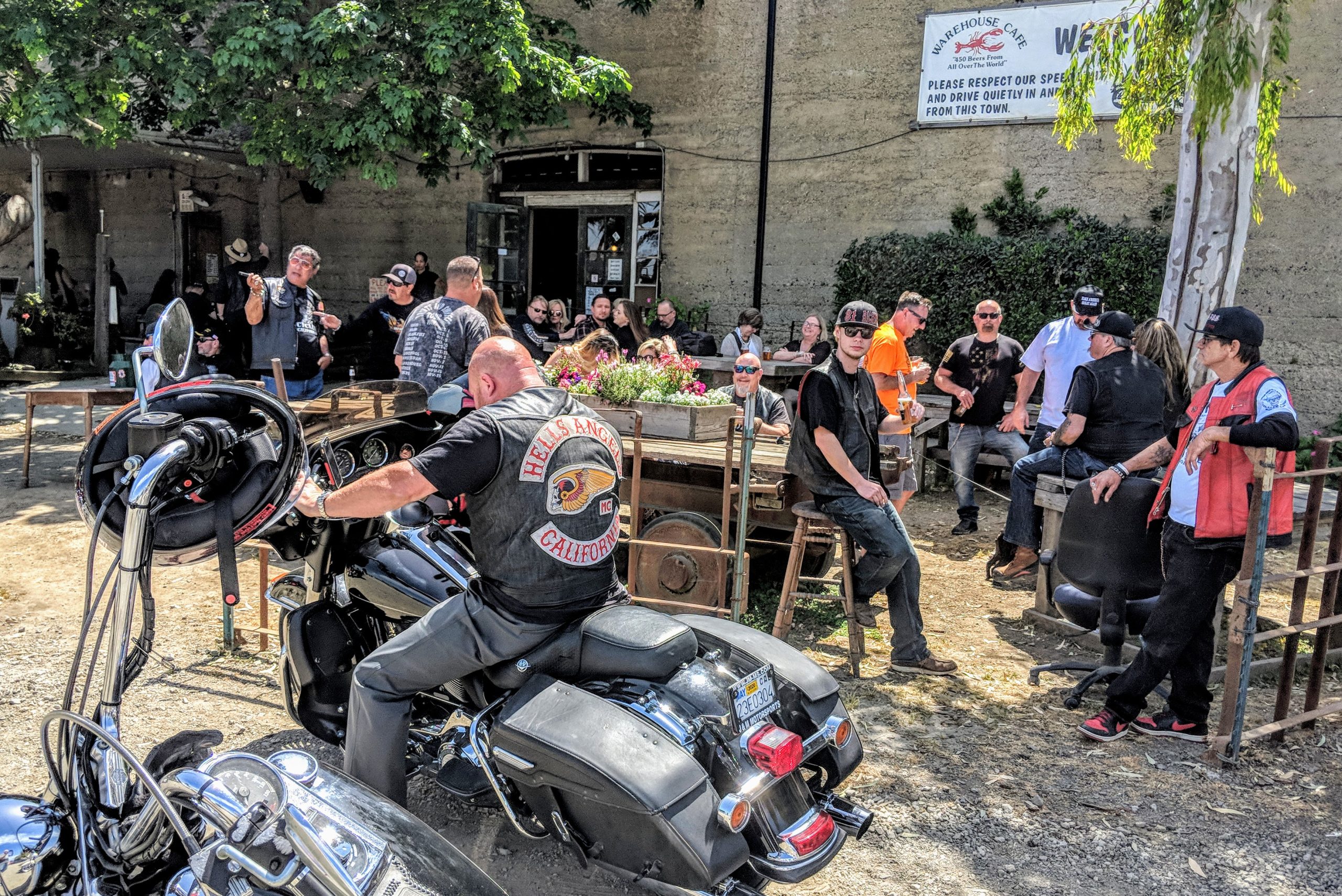
He became the face of the Hells Angels. But he did not found every earlier chapter. The plaque, the cameras and a federal courtroom tell a more startling story.
Ralph “Sonny” Barger became the most recognizable public figure in Hells Angels history. He did not create every early Hells Angels club, and describing him simply as the founder of the entire organization flattens a complicated origin story. His importance came from something more specific: he helped establish the Oakland chapter in 1957, helped turn that chapter into a powerful center of influence, and then spent decades acting as the club’s most visible spokesman, strategist and self-appointed historian.
Early life before the Hells Angels
Barger was born Ralph Hubert Barger in Modesto, California, on October 8, 1938. He grew up in Northern California in a difficult household and left school early. Later accounts, including interviews given by Barger himself, describe a teenager searching for belonging and drawn toward the identity of motorcycle clubs.
The Los Angeles Times reported that he entered the U.S. Army at sixteen using a forged birth certificate and was discharged after the deception was discovered. That episode fits a pattern visible throughout his later life: Barger repeatedly described himself as someone who preferred tightly bonded groups, codes of loyalty and institutions with clear internal rules, even when he resisted authority outside those groups.
Motorcycles became the setting in which that identity hardened.
Oakland, 1957
On April 1, 1957, Barger and others established the Oakland Hells Angels chapter. Earlier groups using the Hells Angels name already existed in Southern California, so Oakland was not the organization’s literal beginning. But Oakland became one of the chapters that shaped what outsiders later recognized as the modern Hells Angels.
Barger was unusually effective at organization and public presentation. The Oakland chapter developed a strong internal identity and became increasingly influential as relationships between California chapters tightened. Over time, Barger became the person reporters, police officials and other bikers most often treated as the club’s public voice.
That does not mean he exercised simple corporate-style command over every chapter. Hells Angels chapters have historically maintained local structures and considerable autonomy. Barger's power was partly formal, partly personal and partly symbolic. His reputation made him more important than a job title alone could explain.
The Oakland chapter is therefore the correct place to begin his historical story. It is where Barger stopped being merely a biker and became a historical actor.
The 1965 publicity explosion
By the mid-1960s, the Hells Angels had become a national news subject. California law-enforcement reporting, sensational press coverage and a growing public fascination with outlaw bikers pushed the club into a much larger cultural argument about violence, youth rebellion and social disorder.
Barger was perfectly positioned for that moment. He was willing to speak publicly, willing to challenge official descriptions of the club and skilled at giving reporters vivid quotations. The more authorities described the Hells Angels as a threat, the more journalists sought Barger for a response.
This created a feedback loop. Police attention produced headlines. Headlines increased the club's notoriety. Notoriety made Barger more valuable to reporters. More interviews made him more famous, and his fame helped turn a California motorcycle-club leader into a national symbol.
The result was a public identity that was partly imposed on him and partly cultivated by him.
Antiwar protesters and the politics Barger projected
In 1965, Hells Angels members clashed with antiwar demonstrators near the Berkeley–Oakland border. The episode became another major piece of the club’s national image.
Barger and other Angels were not conventional political organizers, but their public statements often emphasized nationalism, hostility toward antiwar protesters and contempt for movements they viewed as disorderly or unpatriotic. That placed them in an unusual position within the broader 1960s counterculture: culturally rebellious, but often politically distant from the New Left and peace movement.
This contradiction is central to understanding Barger. He could appear beside writers, musicians and psychedelic-era figures while rejecting much of their politics. The Hells Angels were part of the counterculture landscape without fitting neatly inside counterculture ideology.
Ken Kesey, La Honda and the crossover into counterculture
The Hells Angels' contact with Ken Kesey and the Merry Pranksters became one of the strangest cultural crossings of the decade. At Kesey's La Honda property, bikers, writers and psychedelic experimenters occupied the same social world for a time.
For Barger, this environment expanded the club's cultural reach. The Angels were no longer appearing only in police reports or local crime coverage. They were entering stories about writers, LSD, music and the emerging mythology of 1960s California.
The relationship should not be romanticized. The groups had different values and the contact was unstable. But historically it mattered because it connected the Hells Angels to a much larger media ecosystem.
Barger became one of the recognizable human faces inside that ecosystem.
Hunter S. Thompson and the making of a character
Hunter S. Thompson spent extensive time around Hells Angels members while researching the work that became Hell's Angels: The Strange and Terrible Saga of the Outlaw Motorcycle Gangs.
Barger became one of the book's central personalities. Thompson's portrait helped establish an enduring image of him as more controlled and calculating than the stereotype of the purely chaotic outlaw biker.
The relationship between Thompson and the Angels deteriorated badly. Thompson was eventually beaten by members after intervening in a confrontation. Yet the book remained enormously important to Barger's public identity.
This is one of the paradoxes of his career: journalism that was often critical of the Hells Angels also made the club more famous. Barger understood that visibility itself could be useful, even when the coverage was hostile.
From that point forward, he was not simply participating in events. He was participating in the production of a public legend.
Altamont and the moment that followed him forever
The Altamont Free Concert on December 6, 1969 became the most infamous event associated with the Hells Angels in popular memory.
Members of the club were positioned near the stage while a chaotic crowd, poor planning, drugs, repeated fights and inadequate security created dangerous conditions. Meredith Hunter, an eighteen-year-old concertgoer, was stabbed to death by Hells Angels member Alan Passaro after Hunter drew a handgun. Passaro was later acquitted of murder after arguing self-defense.
Barger was present and later publicly defended the Hells Angels' conduct. He disputed portrayals that reduced the event to a simple story in which the band had hired the club as conventional professional security and the Angels alone caused the disaster.
Altamont became larger than the facts of any single confrontation. It was repeatedly described as the symbolic end of the idealistic 1960s. Barger's name became permanently attached to that symbolism.
For this archive, the important point is narrower: Altamont dramatically expanded the international visibility of both the Hells Angels and Barger, while also tying that visibility to lethal violence.
Fame did not replace criminal prosecution
By the 1970s, Barger was both famous and repeatedly involved in the criminal-justice system.
He faced numerous arrests and prosecutions over the course of his life. Some resulted in convictions and prison sentences; others ended in acquittal or failed to produce the broader convictions prosecutors sought.
That distinction is essential. Retellings of Barger's life often collapse allegation, indictment, trial and conviction into one continuous criminal narrative. They are not the same thing.
The Los Angeles Times reported that Barger was acquitted in a 1972 murder case. He later served prison time on a heroin-related conviction. By his own later estimate, he spent roughly twelve or thirteen years incarcerated across multiple sentences.
His criminal record was real, but it must be described case by case.
The Outlaws conspiracy case
One of the strongest documented federal cases against Barger came from the violent rivalry between the Hells Angels and the Outlaws Motorcycle Club.
Federal prosecutors alleged a conspiracy involving retaliation against the Outlaws following the 1986 killing of a Hells Angels member in Louisville, Kentucky. Barger was convicted of conspiracy to violate federal explosives, firearms and arson laws, as well as a misdemeanor count involving a stolen law-enforcement intelligence manual containing information about Outlaws members.
The U.S. Court of Appeals for the Sixth Circuit affirmed Barger's conviction in 1991. The appellate opinion described evidence that he discussed retaliation, circulated information about Outlaws members and participated in preparations connected to a plan to bomb an Outlaws clubhouse in Chicago.
This case is especially useful because it is not dependent on later legend or memoir. It is preserved in a federal appellate record.
Prison, cancer and a changed public voice
Barger's physical appearance and literal voice changed dramatically after cancer.
A heavy smoker for years, he developed laryngeal cancer. Surgeons removed his larynx in the early 1980s. Afterward he spoke through a surgically created opening in his throat and adapted to a very different public presence.
The illness did not end his association with motorcycling or the Hells Angels. He continued riding, giving interviews and appearing publicly.
That continuity strengthened his legend among supporters: the man who had survived prison, prosecution and cancer remained visible. But it also gave Barger another opportunity to shape how his own story was told.
The author of his own mythology
By the late 1990s and 2000s, Barger increasingly became a professional narrator of the Hells Angels world.
He wrote or co-wrote several books, including his memoir Hell's Angel, and appeared in film and television. Those works gave readers access to his perspective on the club, its codes and his life.
They are valuable sources, but they are not neutral histories.
Barger had obvious incentives to defend the club, emphasize loyalty, minimize some allegations and present his own decisions in a favorable light. His books therefore work best when compared against contemporary reporting, court records and independent historical sources.
This distinction is important for the editorial model. A memoir can establish what Barger claimed. It cannot automatically establish that every claim was true.
Was Sonny Barger the leader of all Hells Angels?
Popular reporting often described Barger as the national leader, president, godfather or spiritual head of the Hells Angels. Those descriptions reflect his enormous influence, but they can create a misleading picture of a single centralized chain of command stretching across every chapter and country.
Barger clearly held leadership status in Oakland and extraordinary influence inside the broader organization. He was also the person outsiders most frequently treated as the club's spokesman.
But influence and absolute control are different things.
A more precise description is that Barger was the most important public and organizational figure associated with the Oakland Hells Angels during the club's rise to international notoriety, and for decades remained the individual most closely identified with the Hells Angels brand.
That formulation explains his significance without turning a federated club structure into a fictional corporate hierarchy.
Arizona and later life
Barger eventually moved from the Bay Area to Arizona. By then he had already become a historical celebrity within motorcycle culture.
He continued attending events, giving interviews and writing. His public identity shifted from active 1960s outlaw figure toward elder statesman of a subculture, although his Hells Angels affiliation remained central to how he presented himself and how the press described him.
The movement from Oakland to Arizona did not separate him from the organization. Instead it showed how portable the Barger persona had become. He no longer needed to be physically rooted in Oakland for Oakland-era mythology to follow him.
Death: June 29, 2022
Sonny Barger died on June 29, 2022, at age eighty-three. Reporting placed his death in Livermore, California. His death notice, prepared in advance and published through his social-media account, said he had died after a battle with cancer. Other obituary reporting identified liver cancer.
His death drew international coverage because Barger had outlived the era that created his fame by more than half a century.
There is no need to exaggerate the aftermath. The Hells Angels had long since expanded far beyond one man, one city or one generation. Barger's death did not end the organization and did not erase the decentralized chapter system that had developed over decades.
What ended was the life of its most recognizable historical spokesman.
Barger is a high-value connector because his biography crosses several historical story types at once.
Follow him backward and the reader reaches the Oakland chapter and the disputed early history of the Hells Angels. Follow him through the 1960s and the path reaches the California law-enforcement publicity cycle, antiwar confrontations, Ken Kesey, Hunter S. Thompson and Altamont. Follow him into later decades and the path reaches federal prosecution, the Outlaws rivalry, prison and the transformation of outlaw-biker identity into a commercialized cultural brand.
That makes him more than a famous member profile.
He is one of the primary navigation nodes for understanding how a regional motorcycle-club world became a durable international criminal-history and cultural subject.
The strongest historical reading of Sonny Barger therefore avoids both extremes. He was not merely a misunderstood folk hero, and he was not simply the fictional mastermind of every act attributed to Hells Angels members around the world.
He was an influential Oakland organizer, the club's most effective public spokesman, a convicted felon in documented cases, a defendant who also won acquittals, a writer, a survivor of major illness and one of the most successful self-mythologizers in modern American outlaw culture.
Documented network
Hells Angels Motorcycle Club (organization): Barger helped establish the Oakland chapter in 1957 and became the club’s most recognizable public figure.
Sonny Barger Helps Establish the Oakland Hells Angels Chapter (event): Barger was a founding member of the Oakland chapter in 1957.
The 1965 California Report That Made the Hells Angels a National Story (event): The 1965 official and press attention helped turn Barger into a nationally recognized spokesman.
The 1965 Berkeley–Oakland Antiwar Clash With the Hells Angels (event): Barger was the public face of the Oakland Hells Angels during the period of the antiwar confrontation.
Ken Kesey, La Honda and the Hells Angels in the Counterculture (event): The Oakland Hells Angels entered the Kesey/La Honda counterculture orbit during Barger's rise as the club’s best-known spokesman.
Hunter S. Thompson and the Book That Reframed the Hells Angels (event): Barger became one of the most recognizable figures in Thompson’s reporting on the club.
Hunter S. Thompson (person): Thompson’s reporting helped make Barger a recognizable national character.
Altamont: Hells Angels, Meredith Hunter and the Killing at the Stage (event): Barger was present at Altamont and publicly defended the club’s role afterward.
Outlaws Motorcycle Club (organization): A federal conviction tied Barger to a conspiracy involving retaliation against the rival Outlaws.
Hells Angels: From California Club to National Notoriety (story arc): Barger is a central figure linking Oakland, 1960s publicity, counterculture contact and Altamont.
Hells Angels Oakland Chapter (organization): Barger helped establish the Oakland chapter in 1957.
East Bay Dragons Motorcycle Club (organization): Published histories describe Barger as a friend/acquaintance of East Bay Dragons founder Tobie Levingston.
Tobie Gene Levingston (person): Published histories describe Barger and Levingston as riders who knew one another in the East Bay.
Timeline and case connections
Structured events are separated from general biography so a later audit can change a date, conviction, killing, organizational split or court outcome without rewriting unrelated portions of the page.
April 1, 1957 — Oakland Hells Angels chapter established. Barger and others established the Oakland Hells Angels chapter, which became central to his public and organizational importance.
1965 — Hells Angels enter national 1965 publicity cycle. California law-enforcement reporting and national press attention helped turn the Hells Angels and Barger into major public subjects.
October 16, 1965 — Berkeley–Oakland antiwar confrontation. Hells Angels members confronted antiwar demonstrators, reinforcing the club’s national political and cultural notoriety.
1966 — Hunter S. Thompson publishes Hell’s Angels. Thompson’s book made Barger one of the best-known personalities associated with the Hells Angels.
December 6, 1969 — Altamont Free Concert. Barger was present at Altamont and later publicly defended the club’s role after the fatal stabbing of Meredith Hunter.
March 4, 1991 — Federal conspiracy conviction affirmed. The Sixth Circuit left in place Barger's conviction for conspiracy involving explosives, firearms and arson laws in retaliation against the Outlaws, along with a misdemeanor conversion conviction.
June 29, 2022 — Death. Barger died at age 83 after cancer.
Date not specified in current profile sources — Sonny Barger Helps Establish the Oakland Hells Angels Chapter. Barger was a founding member of the Oakland chapter in 1957.
Date not specified in current profile sources — The 1965 California Report That Made the Hells Angels a National Story. The 1965 official and press attention helped turn Barger into a nationally recognized spokesman.
Date not specified in current profile sources — The 1965 Berkeley–Oakland Antiwar Clash With the Hells Angels. Barger was the public face of the Oakland Hells Angels during the period of the antiwar confrontation.
Date not specified in current profile sources — Ken Kesey, La Honda and the Hells Angels in the Counterculture. The Oakland Hells Angels entered the Kesey/La Honda counterculture orbit during Barger's rise as the club’s best-known spokesman.
Date not specified in current profile sources — Hunter S. Thompson and the Book That Reframed the Hells Angels. Barger became one of the most recognizable figures in Thompson’s reporting on the club.
Status and record
The structured birth record lists October 8, 1938 in Modesto, California, United States. The death record lists June 29, 2022 in Livermore, California, United States. Cause: Liver cancer.. Barger died in Livermore, California, on June 29, 2022, at age 83.
Books and screen
Source record
The Master package currently attaches these sources to the profile: – Barger, Ralph “Sonny” 1938– — Encyclopedia.com, Tier 2. – Sonny Barger, counterculture force and face of the Hells Angels, dies — Los Angeles Times, Tier 2. – Hells Angels leader Sonny Barger dies at age 83 — Reuters (syndicated by Yahoo Finance), Tier 2. – Sonny Barger, biker outlaw and founder of Hells Angels, dies at 83 — The Washington Post, Tier 2. – The Day the Music Got Stomped — Los Angeles Times, Tier 2. – United States v. Ralph Hubert Barger, 931 F.2d 359 — U.S. Court of Appeals for the Sixth Circuit / Justia, Tier 1. – Gatto v. County of Sonoma — California Court of Appeal / Justia, Tier 1. – Hurwitt v. City of Oakland, 247 F. Supp. 995 — U.S. District Court / Justia, Tier 1. – Ken Kesey, Hunter S. Thompson and the Hell’s Angels at La Honda: August 7th, 1965 — American Short Fiction, Tier 2. – Soul on Bikes: The East Bay Dragons MC and the Black Biker Set — Oakland Public Library, Tier 2.
The presence of a source does not mean it supports every sentence. Claim-level references remain in structured data for later audits.
Evidence and editorial boundaries
For living subjects in particular, legal status and allegations require dated evidence. Future expansion should come from stronger records, court material, archives or newly processed canonical entities rather than generalized crime lore.
THE FILES BEHIND THE LEGEND
Sonny Barger: The Evidence the Legend Leaves Out
The man most associated with Hells Angels was not its universal founder. What the archival cameras, contemporaneous reporting and federal court actually show is more revealing than the myth.
- Key chapterOakland, April 1957
- 1965 archiveKRON-TV newsfilm, November 19
- Federal caseU.S. v. Barger, Sixth Circuit, 1991
- DeathJune 29, 2022, aged 83
Evidence-based chronology
- 1957: Barger, then 18, and others established the Oakland chapter; the broader Hells Angels history began earlier.
- 19 Nov 1965: KRON filmed Barger announcing that club members would not attend the following day’s antiwar march.
- 6 Dec 1969: Barger became publicly associated with the controversy over the Hells Angels presence at Altamont.
- 12 Aug 1986: Hells Angel John Cleve Webb was killed by Outlaws members in Louisville, a fact central to the later conspiracy case.
- 1988–1991: Following a federal trial and appeal, Barger’s explosives-related conspiracy and stolen-manual convictions were upheld by the Sixth Circuit.
- 2022: Barger died aged 83; obituaries reopened debate over his historical role.
The Oakland plaque tells a smaller, more important founding story
A dated inscription recorded by the Los Angeles Times described the Oakland Hells Angels chapter as founded on April 1, 1957, by Sonny Barger and others. The final two words matter. They identify a local organizational milestone, not one man single-handedly creating every earlier group using the Hells Angels name.
The distinction is more than a fact-checking footnote. When a club becomes internationally recognizable, its history is often compressed into one city and one personality. Oakland deserves its own chapter history; Southern California’s earlier chapters deserve theirs. Readers need both stories to understand how influence shifted over time.
Source record: Los Angeles Times — The Rough Rider (1994) · Los Angeles Times — Sonny Barger, counterculture force and face of the Hells Angels (2022)
A television camera captured the politics of 1965
A surviving KRON-TV newsfilm from November 19, 1965 shows Barger at Dorothy Connors Bail Bonds discussing a planned Vietnam Day Committee march. The archive identifies him as the Oakland chapter president and records his statement that the Angels would stay away from the demonstration in the stated interest of public safety.
The same film includes footage of an earlier confrontation between bikers, demonstrators and police. Those are different moments: filmed clashes from earlier protests and a later public announcement about a future march. Treating them as one continuous episode would flatten the chronology and manufacture a false sequence.
Source record: San Francisco State University Bay Area Television Archive — Ralph Sonny Barger Confronts VDC (KRON-TV, 19 November 1965) · FBI Vault — The Hells Angels, Part 4: 1965 Vietnam Day Committee records
What the telegram to President Johnson actually demonstrates
The KRON catalog also records Barger reading a telegram offering support for the American war effort in Vietnam. This was a public political statement by a prominent club representative, not evidence that the federal government accepted an offer or that the club had an official military role.
For historians the value lies in the contradiction: a group seen by many outsiders as anti-establishment used emphatically pro-war language to oppose antiwar activists. The archival footage allows RoguesBook to show that paradox without guessing at every member’s beliefs or pretending that one speaker represented every chapter in every year.
Source record: San Francisco State University Bay Area Television Archive — Ralph Sonny Barger Confronts VDC (KRON-TV, 19 November 1965)
The 1986 killing that transformed an old rivalry into a federal case
The Sixth Circuit’s opinion begins with the killing of John Cleve Webb, an Anchorage Hells Angels member, by Outlaws members in Louisville on August 12, 1986. The ruling describes retaliatory discussions that followed and Barger’s role in circulating information about the rival club. Those facts come from judicial findings and trial evidence discussed on appeal.
Webb’s killing was not a conviction of Barger for that homicide. It was a triggering event in the investigation of alleged and later proven conspiracy activity. That boundary is crucial: a reader should not confuse the original shooting, subsequent discussion of revenge and the separate federal crimes for which Barger was convicted.
Source record: United States v. Barger, 931 F.2d 359 (6th Cir. 1991) — opinion
The EPIC manual, the informant and the disputed sting
The case also involved a restricted law-enforcement intelligence manual concerning the Outlaws, often called the EPIC manual. The court described Barger’s transfer and discussion of copies. It separately described Anthony Tait, an FBI informant who had gained access to the motorcycle-club world and took part in the evidence that federal prosecutors presented.
Barger challenged aspects of the prosecution, including entrapment. The appellate judges rejected that argument after discussing evidence of his statements and acts preceding the proposed bombing plan. That ruling should be reported as a court conclusion, rather than treated as a narrator’s omniscient account of everyone’s private motives.
Source record: United States v. Barger, 931 F.2d 359 (6th Cir. 1991) — opinion · Washington Post — Louisville Trial Gives Bikers an Easy Ride (1988)
Convicted of conspiracy — not of carrying out a clubhouse bombing
In United States v. Barger, 931 F.2d 359, the Sixth Circuit affirmed a jury conviction for conspiracy involving federal explosives, firearms and arson laws, as well as a misdemeanor conviction involving conversion of a stolen government document. The court’s decision was issued in January 1991, with reconsideration denied in March.
Describing this as if Barger personally completed a deadly bombing would be false. The court assessed an agreement, participation, intent and evidence supporting conspiracy liability. A strong crime-history article should be more dramatic because it shows exactly what prosecutors could prove, not because it adds crimes to the record.
Source record: United States v. Barger, 931 F.2d 359 (6th Cir. 1991) — opinion
From outlaw image to media business
By 1994 the Los Angeles Times could interview Barger in a motorcycle-parts business near the Oakland clubhouse. The story described him as an entrepreneur and local figure as well as a symbol of outlaw biker culture. By then the public personality and the commercial value of the personality were part of the historical record.
That development complicates both hero worship and simplistic demonization. Barger’s public life crossed club organization, prosecution, counterculture celebrity, self-promotion and later publishing. Each belongs in a different evidentiary category, and the archive is strongest when it gives readers those paths rather than a single sweeping label.
Source record: Los Angeles Times — The Rough Rider (1994) · Los Angeles Times — Sonny Barger, counterculture force and face of the Hells Angels (2022)
What survived the man
Barger died in June 2022 after cancer, according to contemporaneous reporting and the death statement published through his account. News coverage repeatedly described him as the face of the Hells Angels, a formulation that captures his visibility without establishing that he controlled every chapter in the world.
Oakland’s history continues outside his biography. The larger motorcycle-club story includes local chapters, independent legal proceedings, different decades and people whose experiences cannot be reduced to a Barger footnote. The next pages therefore move outward from the man to the chapter, the 1965 archive, the California-to-Altamont series and the court documents.
Source record: Los Angeles Times — Sonny Barger, counterculture force and face of the Hells Angels (2022)
Key events
Born
Birth of Sonny Barger.
Modesto, California, United StatesSonny Barger Helps Establish the Oakland Hells Angels Chapter
The transformation of the Hells Angels from a Southern California motorcycle club into a national symbol cannot be understood without Oakland.
Oakland, California, United StatesThe 1965 California Report That Made the Hells Angels a National Story
By the beginning of 1965, the Hells Angels already had a reputation in California.
California, United StatesKen Kesey, La Honda and the Hells Angels in the Counterculture
In 1965 Hells Angels members entered Ken Kesey’s La Honda social world, revealing the temporary overlap between outlaw biker culture and the emerging psychedelic…
La Honda, California, United StatesThe 1965 Berkeley–Oakland Antiwar Clash With the Hells Angels
At the Berkeley–Oakland boundary in October 1965, Hells Angels members confronted Vietnam Day Committee marchers in a clash later described in federal court records.
Berkeley–Oakland border, California, United StatesHunter S. Thompson and the Book That Reframed the Hells Angels
The Hells Angels were already famous when Hunter S.
California, United StatesAltamont: Hells Angels, Meredith Hunter and the Killing at the Stage
On December 6, 1969, the Hells Angels became inseparable from one of the most infamous concerts in rock history.
Altamont Speedway, California, United StatesDeath
Death of Sonny Barger.
Livermore, California, United StatesPeople, groups and places
References
-
[1]LD 38 – Chapter 3: Organized Crime GangsTier 1SupportsView source ↗
-
[2]LD 38 – Chapter 3: Organized Crime GangsTier 1SupportsView source ↗
-
[3]Gatto v. County of SonomaTier 1SupportsMentionsView source ↗
-
[4]McCone-Hoover, UC Berkeley 1965Tier 1SupportsView source ↗
-
[5]Rolling Stones at Altamont (1969)Tier 1SupportsView source ↗
-
[6]Outlaw Motorcycle GangsTier 1SupportsView source ↗
-
[7]United States v. Ralph Hubert Barger, 931 F.2d 359Tier 1MentionsSupportsView source ↗
-
[8]Hurwitt v. City of Oakland, 247 F. Supp. 995Tier 1SupportsMentionsView source ↗
-
[9]Organized Crime: Outlaw Motorcycle Gangs testimonyTier 1SupportsView source ↗
-
[10]Original 1965 Acid Test Flyer PrintTier 1SupportsView source ↗
-
[11]Ken Kesey, Hunter S. Thompson and the Hell’s Angels at La Honda: August 7th, 1965Tier 2SupportsMentionsView source ↗
-
[12]Barger, Ralph “Sonny” 1938–Tier 2MentionsSupportsView source ↗
-
[13]Murder at the Altamont Festival brings the 1960s to a violent endTier 2SupportsView source ↗
-
[14]Police Beef Up Patrol for Hells Angels' ArrivalTier 2SupportsView source ↗
-
[15]Sonny Barger, counterculture force and face of the Hells Angels, diesTier 2SupportsMentionsView source ↗
-
[16]The Day the Music Got StompedTier 2SupportsMentionsView source ↗
-
[17]The Rough RiderTier 2SupportsView source ↗
-
[18]Soul on Bikes: The East Bay Dragons MC and the Black Biker SetTier 2SupportsMentionsView source ↗
-
[19]Hells Angels leader Sonny Barger dies at age 83Tier 2SupportsMentionsView source ↗
-
[20]Hells Angels vs. Allen Ginsberg: The unlikely Vietnam War-era confrontationTier 2SupportsView source ↗
-
[21]Sonny Barger, biker outlaw and founder of Hells Angels, dies at 83Tier 2MentionsSupportsView source ↗