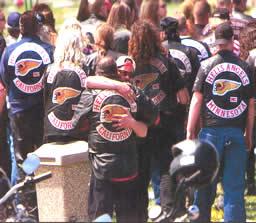
First came the motorcycle clubs. Then an Oakland figurehead, television cameras and counterculture fame. At Altamont, the story took a tragic turn.
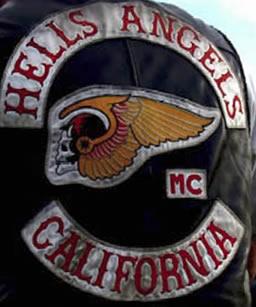
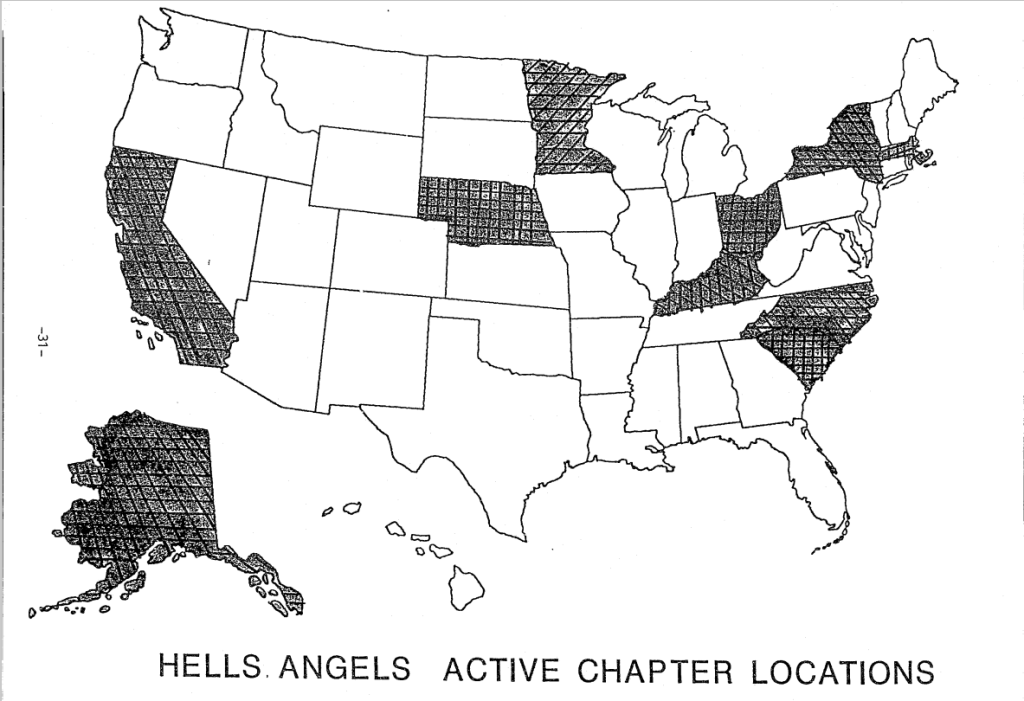
Before the Hells Angels became an international name, they were a California story.
The early record is less tidy than later legend suggests. Government sources disagree over whether the organization should be dated to 1948 or 1950, and the first years involved overlapping Southern California motorcycle groups rather than a single clean corporate founding. By the end of the 1950s, however, the direction was unmistakable.
Oakland and Sonny Barger changed the scale of the story.
This arc follows five moments that turned a postwar motorcycle club into one of the most recognizable outlaw brands in the world: the California origins, the Oakland chapter, the 1965 government report, Hunter S. Thompson's book, and the violence at Altamont.
Chapter 1 — A club with an uncertain birthday
California peace-officer training material dates the formation of the Hells Angels to 1948 and connects early membership to the POBOBs. Federal testimony from the 1980s instead described a 1950 formation in Fontana under Otto Friedli.
The discrepancy is not a trivial footnote. It tells us something about how informal the early motorcycle-club world was.
These were not organizations founded with public charters, press releases and carefully preserved archives. They formed through local riding groups, personal alliances and chapter identities that later became part of a larger story.
What can be said with more confidence is that San Bernardino became an early center and that the club emerged from the postwar California motorcycle scene.
Chapter 2 — Oakland and Sonny Barger
In 1957, eighteen-year-old Sonny Barger helped establish the Oakland chapter.
Barger was not merely another member. He became the figure most associated with the club's emerging structure and public identity. Later histories credit Oakland with becoming the effective center of gravity as the organization expanded.
The chapter system allowed a single identity to travel. Members could belong to local groups while recognizing a wider Hells Angels name, colors and code.
That model proved durable.
Chapter 3 — The state creates a national story
For most Americans, the Hells Angels were still obscure at the beginning of the 1960s.
That changed dramatically in 1965.
The California Department of Justice prepared a report describing alleged criminal conduct and "hoodlum activities" attributed to members. The report was circulated to law-enforcement agencies and became a national media event.
The Hells Angels suddenly had a mass audience.
The government saw a law-enforcement problem. Newspapers saw a story. Television saw powerful images. The club itself acquired a notoriety that no advertising campaign could have purchased.
The public image began to outrun the underlying record.
Chapter 4 — Hunter S. Thompson enters the club's orbit
Hunter S. Thompson did something different from most reporters who followed the 1965 panic. He spent sustained time around the Hells Angels.
His resulting book, Hell's Angels: The Strange and Terrible Saga of the Outlaw Motorcycle Gangs, became one of the most influential works ever written about motorcycle subculture.
Thompson did not turn the Angels into heroes. He described violence, intimidation, boredom, group loyalty, class resentment and spectacle.
But by making the club legible as a social world, he also helped make it permanent in American culture.
Readers who would never encounter a Hells Angel in person now knew the vocabulary, the colors, the mythology and the name Sonny Barger.
Chapter 5 — Altamont
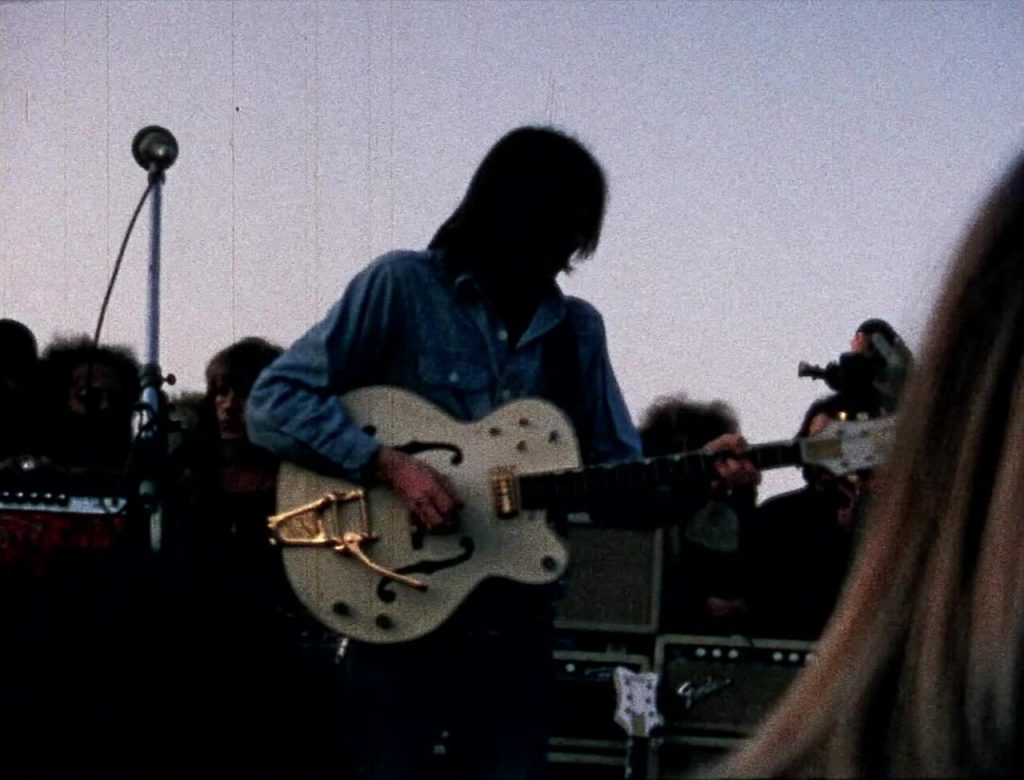
On December 6, 1969, hundreds of thousands of people gathered at Altamont Speedway for a free concert headlined by the Rolling Stones.
Hells Angels members were positioned around the stage in an informal security role. The arrangement was poorly defined and the environment deteriorated quickly. Fights broke out. Jefferson Airplane singer Marty Balin was knocked unconscious during one altercation.
The most consequential violence came during the Rolling Stones' set.
Meredith Hunter, eighteen, drew a handgun near the stage. Hells Angels member Alan Passaro stabbed him. Hunter died.
The confrontation was captured on film.
Passaro was later charged with murder and acquitted after the jury accepted a self-defense argument. Decades later, a renewed Alameda County review concluded that Passaro was the only person who stabbed Hunter.
That legal outcome is essential. The footage is shocking, but the historical record is not accurately described by simply saying a Hells Angel "murdered" Hunter. A jury saw the evidence and acquitted Passaro.
Why Altamont mattered beyond the case
Altamont changed the Hells Angels' image because millions of people could connect the club to a single visual event.
The scene contained everything that made the organization culturally magnetic and frightening: leather colors, motorcycles, rock music, drugs, violence and a breakdown of conventional authority.
It also showed the danger of reducing a real organization to a symbol.
The event was the product of disastrous concert planning, a volatile crowd, unclear security arrangements, individual acts of violence and one fatal confrontation. Those facts are more complicated than the myth that Altamont was simply "the day the Hells Angels ended the sixties."
But myths are part of history when they shape what happens next.
The next Hells Angels story
By 1969 the club was no longer just a California curiosity.
The next phase takes the story into organized-crime investigations, rival motorcycle clubs, international expansion, methamphetamine cases, biker wars and undercover operations.
That later history requires a different evidentiary standard. It involves living people, contested allegations and prosecutions with mixed outcomes.
This first arc stays with the transformation that made everything else possible: how a loosely documented California motorcycle club became an international symbol before the 1960s were over.
How the five chapters connect
The five chapters are not simply a chronology. Each changes the mechanism by which the Hells Angels became more powerful as a public symbol.
The founding period created the name and chapter identity. Oakland created a visible center and a spokesman. The 1965 report converted a California law-enforcement subject into a national media story. Thompson converted the story into a social world that readers could enter. Altamont converted that mythology into filmed evidence of real violence.
The pattern is cumulative. By 1969, a photograph of Hells Angels colors no longer needed explanation. The public already carried a set of expectations about what those colors meant.
The difference between organization and image
One of the most important themes in this arc is the gap between the real organization and the cultural image built around it.
The organization consisted of chapters, members, internal relationships and evolving rules. The image was created by police reports, photographs, books, films, music culture and the club's own self-presentation.
Those two systems influenced each other. Public fear could increase the prestige of an outlaw identity. Media attention could attract recruits. A recognizable visual brand could make an event involving a few members appear to represent the entire organization.
For historical work, the solution is not to ignore the image. It is to track when image and evidence diverge.
Why this arc stops in 1969
The history after Altamont is larger and more legalistic. It includes specific criminal enterprises alleged by prosecutors, convictions involving particular members and chapters, acquittals, rivalries, international expansion and the use of organized-crime statutes.
Those stories should not be compressed into a final paragraph here. They require separate events with their own evidence.
This arc therefore functions as an origin story for the modern public Hells Angels. It explains how a loosely documented California motorcycle club acquired a durable chapter structure, a famous spokesman, a national reputation and a global cultural identity.
The later criminal and international history makes more sense once that transformation is understood.
FIVE TURNS THAT MADE A LEGEND
From Oakland to Altamont: The Decade That Changed Hells Angels
Follow the evidence behind the public image: local chapter roots, officials’ reports, televised protests, counterculture journalism and the fatal Altamont concert.
- Story startsPostwar California motorcycle-club history
- Oakland milestoneApril 1957
- Publicity breakpoint1965
- AltamontDecember 1969
Evidence-based chronology
- Before 1957: Earlier Southern California groups were already using the Hells Angels identity.
- 1957: Oakland chapter established, with Sonny Barger among the founders.
- 1965: Official reports, antiwar confrontations and KRON footage lifted the club into national attention.
- 1966: Hunter S. Thompson’s book reshaped public understanding of the club.
- 1969: Meredith Hunter was killed at Altamont; subsequent accounts made the night a defining cultural argument.
Chapter one: the earliest name was not the later empire
A history of Hells Angels must start before Sonny Barger. Early California motorcycle groups and chapters preceded Oakland. The fact that precise organizational origin stories differ in some accounts is a reason to label the disagreement, not to choose the most dramatic founding myth.
Oakland became highly influential later. Keeping those dates separate prepares readers to understand why a man could become the most recognized face of an organization he did not originate everywhere.
Source record: Los Angeles Times — Sonny Barger, counterculture force and face of the Hells Angels (2022) · Los Angeles Times — The Rough Rider (1994)
Chapter two: an Oakland chapter becomes a national image
The 1957 clubhouse date is one of the clearest documented local markers in the archive. By the mid-1960s, press treatment of Barger and Oakland frequently stood in for the wider club. That made a local story nationally recognizable.
An Oakland chapter page answers who was involved locally; the Sonny Barger biography answers what the same period meant for the individual; the broader organization page explains what can and cannot be inferred about chapters elsewhere.
Source record: Los Angeles Times — The Rough Rider (1994)
Chapter three: cameras replace rumor
The 1965 KRON-TV film is a remarkable hinge in this series. It combines footage of prior biker-protester confrontation with a later press conference in which Barger addressed a planned Vietnam Day Committee march. The archival catalog identifies the broadcast date as November 19, 1965.
That offers a near-contemporary source for exact words and public positioning. It also demonstrates why a chronology matters: material from different demonstrations cannot be stitched into one invented sequence merely because it was edited into a television segment.
Source record: San Francisco State University Bay Area Television Archive — Ralph Sonny Barger Confronts VDC (KRON-TV, 19 November 1965) · FBI Vault — The Hells Angels, Part 4: 1965 Vietnam Day Committee records
Chapter four: reporting creates a character larger than the source
Hunter S. Thompson’s work made the Hells Angels a literary as well as a policing subject. To understand the transformation, readers should compare a writer’s narrative account with court records, official reporting and archival footage. Each category answers a different question.
The essential difference is between observation, allegation and legal finding. A book can be indispensable cultural evidence without every scene carrying the weight of a judicial judgment. A government report can reveal a political moment without proving personal guilt by association.
Source record: Los Angeles Times — Sonny Barger, counterculture force and face of the Hells Angels (2022)
Chapter five: Altamont changes what the public remembers
The killing of Meredith Hunter at the December 1969 Altamont concert became central to retrospective accounts of the Hells Angels, rock music and the collapse of 1960s idealism. The tragedy should be treated as a specific incident with identifiable evidence, not as a license to invent acts or blame every person linked with the club.
The series ends its first major period here, but it does not end the larger history. Readers following criminal cases can move to the later Outlaws conspiracy decision, while readers following the cultural story can return to Barger, Thompson and the Oakland clubhouse.
Source record: Los Angeles Times — Sonny Barger, counterculture force and face of the Hells Angels (2022)
0 connected stories
No separate event chapters have been published for this series yet. Follow the documented sections above; the timeline is not an empty list of invented events.
References
- LD 38 – Chapter 3: Organized Crime Gangs · California Commission on Peace Officer Standards and Training · View source ↗
- LD 38 – Chapter 3: Organized Crime Gangs · California Commission on Peace Officer Standards and Training · View source ↗
- Gatto v. County of Sonoma · California Court of Appeal / Justia · View source ↗
- Rolling Stones at Altamont (1969) · Library of Congress via Wikimedia Commons · View source ↗
- Organized Crime: Outlaw Motorcycle Gangs testimony · U.S. Senate / NCJRS archive · View source ↗
- Murder at the Altamont Festival brings the 1960s to a violent end · HISTORY · View source ↗
- Sonny Barger, counterculture force and face of the Hells Angels, dies · Los Angeles Times · View source ↗
- The Day the Music Got Stomped · Los Angeles Times · View source ↗
- Hells Angels leader Sonny Barger dies at age 83 · Reuters (syndicated by Yahoo Finance) · View source ↗