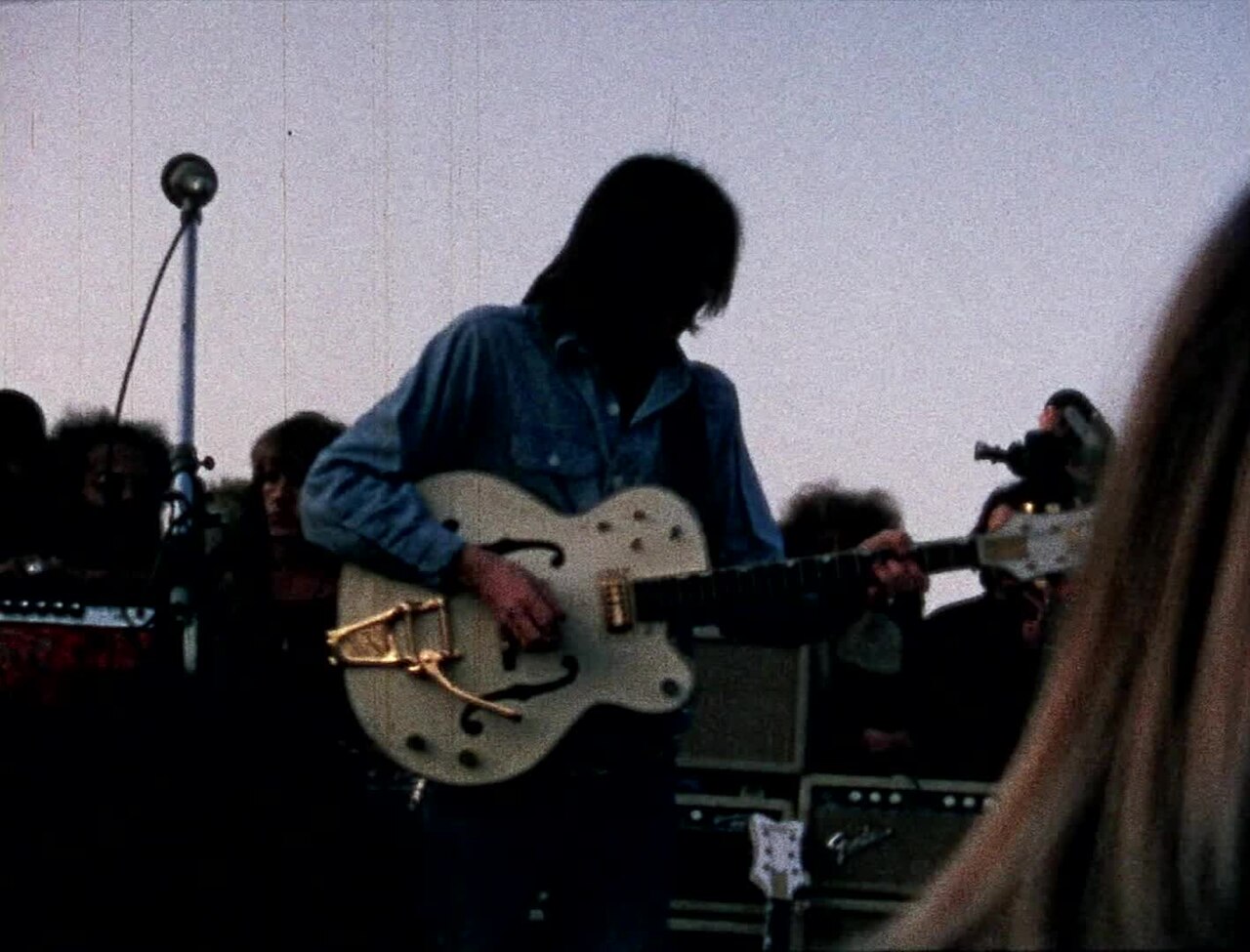
A free concert was supposed to close the 1960s on a high note. Instead, Meredith Hunter was killed near the Altamont stage—and the filmed confrontation forced the world to confront what had happened.
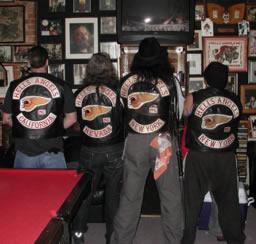
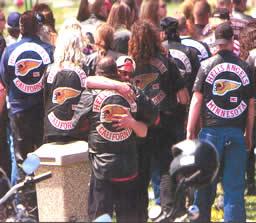
On December 6, 1969, the Hells Angels became inseparable from one of the most infamous concerts in rock history.
The Altamont Free Concert was supposed to end the Rolling Stones' American tour with a vast free show in Northern California.
Instead, poor planning, a rushed venue change, crowd pressure, drugs, inadequate infrastructure and repeated violence created an environment that deteriorated throughout the day.
Hells Angels members were positioned around the low stage in an informal security role.
By the time the Rolling Stones performed, the arrangement had become dangerous.
The stage was the pressure point
The stage at Altamont was low and accessible.
Thousands of people pressed toward it. Hells Angels members and concertgoers repeatedly confronted one another at the boundary.
Jefferson Airplane singer Marty Balin was knocked unconscious during an earlier altercation. The Grateful Dead, after hearing what had happened, left without performing.
The violence was not hidden backstage.
It was happening in front of cameras.
Meredith Hunter
Meredith Hunter was eighteen years old.
During the Rolling Stones' set, Hunter moved close to the stage. The surviving film shows him with a handgun.
Hells Angels member Alan Passaro confronted him and stabbed him. Hunter died.
Those basic facts became the center of the criminal case.
The footage is crucial because it prevents later retellings from turning the encounter into pure legend.
Alan Passaro’s trial
Passaro was charged with murder.
At trial, the defense argued that he had acted in self-defense because Hunter had drawn a gun.
The jury acquitted Passaro.
That verdict matters.
The legal system saw the footage, heard the evidence and returned a not-guilty verdict.
Decades later, Alameda County authorities revisited claims that another assailant might have inflicted the fatal wounds. The renewed investigation was closed in 2005 after authorities concluded Passaro was the only person who stabbed Hunter.
That later conclusion did not reverse the acquittal.
What the film shows — and what it cannot show
It documents the density of the crowd, the proximity of Hells Angels members to performers and the chaotic stage environment.
It also shows the limits of visual evidence.
A camera can capture a gun and a stabbing without explaining every decision that produced the confrontation.
That is why the article keeps separate layers:
Established: Hunter drew a handgun; Passaro stabbed him; Hunter died; Passaro was prosecuted and acquitted.
Not established by the event alone: collective criminal responsibility of every Hells Angels member present, or a simple claim that the club as an organization planned Hunter's death.
The security question
Popular retellings often say the Rolling Stones "hired the Hells Angels as security for $500 worth of beer."
The underlying arrangement appears to have been much less formal than that sentence suggests.
Accounts agree that Hells Angels members were around the stage and that beer was part of the arrangement. But Barger later disputed the idea that the club had accepted the duties of conventional professional security.
That ambiguity does not erase what happened.
It helps explain why the setup failed.
There was no professional security structure capable of controlling a crowd of that size, and the people physically holding the stage boundary were members of a motorcycle club accustomed to enforcing space on their own terms.
Why Altamont became bigger than the case
Three other people died in unrelated circumstances connected to the event, but Hunter's death became the symbol.
Part of the reason was the film.
The killing could be replayed.
Part of the reason was cultural timing. Woodstock had taken place only months earlier and had already become a symbol of peaceful mass counterculture. Altamont offered an almost perfectly inverted image.
The Hells Angels were ready-made symbols inside that contrast.
Sonny Barger after the concert
Barger publicly defended the Angels after Altamont and argued that the group had been unfairly blamed for a disastrously organized event.
His response extended the controversy because it turned the aftermath into a battle over narrative.
Were the Angels reckless enforcers who made violence inevitable?
Were they used as a convenient scapegoat by organizers who had no real security plan?
The historical answer contains pieces of both arguments but does not require accepting either side's mythology in full.
The event was badly planned. Members of the Hells Angels used violence. Hunter produced a gun. Passaro stabbed him. A jury acquitted Passaro on self-defense grounds.
Those facts can coexist.
The end of an arc
After 1969, the next story is different.
It is about international expansion, organized-crime investigations, drug cases, biker wars, rival clubs, undercover operations and RICO prosecutions.
That history is larger, more legally complex and closer to the present.
Altamont is where the mythology stops being background and becomes evidence on film.
The venue change and the collapsing plan
Altamont did not begin with a stable security plan that later failed. The event itself was assembled under pressure. The location changed late, infrastructure was inadequate for the size of the crowd, and the physical relationship between audience and stage was unusually dangerous.
That matters because the Hells Angels were inserted into an already fragile system. The club's presence did not create every failure at Altamont, but the decision to rely on members around a low stage placed people accustomed to enforcing space through intimidation and physical force at the point of maximum crowd pressure.
There was no clear professional chain of command capable of separating performers, spectators and the men around the stage.
Violence before the Rolling Stones
The fatal confrontation did not emerge from an otherwise peaceful day. Earlier sets had already shown that the environment was deteriorating.
Marty Balin of Jefferson Airplane was struck and knocked unconscious during a confrontation. The Grateful Dead decided not to perform after learning how bad conditions had become. Motorcycles, people and equipment competed for limited space near the stage.
Those earlier incidents matter because they demonstrate that the danger was visible before Meredith Hunter approached the front during the Rolling Stones' set.
Reading the film carefully
The archival footage is unusually powerful evidence, but visual evidence can be oversimplified.
The film shows Hunter near the stage and shows a handgun. It shows Passaro's attack. It captures a chaotic environment in which multiple people are moving at once.
What it does not automatically provide is a complete account of intention, perception and legal responsibility. That is why the trial remains part of the historical record rather than a footnote to the film.
Passaro was prosecuted for murder. The defense argued self-defense. The jury acquitted him.
A responsible account must hold all of those facts together.
Meredith Hunter as a person, not a symbol
Retellings of Altamont often turn Hunter into a narrative device: “the man with the gun,” “the victim,” or “the death that ended the sixties.” He was eighteen years old.
The symbolic weight later placed on his death can obscure the fact that a young man died in an environment created by a series of human decisions. The documentary importance of the footage should not reduce him to a frame in a film.
The same principle applies to Passaro. His membership in the Hells Angels is historically relevant. So is the fact that a jury did not convict him of murder.
Responsibility at different levels
An individual Hells Angels member stabbed Hunter. Multiple members were involved in violent confrontations during the day. Hells Angels members were positioned around the stage. Those are different claims from saying the organization collectively planned Hunter's death or that every member present was responsible for every act of violence.
The event also involved decisions by promoters, performers, venue organizers and others who accepted a poorly defined security arrangement.
Historical responsibility is distributed even when criminal liability is individual.
The cultural verdict was faster than the legal one
Long before Passaro's case was resolved, Altamont had already become a cultural verdict on the Hells Angels.
Images of leather-clad members at the stage circulated alongside descriptions of chaos and death. The club's earlier reputation meant those images fit a story the public already understood.
That is why Altamont became so powerful in the history of the organization. It did not introduce the Hells Angels to America. It appeared to confirm years of headlines in a single filmed event.
What came after
The Hells Angels continued to expand after Altamont. The organization did not disappear when the counterculture moved into a different era.
Instead, later decades brought a much more legally complex history: federal investigations, drug cases, rival motorcycle clubs, RICO prosecutions, international charters and repeated disputes over whether criminal cases involving members established responsibility at the chapter or organizational level.
Altamont remains the end of this first arc because it is the point where culture, violence and documentary evidence collided in public.
The next Hells Angels story is less about myth being created and more about governments trying to define, prosecute and regulate an organization that had already become famous.
What the record establishes — and what it does not
Hunter drew a handgun; Passaro stabbed him; Hunter died; Passaro was prosecuted and acquitted on a self-defense theory.
The event does not establish collective criminal responsibility for every Hells Angels member present or prove that the club planned Hunter's death.
People and groups in this story
Don’t stop here
References
- Rolling Stones at Altamont (1969) · Library of Congress via Wikimedia Commons · View source ↗
- Murder at the Altamont Festival brings the 1960s to a violent end · HISTORY · View source ↗
- Sonny Barger, counterculture force and face of the Hells Angels, dies · Los Angeles Times · View source ↗
- The Day the Music Got Stomped · Los Angeles Times · View source ↗