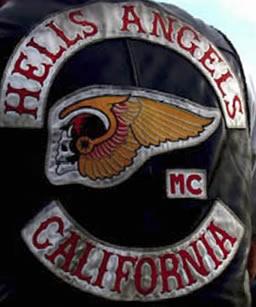
A state report helped turn the Hells Angels into a national controversy in 1965. Its impact was enormous—but not every allegation in its pages should be mistaken for an established fact.
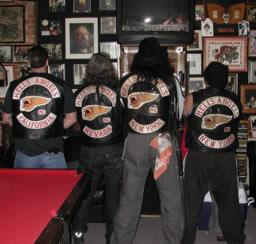
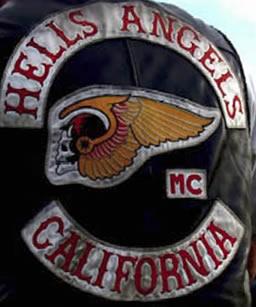
By the beginning of 1965, the Hells Angels already had a reputation in California.
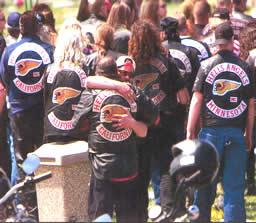
What they did not yet have was a national audience.
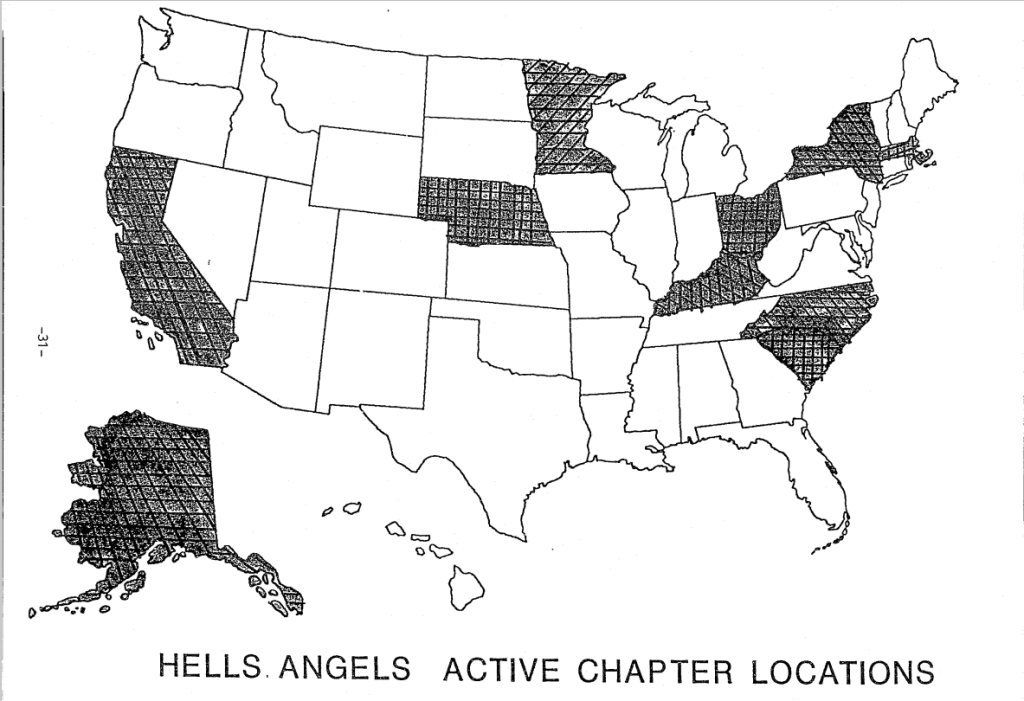
A report prepared by the California Department of Justice helped change that.
Later California court opinions identify the document as Hell's Angels Motorcycle Clubs, dated March 15, 1965. The report collected law-enforcement allegations about club members, including criminal records and descriptions of what authorities called "hoodlum activities."
Its importance went far beyond the pages themselves.
Government intelligence becomes mass media
The report circulated among police agencies, but the story escaped the law-enforcement world almost immediately.
National magazines and newspapers covered the Hells Angels as a new social threat. The visual material was irresistible: motorcycles, sleeveless colors, long hair, military-style insignia and groups of men who openly embraced an outsider identity.
The result was a national moral panic and a national branding event at the same time.
The club was being condemned and advertised by the same coverage.
The problem with the report
The 1965 document should not be treated as a list of proven convictions.
Later legal discussion makes clear that it described alleged activities attributed to members by law-enforcement agencies. Some incidents behind the wider panic were disputed or did not produce convictions.
A police allegation is evidence of what police believed or were investigating. It is not automatically proof that the alleged conduct occurred exactly as described.
Why the report still mattered
Even where individual allegations were weak or contested, the report changed the political and media environment.
It helped move outlaw motorcycle clubs from the category of local public-order problem into the language of organized crime.
That shift became more pronounced over the following decades. California organized-crime reports and federal agencies increasingly described Hells Angels chapters and members in connection with narcotics trafficking, violence and other criminal enterprises.
The 1965 report was an early bridge between those two eras.
Enter Hunter S. Thompson
The national publicity also created the opening for one of the strangest journalistic relationships of the decade.
Hunter S. Thompson began researching the Hells Angels after the media storm. Rather than rely entirely on police files and newspaper stories, he spent time around members and tried to understand the group as a subculture.
The resulting book would challenge parts of the panic while documenting violence and intimidation of its own.
That book did something the California report could not do.
It gave the Angels voices, personalities and a social world.
A reputation becomes an asset
The paradox of 1965 is that negative publicity increased the Hells Angels' power as a symbol.
Fear made the colors more recognizable. Newspaper attention made Sonny Barger more famous. Every story about outlaw bikers made the club more interesting to people attracted to precisely that image.
This does not mean the criminal allegations were invented merely for publicity.
It means the relationship between policing, journalism and outlaw identity became self-reinforcing.
After 1965, the Hells Angels no longer needed to enter a town for people to know what the name was supposed to mean.
The story had gone national.
What the document actually was
The report mattered because it carried the authority of the state. A rumor in a newspaper and an allegation inside a Department of Justice document do not have the same public effect, even when neither is a criminal conviction.
Later litigation preserved the report's significance in the legal record. California courts discussing the document treated it as a law-enforcement intelligence product that assembled descriptions and allegations from police sources. That makes it historically important, but it also tells us how to read it: as evidence of what authorities believed and circulated, not as a substitute for adjudicated facts.
The difference becomes especially important when an organization contains many chapters and members. A report may describe conduct associated with particular individuals, incidents or local groups while the public headline collapses everything into one name.
How a police file becomes a national image
The report arrived at a moment when national media were primed for stories about youth disorder, changing social norms and threats to conventional authority. The Hells Angels were visually perfect for that environment.
The motorcycles were loud. The colors were immediately recognizable. The clothing violated mainstream expectations. The club already possessed a reputation that reporters could package into a larger story about rebellion.
Once magazines and newspapers repeated the name, the coverage began creating its own subject. People who had never seen a Hells Angel now knew what they were supposed to look like. The colors became cultural shorthand.
Allegation, conviction and attribution
A law-enforcement agency can be an authoritative source for the fact that an investigation occurred, that a report was issued or that officials made a particular characterization. It is not automatically the final authority on whether every allegation in that report was proved.
That is why this story avoids sentences such as “the report proved the Hells Angels were…” Instead, it records that California authorities described members and activities in certain terms and that those descriptions drove national coverage.
This method becomes even more important in later Hells Angels history, where indictments, acquittals, convictions and dismissed charges exist side by side.
The report's unintended advertising effect
Negative publicity can strengthen an outlaw identity. The Hells Angels did not need favorable coverage to become famous. In some ways, hostile coverage was more useful to the image.
The report and the stories that followed associated the club with danger, lawlessness and refusal to conform. Those were exactly the qualities that made the organization fascinating to some outsiders.
The paradox is central to the Hells Angels story: the same institutions attempting to define the club as a problem helped make the club nationally recognizable.
That does not mean law enforcement created the underlying conduct. It means that publicity magnified the symbolic value of the conduct and allegations that were already present.
The road to Thompson
Hunter S. Thompson's project grew directly out of this media environment. He wanted to know what happened when the people behind the headlines were observed at close range.
That approach did not lead him to dismiss violence or intimidation. Instead, it gave him material to separate ordinary club life from the most sensational public claims.
His work would become powerful partly because readers had already been primed by the 1965 panic. The book promised access to a group they had been told to fear.
Why 1965 is a hinge point
Before 1965, the Hells Angels had a regional reputation and growing visibility. After 1965, they were a national cultural object.
The state report, the media reaction and the club's own response created a feedback loop that continued for decades. Police attention generated publicity. Publicity generated fascination. Fascination made the club more culturally significant, which generated still more scrutiny.
That loop is one of the reasons the Hells Angels became much more than a motorcycle organization. They became a symbol through which America argued about crime, freedom, masculinity, rebellion and social disorder.
What the record establishes — and what it does not
A California DOJ report dated March 15, 1965 documented law-enforcement allegations and became a major media catalyst.
Allegations catalogued by law enforcement were not all proven in court and should not be treated as convictions.
People and groups in this story
Don’t stop here
References
- LD 38 – Chapter 3: Organized Crime Gangs · California Commission on Peace Officer Standards and Training · View source ↗
- LD 38 – Chapter 3: Organized Crime Gangs · California Commission on Peace Officer Standards and Training · View source ↗
- Gatto v. County of Sonoma · California Court of Appeal / Justia · View source ↗
- Outlaw Motorcycle Gangs · Office of Justice Programs / NCJRS · View source ↗
- Sonny Barger, counterculture force and face of the Hells Angels, dies · Los Angeles Times · View source ↗