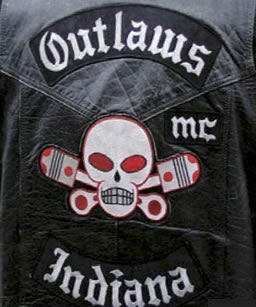
The Outlaws were part of American motorcycle history long before many of the best-known biker feuds. Their story stretches from prewar riding clubs into modern racketeering investigations—and the two eras are not interchangeable.
The Outlaws Motorcycle Club is one of the oldest major motorcycle clubs in the United States and one of the organizations most frequently identified by American law enforcement with the outlaw-motorcycle-gang category.
Its history stretches from prewar Midwestern motorcycle culture to modern federal racketeering cases. That long timeline is important because the organization that existed in the 1930s cannot simply be treated as identical in structure and activity to the organization described in twenty-first-century criminal prosecutions.
Origins in the Chicago area
Club histories date the Outlaws to 1935 in McCook, Illinois, outside Chicago.
The early organization was known as the McCook Outlaws Motorcycle Club. Published club histories describe reduced activity during the Second World War and a revival in the immediate postwar period.
By 1950, the organization had expanded through the Chicago area and adopted the Chicago Outlaws name.
The club’s famous skull-and-crossed-pistons imagery developed over the following years. The insignia, often called “Charlie,” became one of the most recognizable patches in motorcycle-club culture.
From riding club to one-percenter identity
The Outlaws predate the later “one-percenter” label and the formal outlaw-club culture that developed after the Second World War.
As motorcycle clubs became more structured during the 1950s and 1960s, the Outlaws developed the chapter system and national identity associated with the modern organization.
The initials A.O.A.—American Outlaws Association—appear repeatedly in federal cases and law-enforcement material.
That institutional continuity is one reason the Outlaws matter historically: the club connects the early riding-club era with the later world of national and international outlaw motorcycle organizations.
Chapter structure and the Great Lakes base
The Outlaws expanded through local chapters tied to regional and national leadership.
Archived U.S. Justice Department material described the organization as especially dominant in the Great Lakes region and identified chapters across many U.S. states and foreign countries.
Historical membership counts should not be treated as current statistics. Law-enforcement estimates are snapshots tied to the date of the report.
The durable point is geographic rather than numerical: the Outlaws developed a strong Midwest and Great Lakes base and later extended its presence beyond that core.
The Hells Angels rivalry
The Outlaws’ rivalry with the Hells Angels is one of the longest-running relationships in outlaw-motorcycle-club history.
Federal prosecutions have documented repeated episodes in which territory, chapter expansion and the display or seizure of club colors became triggers for violence.
The Justice Department’s 2010 prosecution of Outlaws national leadership described planned or completed violent acts against rival motorcycle clubs in Virginia, Maine, Florida and the Midwest.
Evidence at trial included conflict over a new Outlaws clubhouse in Rock Hill, South Carolina, in territory regarded as associated with the Hells Angels, as well as retaliatory violence after Outlaws members were assaulted in Connecticut.
The 2007 Gerard Tobin murder
The rivalry also became a major criminal case in the United Kingdom.
In August 2007, Hells Angels member Gerard Tobin was shot and killed while riding home from a motorcycle event on the M40 motorway.
A police case study later described the killing as an organized attack carried out by Outlaws members against a rival Hells Angels member.
The Tobin case is important because it shows that the rivalry was not limited to the United States. As both organizations expanded internationally, local chapter conflicts could reproduce older antagonisms in new countries.
Jack Rosga and the 2010 federal case
One of the strongest U.S. cases against the organization targeted national president Jack Rosga and other members.
In December 2010, a federal jury in Virginia convicted Rosga and three other defendants of participating in a violent criminal organization.
The Justice Department said evidence at trial showed planned violence against rival motorcycle clubs, narcotics activity and firearms use.
Rosga was sentenced in April 2011 to twenty years in federal prison.
That case matters because it moved beyond generic law-enforcement descriptions. It placed a national president and specific associates before a jury and produced convictions based on conduct established at trial.
A longer federal record
The 2010 prosecution was not an isolated event.
Federal cases in Detroit, Indianapolis and other jurisdictions have produced guilty pleas and convictions involving Outlaws members on charges that included violent crimes in aid of racketeering, drug trafficking, firearms offenses, extortion, gambling and fraud.
Again, the correct historical unit is the defendant and the case. A conviction involving an Outlaws member does not establish the criminal liability of every member or chapter.
The organization-level page is useful because it shows recurring patterns across jurisdictions without erasing those legal distinctions.
Support clubs and organizational layers
Federal law-enforcement material has described the Black Pistons as a support club associated with the Outlaws.
Support clubs matter because they show that motorcycle-club networks can include multiple layers of affiliation.
A support organization may provide recruitment, social connections or local influence without being identical to the parent club.
That layered structure complicates simplistic descriptions of “membership.” A person can be connected to a wider club environment without holding the same status as a fully patched member.
The 2026 Florida arson case
The Outlaws name continued to appear in federal prosecutions in the mid-2020s.
In March 2026, Gregory E. Simonds Jr., identified by prosecutors as an Outlaws Motorcycle Club member in Pensacola, pleaded guilty to federal arson charges involving an explosive.
Court documents said the incident occurred during a February 2025 confrontation involving people associated with the Pagans Motorcycle Club in Fort Walton Beach, Florida. The explosive damaged a nearby restaurant and injured an employee.
Because Simonds pleaded guilty, that specific conduct is established differently from an unresolved indictment. The case nevertheless concerns one defendant; it should not be generalized to every Outlaws chapter.
Mythology versus evidence
The Outlaws are surrounded by the same mythmaking that affects other long-running motorcycle clubs.
Stories about secret rules, permanent alliances, universal orders and fixed territorial maps are often repeated without dates or primary sources.
The stronger historical approach relies on specific records: a founding claim, a named chapter, a court case, a police report, a conviction or a documented rivalry episode.
This is especially important because chapter-based organizations can change over time. Leadership, alliances and local conflicts are not frozen across decades.
Why the Outlaws matter
The Outlaws matter because they provide historical depth to the entire outlaw-motorcycle-club cluster.
They connect prewar American motorcycle culture to postwar one-percenter identity, Midwest chapter expansion, the Hells Angels rivalry, European conflict and modern racketeering prosecutions.
The strongest connected histories are the Hells Angels rivalry, the Gerard Tobin murder, the 2010 Jack Rosga prosecution, the Black Pistons support-club relationship and the broader network of Pagans, Bandidos and other major motorcycle organizations.
The most accurate picture is neither a romantic brotherhood story nor a claim that every person attached to the Outlaws shares responsibility for every crime committed by a member. The useful history lies in the documented structure between those extremes.
Portrayed on Screen
The Bikeriders
The Vandals are fictional, but the club culture underneath them comes directly from Danny Lyon’s years with the real Chicago Outlaws.
People who shaped this story
Events that define the record
Murder of Gerard Tobin (2007)
The targeted shooting of Hells Angels UK member Gerard Tobin on the M40 in Warwickshire after he left the Bulldog Bash in August 2007.
Rivals, allies and counterpart organizations
Related series
References
-
[1]2011 National Gang Threat AssessmentTier 1MentionsSupportsView source ↗
-
[2]Investigation into the Murder of Hell's Angel Gerard Tobin on the M40Tier 1SupportsMentionsView source ↗
-
[3]United States v. Ralph Hubert Barger, 931 F.2d 359Tier 1SupportsView source ↗
-
[4]Outlaw Motorcycle Gangs (OMGs)Tier 1MentionsSupportsView source ↗
-
[5]Outlaws Motorcycle Gang Members Found GuiltyTier 1MentionsSupportsView source ↗
-
[6]Outlaws Motorcycle National President Sentenced to 20 Years in PrisonTier 1SupportsMentionsView source ↗
-
[7]Pensacola Member of Outlaws Motorcycle Club Pleads Guilty to ArsonTier 1MentionsSupportsView source ↗
-
[8]Lokal trusselvurdering Vest politidistrikt 2024–2025Tier 1SupportsView source ↗
-
[9]HistoryTier 2MentionsView source ↗