
Before gonzo journalism became a label, Hunter S. Thompson immersed himself in the Hells Angels story. The resulting book transformed the club’s public image—and made the reporter part of the story.
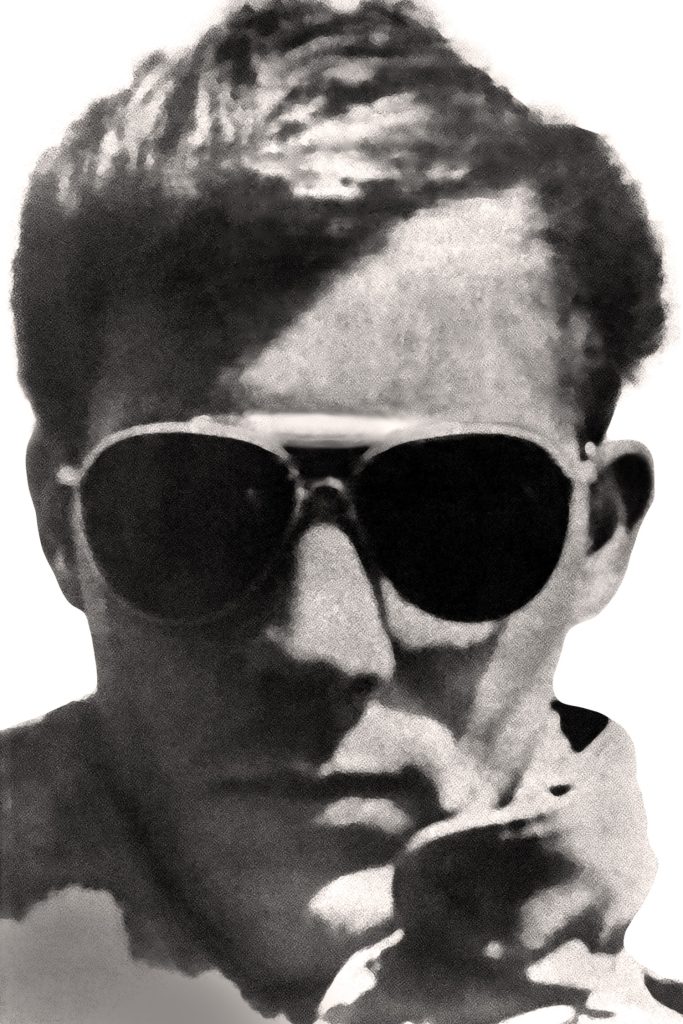

The Hells Angels were already famous when Hunter S. Thompson wrote about them.
What Thompson changed was the kind of fame they had.
The California Department of Justice and national magazines had presented the club largely as a threat. Thompson approached the same world as a reporter trying to understand the people inside it.
His work eventually became Hell's Angels: The Strange and Terrible Saga of the Outlaw Motorcycle Gangs.
Reporting from inside the myth
Thompson spent extended time around Hells Angels members in California.
That access allowed him to see ordinary hours that rarely appeared in law-enforcement reports: drinking, mechanical work, arguments, boredom, friendship, status competition and the endless performance of toughness.
He did not produce a sympathetic club history.
The book contains violence, misogyny, intimidation and a deep skepticism about romantic outlaw narratives.
But it also challenged the idea that every sensational claim repeated in the press was automatically true.
Sonny Barger as a character
One of the book's lasting effects was to make Sonny Barger legible to a national readership.
Barger appears not as an anonymous gang member but as a political and organizational personality inside the club.
That distinction mattered.
Readers now had a face to attach to the name Hells Angels. The club could be understood through personalities, arguments and internal logic rather than only through police statistics.
For Barger, that visibility became a long-term asset.
The book and the brand
The first-edition dust jacket became part of the visual mythology around the club.
The title itself helped cement a spelling and identity already loaded with associations: war films, biker movies, rebellion and danger.
Thompson's book sold the Hells Angels to mainstream readers while warning them not to romanticize what they were reading.
That contradiction is one reason the book endured.
Journalism becomes part of the story
The Hells Angels history cannot be separated from the people who documented them.
Police reports influenced journalists. Journalists influenced public perception. Public perception influenced recruiting, law enforcement and the club's own sense of identity.
Thompson became part of that feedback loop.
His relationship with the club eventually broke down violently. That ending reinforced one of the book's central lessons: access did not make the Angels harmless, and fascination did not erase the power dynamics inside the group.
From page to stage
By the end of the 1960s, the Hells Angels were embedded in the wider counterculture story.
They appeared around musicians, at parties and in films. Their colors became instantly recognizable.
Then came Altamont.
The free concert in December 1969 turned years of press mythology into a real, filmed confrontation in front of a massive crowd.
For anyone who had read Thompson, the Hells Angels were already more than strangers on motorcycles.
At Altamont, the rest of the world got the image.
Why Thompson's access mattered
Most outsiders encountered the Hells Angels through police statements or compressed newspaper reports. Thompson's method was different because he stayed close enough to observe the gap between public performance and daily life.
That access did not make him an insider in the institutional sense. He remained a writer using the club as a subject. But the length of the relationship allowed him to describe details that short news encounters could not capture: how status worked, how members talked among themselves, how boredom and drinking occupied time, and how quickly group solidarity could become intimidation.
The book's value comes partly from that tension. Thompson was fascinated by the Angels and increasingly skeptical of the mythology surrounding them, including mythology created by the Angels themselves.
The book did not replace the police story
It is tempting to describe Thompson as the corrective to the 1965 California report. The relationship is more complicated.
He challenged sensational claims and mocked parts of the moral panic, but he also described behavior that was violent, coercive and misogynistic. His account did not transform the club into misunderstood folk heroes.
Instead, it made the story harder to simplify. The Hells Angels could be targets of exaggerated reporting and still be capable of serious violence. Members could resent mainstream institutions while also cultivating a threatening reputation because that reputation had social value inside and outside the club.
Sonny Barger on the page
Barger became especially important because Thompson's readers encountered him as a recognizable personality rather than an anonymous symbol.
He appeared as someone who could articulate the club's position, manage relationships with outsiders and defend a code that many readers would find alien. That helped establish the public role Barger would occupy for decades.
The effect was larger than one man's reputation. Once the Hells Angels had named personalities, the organization became narratively durable. Journalists could follow individuals, conflicts and chapters over time.
The dust jacket as historical evidence
The first-edition dust jacket is useful not because a book cover proves anything about the club's conduct, but because it shows how quickly imagery became part of the story.
The back patch dominates the design. The reader sees the club before opening the book. That visual emphasis reflects the same logic that made newspaper photography so powerful: colors converted a complicated organization into a single recognizable image.
The jacket itself is now part of the archival record of how the Hells Angels were sold to the mainstream public.
When observation becomes involvement
Thompson's access eventually broke down. His relationship with members ended in violence after a dispute in which he intervened during an altercation. That ending matters because it destroys the fantasy that close observation made the relationship safe or equal.
The reporter had entered the social world he was documenting, but he did not control it.
That episode also foreshadowed a recurring problem in Hells Angels coverage: outsiders were drawn to the club because proximity promised authenticity, while the same proximity could expose them to risks that ordinary reporting kept at a distance.
The lasting impact
The book became one of the foundational texts of what would later be associated with Thompson's gonzo persona, but its influence on Hells Angels history is just as important.
For millions of readers, the club became more than a headline. It became a social universe with language, rituals, personalities and contradictions.
That cultural visibility helped ensure that when the Hells Angels appeared at later public events, especially Altamont, audiences already knew the symbolic role they were expected to play.
The club had been transformed from a California subculture into a national narrative character. Thompson did not create that transformation by himself, but his book gave it depth and permanence.
What the record establishes — and what it does not
Thompson spent extended time around Hells Angels members and published an influential book about the club.
Thompson's reporting is not a neutral administrative record; it is journalism shaped by access, conflict and authorial perspective.
People and groups in this story
Don’t stop here
References
- Gatto v. County of Sonoma · California Court of Appeal / Justia · View source ↗
- Sonny Barger, counterculture force and face of the Hells Angels, dies · Los Angeles Times · View source ↗