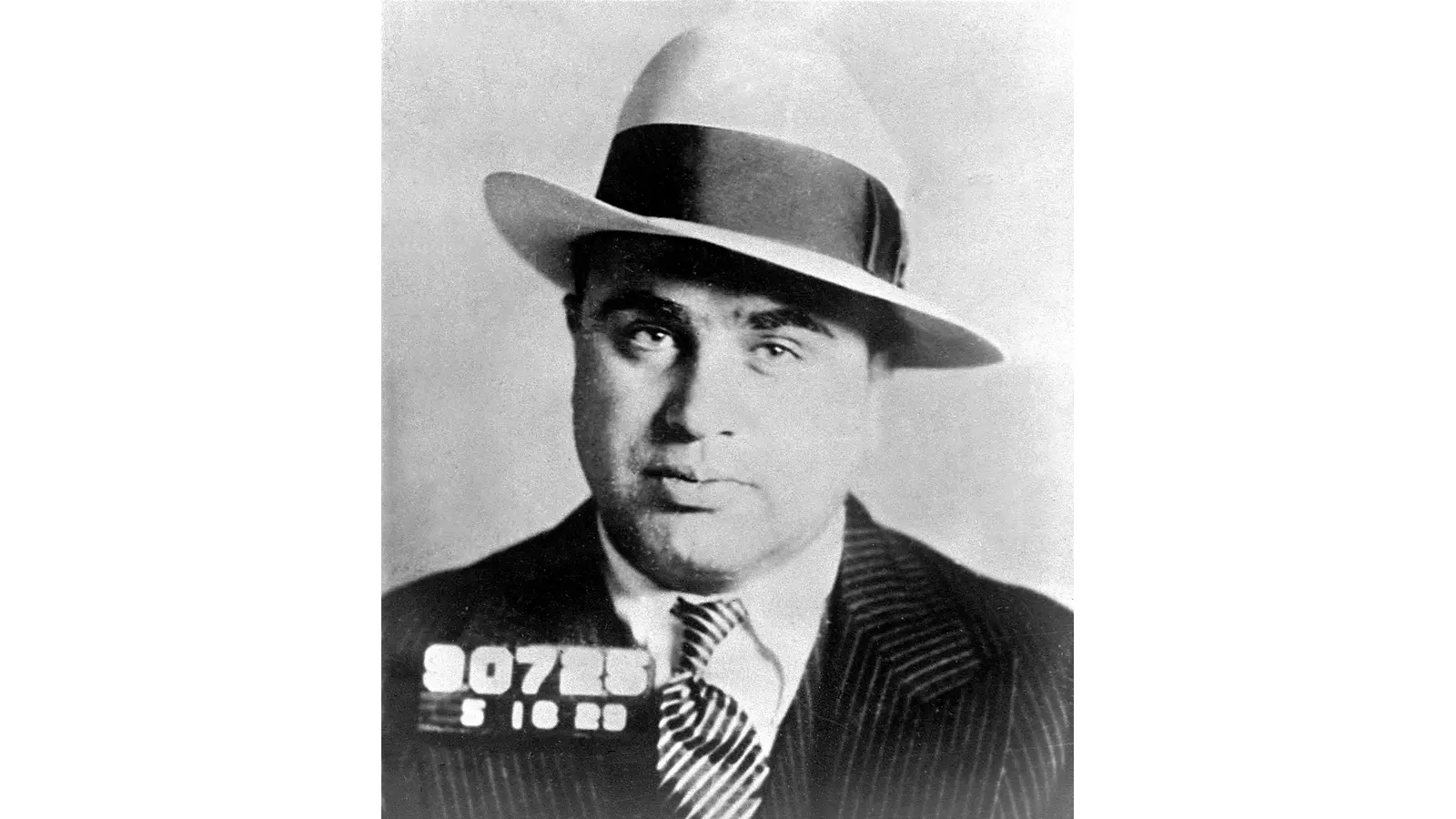
The Chicago Outfit became one of the most durable organized-crime organizations in the United States. Its public image is dominated by Al Capone, but the organization was never simply one man’s gang. It grew out of older Chicago vice networks, expanded dramatically during Prohibition, survived Capone’s imprisonment, and continued through changing leadership and changing rackets long after the bootlegging era ended.
That continuity is what makes the Outfit important. It connects the city’s early twentieth-century vice economy to the Beer Wars, the rise of Capone, the North Side rivalry, federal tax prosecution, post-Prohibition gambling, and later federal investigations into a criminal structure that had outlived the era that made it famous.
Before Capone
Chicago already had organized vice before national Prohibition. Saloons, gambling, prostitution, political protection and neighborhood power networks created an environment in which criminal groups could make money by controlling territory and relationships rather than by committing isolated crimes.
Johnny Torrio became one of the most important figures in that transition. He worked with James “Big Jim” Colosimo and helped build a South Side organization with interests in vice and protection. Torrio’s importance was organizational: he understood that money could be made more reliably through networks, political contacts and controlled markets than through random street crime.
Al Capone, who had known Torrio in New York, later joined him in Chicago.
Prohibition changes the scale
National Prohibition transformed the economics of organized crime.
Alcohol demand did not disappear when legal production and sale were restricted. Instead, the market moved underground. A successful bootlegging organization needed breweries or suppliers, storage, trucks, drivers, distributors, speakeasy customers, corrupt protection and people able to enforce agreements when legal courts could not be used.
The South Side organization was well positioned to exploit that market.
Bootlegging therefore changed more than revenue. It changed the scale of organization. Criminal groups that had once focused on neighborhood vice could now compete over supply chains, routes and wholesale distribution.
That competition helped produce the violence remembered as the Chicago Beer Wars.
Torrio’s attempted assassination
On January 24, 1925, Johnny Torrio survived an assassination attempt outside his home.
The attack came during a period of intense conflict between the South Side organization and the North Side Gang. Torrio was badly wounded.
Soon afterward, he withdrew from day-to-day leadership.
That transition elevated Capone from an important lieutenant to the dominant public figure in the South Side organization.
Capone inherited something larger than a group of gunmen. He inherited a criminal business structure with money, territory, political connections, enforcement capacity and distribution networks.
Capone becomes the public face
Capone’s name became almost inseparable from Chicago organized crime during the second half of the 1920s.
He was unusually visible. Newspapers followed his movements, quoted him, photographed him and turned him into a national figure.
That publicity distorted the structure around him.
The organization depended on many people whose names were less famous: managers, bookmakers, drivers, political intermediaries, enforcers, business fronts and associates who handled specific neighborhoods or rackets.
Capone was the most recognizable node in the network, not the entire network.
The North Side rivalry
The Outfit’s best-known enemy was the North Side Gang.
Dean O’Banion became one of the central figures in that organization. He was killed in his flower shop in November 1924.
Hymie Weiss emerged as a leading North Side figure after O’Banion’s death. Weiss was killed in October 1926 near Holy Name Cathedral.
George “Bugs” Moran later became the organization’s best-known surviving leader.
The conflict between the South Side and North Side organizations involved territory, bootlegging markets, retaliation and personal rivalries. It was not one continuous formal war with a single chain of command, but repeated violence created a cycle in which one killing could produce another.
The Genna network
The Genna brothers controlled a powerful West Side bootlegging network and became another important part of Chicago’s Prohibition-era criminal landscape.
Their organization had its own territory and alliances. Several brothers were killed during the violent middle years of the decade.
The collapse of the Genna leadership helped reshape the balance of power in Chicago.
The city’s underworld was therefore not simply divided into “Capone versus Moran.” Several organizations, neighborhood groups and political interests overlapped and competed.
Understanding that wider field makes the Outfit’s rise more intelligible.
The Hawthorne Hotel attack
On September 20, 1926, gunmen attacked the Hawthorne Hotel in Cicero, where Capone was based.
The assault became one of the most dramatic episodes of the Beer Wars.
The attack showed how vulnerable even a heavily protected leader could be. It also demonstrated the scale of retaliatory violence that had become possible once criminal organizations had access to money, vehicles, automatic weapons and large numbers of armed associates.
Capone survived.
The attack did not end the rivalry, but it became part of the escalating mythology around him.
The St. Valentine’s Day Massacre
On February 14, 1929, seven men connected to the North Side organization were killed in a garage on North Clark Street.
The killings became known as the St. Valentine’s Day Massacre.
Capone’s organization was widely suspected of responsibility, and the event has remained associated with his name in popular history.
No one was convicted for the seven murders.
That distinction matters. Historical suspicion, contemporary police theories and later accounts should not be presented as if they were a criminal judgment.
The massacre nevertheless changed public perception. Chicago gang violence was no longer merely a local problem in newspaper reporting. It became a national symbol of Prohibition-era organized crime.
Money, corruption and protection
The Outfit’s power depended on more than violence.
A bootlegging network required protection from investigation and disruption. Political corruption, bribery and relationships with local officials could be as valuable as armed enforcement.
The organization also used legitimate businesses and financial arrangements to move and disguise money.
This is one reason the public focus on spectacular shootings can be misleading. Violence attracted attention, but continuity came from administration.
The criminal organization survived because it could manage money, people, territory and influence.
Why federal investigators pursued Capone through taxes
Capone’s notoriety created pressure for action, but proving his direct responsibility for major acts of violence was difficult.
Witnesses could disappear, refuse to cooperate or fear retaliation. Local investigations could be compromised. Orders might be passed through intermediaries.
Federal investigators eventually concentrated on financial offenses that could be supported through records and testimony.
In 1931, Capone was convicted of federal income-tax evasion.
He received an eleven-year prison sentence.
The conviction removed the organization’s most famous leader, but it did not dismantle the structure around him.
The Outfit after Capone
This is the point where the organization’s history separates most clearly from Capone’s biography.
Organized crime in Chicago continued after his imprisonment.
The FBI later described the Chicago mob as a single La Cosa Nostra family commonly known as the Outfit. Unlike New York, where the Five Families became the dominant public model, Chicago developed a different internal structure organized through crews and long-running networks.
Leadership changed over time.
Some figures operated publicly; others preferred less visibility than Capone had.
The organization’s survival demonstrated that the system had become more important than any individual boss.
After Prohibition
Repeal removed the extraordinary profits created by the illegal alcohol market, but the organization did not disappear.
Illegal gambling, bookmaking, loansharking and other rackets provided replacement income.
The relationships created during Prohibition also remained valuable.
People who knew how to move money, influence officials, intimidate witnesses and organize illegal markets could apply those skills to new businesses.
The end of Prohibition therefore changed the Outfit’s revenue mix rather than ending the organization.
A national network
Later federal investigations connected Chicago organized crime to activity beyond Illinois.
The Outfit became associated with gambling interests, labor racketeering and influence in Las Vegas.
Those later chapters belong to a different era from Capone’s Beer Wars, but they show the same underlying principle: criminal organizations survive by adapting.
The specific rackets change.
The network remains useful.
The 1963 FBI chart
A 1963 FBI organizational chart of the Chicago Outfit is especially valuable because it visually demonstrates how far the organization had moved beyond the Capone era.
The chart presents a hierarchy and network decades after Capone’s conviction.
That document helps correct one of the most persistent misconceptions about Chicago organized crime.
Capone was not the end of the story.
By the 1960s, federal investigators were still mapping an organization they understood as a continuing criminal structure.
Operation Family Secrets
Decades later, the FBI’s Operation Family Secrets again focused national attention on the Chicago Outfit.
The investigation examined murders, extortion and other organized-crime activity tied to later generations of the organization.
That case belongs to a much later period than Prohibition, but it reinforces the central point of the Outfit’s history: the organization persisted through leadership changes and changing criminal markets.
The distance between Capone and later federal prosecutions is not a weakness in the story.
It is the story.
Key people
Johnny Torrio helped shape the organization before Capone became its public leader.
Al Capone turned the South Side network into the most famous criminal organization of Prohibition-era Chicago.
Dean O’Banion, Hymie Weiss and George “Bugs” Moran became central figures on the opposing North Side.
Those people should not be read as isolated biographies. Their importance comes from the relationships among them.
Each profile opens another part of the same network.
Key events
Several events define the Outfit’s Prohibition-era rise and conflict:
– the attempted assassination of Johnny Torrio in 1925 – the murder of Dean O’Banion – the murder of Hymie Weiss – the Hawthorne Hotel attack on Al Capone – the St. Valentine’s Day Massacre – Capone’s 1931 federal tax-evasion conviction
Each event represents a different mechanism of organized-crime history: succession, retaliation, territorial violence, publicity and federal prosecution.
Connected organizations
The North Side Gang was the Outfit’s most important documented rival during the Beer Wars.
The Genna Crime Family was another major participant in Chicago’s Prohibition-era underworld.
The Chicago Beer Wars Series connects these organizations, their leaders and their major events in chronological order.
That structure is more useful than treating the Outfit as a closed biography.
The organization is a hub.
Why the Chicago Outfit matters
It links people, organizations and events across decades.
It connects Johnny Torrio to Al Capone.
It connects Capone to the North Side Gang.
It connects the North Side Gang to Dean O’Banion, Hymie Weiss and Bugs Moran.
It connects those rivalries to the Hawthorne Hotel attack and the St. Valentine’s Day Massacre.
It connects Prohibition-era violence to federal financial prosecution.
And it connects the 1920s to later federal investigations showing that Chicago organized crime survived long after its most famous figure disappeared from power.
The Outfit is therefore not merely one organization page.
It is one of the main gateways through the history of organized crime in Chicago.
Connected to the Screen Story
Casino
Scorsese’s Casino fictionalizes the Las Vegas world of Frank Rosenthal, Anthony Spilotro, Geri McGee and the Midwest mob’s casino skim.
People who shaped this story
Events that define the record
The Attempted Assassination of Johnny Torrio
Johnny Torrio survived a January 1925 shooting outside his Chicago home; the attack preceded his withdrawal from day-to-day leadership and Al Capone’s rise to…
Chicago, IllinoisAl Capone Is Convicted of Tax Evasion
A federal jury convicted Al Capone on income-tax charges in October 1931; the case succeeded where attempts to prosecute him for Chicago gang violence…
Chicago, IllinoisOperation Strawman and the Las Vegas Casino Skim Prosecutions
Federal investigations and prosecutions exposed the Las Vegas casino skim that moved unreported cash from casinos to organized-crime interests in Chicago, Kansas City and…
Tropicana Casino Skim, 1978–1979
A separate Las Vegas casino-skimming conspiracy in which money was removed from the Tropicana, moved to Kansas City and distributed among organized-crime interests in…
Rivals, allies and counterpart organizations
Related series
References
-
[1]Crime and Chicago's ImageTier 1SupportsView source ↗
-
[2]St. Valentine's Day MassacreTier 1SupportsView source ↗
-
[3]Al Capone Part 7 of 36Tier 1SupportsView source ↗
-
[4]Al Capone Part 8 of 36Tier 1SupportsView source ↗
-
[5]Al CaponeTier 1SupportsMentionsView source ↗
-
[6]Al CaponeTier 1SupportsMentionsView source ↗
-
[7]Anthony AccardoTier 1SupportsView source ↗
-
[8]Anthony SpilotroTier 1SupportsView source ↗
-
[9]Frank NittiTier 1SupportsView source ↗
-
[10]Joseph AiuppaTier 1SupportsView source ↗
-
[11]Kansas City Field Office HistoryTier 1SupportsView source ↗
-
[12]Milwaukee Field Office HistoryTier 1SupportsView source ↗
-
[13]Salvatore (Sam) GiancanaTier 1SupportsView source ↗
-
[14]The Chicago MafiaTier 1MentionsSupportsView source ↗
-
[15]The FBI and the American Gangster, 1924-1938Tier 1SupportsMentionsView source ↗
-
[16]The FBI and the American Gangster, 1924–1938Tier 1Supports
-
[17]1963 FBI chart of the Chicago OutfitTier 1MentionsView source ↗
-
[18]Al Capone Sentenced for Tax EvasionTier 1SupportsView source ↗
-
[19]IRS History TimelineTier 1SupportsView source ↗
-
[20]How Good a Match is It? Putting Statistics into Forensic Firearms IdentificationTier 1SupportsView source ↗
-
[21]Lessons from the “Trial of the Century” and early forensic science effortsTier 1SupportsView source ↗
-
[22]United States v. Cerone et al., 830 F.2d 938 (8th Cir. 1987)Tier 1SupportsMentionsView source ↗
-
[23]United States v. Cerone et al., 830 F.2d 938 (8th Cir. 1987)Tier 1SupportsView source ↗
-
[24]United States v. DeLuna, 763 F.2d 897 (8th Cir. 1985)Tier 1SupportsView source ↗
-
[25]United States v. Thomas, DeLuna and Chiavola, 759 F.2d 659 (8th Cir. 1985)Tier 1SupportsView source ↗
-
[26]From The Archives - May 2014: Hymie WeissTier 2SupportsView source ↗
-
[27]From the Archives — Paul RiccaTier 2SupportsView source ↗
-
[28]When Al Capone’s Henchmen Marked Valentine’s Day With a Bloody MassacreTier 2SupportsView source ↗
-
[29]“Machine Gun” Jack McGurn leads list of notorious Mob hitmenTier 2SupportsView source ↗
-
[30]Allen Glick, 1970s owner of Las Vegas casinos skimmed by Mob, has diedTier 2SupportsView source ↗
-
[31]Battle for Las VegasTier 2SupportsView source ↗
-
[32]Chicago Outfit boss Sam Giancana killed 50 years agoTier 2SupportsView source ↗
-
[33]Chicago Outfit mobster Tony Spilotro and brother Michael murdered 40 years agoTier 2SupportsView source ↗
-
[34]Dean O’BanionTier 2SupportsView source ↗
-
[35]Feds agree to reduce oversight of once-Mob-corrupted Teamsters UnionTier 2SupportsView source ↗
-
[36]Frank “Lefty” RosenthalTier 2SupportsView source ↗
-
[37]Odd Facts and Stories from ProhibitionTier 2SupportsView source ↗
-
[38]Robert F. Kennedy’s Crusade Against the Mob: Part 3Tier 2SupportsView source ↗
-
[39]The Kansas City connectionTier 2SupportsView source ↗
-
[40]Tony AccardoTier 2SupportsView source ↗
-
[41]Former Teamsters President Details Union's Mafia TiesTier 2SupportsView source ↗
-
[42]Allen Glick testimony in Las Vegas casino-skimming trial, November 8, 1985Tier 2SupportsView source ↗
-
[43]Federal sentencing in the Tropicana casino-skimming conspiracyTier 2SupportsView source ↗
-
[44]Wikipedia: Jake GuzikTier 3SupportsView source ↗