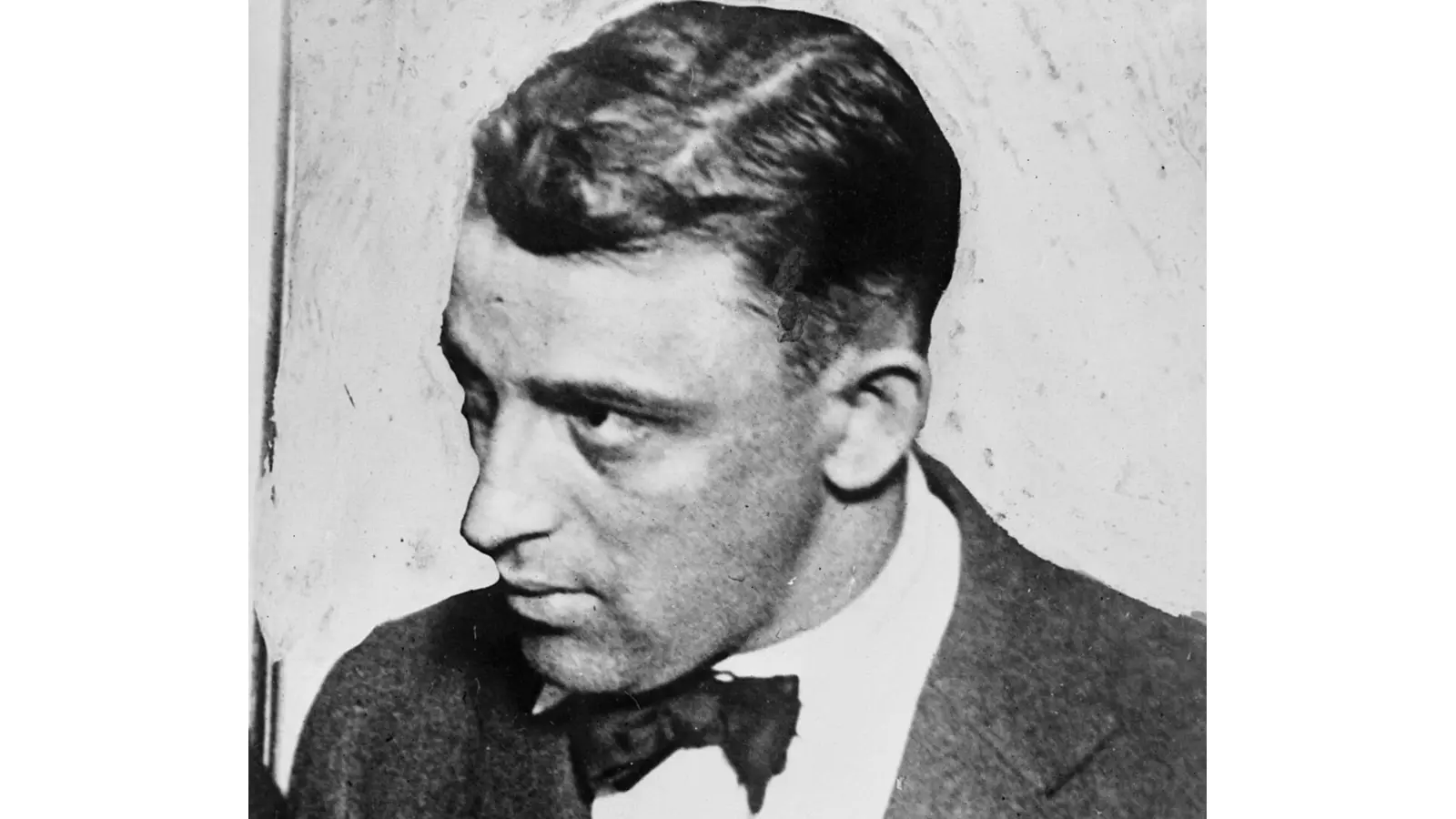
The North Side Gang was one of the organizations that defined Chicago’s Prohibition-era underworld. Its best-known leaders — Dean O’Banion, Hymie Weiss and George “Bugs” Moran — fought for bootlegging territory, political protection and survival against the South Side organization that evolved into the Chicago Outfit.
The gang is remembered because of spectacular violence: O’Banion’s murder in 1924, the shooting of Johnny Torrio in 1925, the machine-gun attack on Al Capone’s Hawthorne Hotel base in 1926, Weiss’s murder later that year and the St. Valentine’s Day Massacre in 1929. But those events make more sense when the North Side Gang is treated as an organization rather than as a collection of famous shootings.
It was a criminal business network competing in an illegal market created by Prohibition.
A Prohibition organization, not just a street gang
National Prohibition created an enormous illegal market for beer and liquor. Chicago’s criminal groups could make money by producing alcohol, moving it, storing it and selling it through speakeasies and other outlets. That required more than armed men. It required trucks, warehouses, breweries, distributors, political contacts, bribery and people who could enforce agreements when ordinary contracts had no legal protection.
The North Side Gang grew inside that environment.
Its territory centered on Chicago’s North Side and the wealthy Gold Coast. Dean O’Banion became its most visible early leader and built a reputation that combined underworld power with a surprisingly public presence. His flower shop near Holy Name Cathedral was a legitimate business, a meeting place and eventually the scene of his murder.
The gang’s location mattered. Control of neighborhoods meant access to customers, storage points, transport routes and political relationships. A territorial dispute was therefore not simply about pride. It could threaten a large stream of illegal revenue.
O’Banion and the uneasy peace with Torrio
The North Side organization did not begin in permanent war with Johnny Torrio’s South Side group.
Around the early years of Prohibition, O’Banion and Torrio reached arrangements intended to divide territory and reduce conflict. O’Banion retained the North Side and Gold Coast, while business interests could overlap when cooperation made more money than violence.
That peace was always fragile.
Chicago’s bootlegging economy contained several competing organizations. One of the most important was the Genna network on the West Side. The Gennas were aligned with Torrio’s side and expanded aggressively in the illegal alcohol trade.
For O’Banion, their movement into markets he considered his own was a direct threat.
The dispute became personal as well as commercial. Accounts of the period describe arguments over gambling debts, territory and the sale of the Sieben Brewery. Whatever combination of grievances finally destroyed the relationship, by 1924 the earlier accommodation between the North Side and South Side organizations had broken down.
The murder of Dean O’Banion
On November 10, 1924, O’Banion was shot to death inside his flower shop.
The killing became one of the defining moments of the Chicago Beer Wars. Contemporary and later historical accounts connect Frankie Yale and gunmen associated with the Genna organization to the murder, while the broader conflict tied the killing to the Torrio–Capone side of Chicago’s underworld.
The important organizational consequence is clear even where individual responsibility remains a matter of historical reconstruction.
O’Banion’s death did not destroy the North Side Gang.
It produced a succession.
Hymie Weiss emerged as the most important leader in the next phase, and the conflict became more violent.
Weiss, retaliation and the attack on Johnny Torrio
The North Side response to O’Banion’s murder was not limited to mourning or a change of leadership.
Retaliatory violence followed.
In January 1925, Johnny Torrio was shot and seriously wounded outside his home. Historical accounts associate Weiss and other North Side figures with the attempt. Torrio survived, but the attack had consequences far beyond the failed killing itself.
After recovering, Torrio withdrew from active leadership and Al Capone became the dominant figure in the South Side organization.
That transition changed the rivalry.
The North Side Gang was no longer primarily confronting Torrio’s network. It was now facing the organization identified publicly with Capone.
Capone’s visibility would later dominate the popular memory of the era, but the North Side Gang remained one of the main reasons his organization faced sustained armed opposition inside Chicago.
The war reaches Cicero
By 1926, the conflict had become capable of producing attacks on a scale that looked more like military action than an ordinary gang shooting.
On September 20, 1926, gunmen attacked the Hawthorne Hotel in Cicero, where Capone maintained a base of operations. The attack involved sustained automatic-weapons fire and became one of the most dramatic episodes of the Beer Wars.
Capone survived.
The significance of the attack was not only that a famous gangster escaped death. It showed how far the organizations had moved from small groups of neighborhood criminals. They had money, vehicles, automatic weapons, safe locations and enough manpower to organize complex retaliatory attacks.
Violence had become part of the operating environment of the business.
The murder of Hymie Weiss
Less than a month after the Hawthorne Hotel attack, the North Side Gang lost another leader.
On October 11, 1926, Hymie Weiss was shot near Holy Name Cathedral, close to the same flower-shop location associated with O’Banion.
Weiss’s death removed the man who had become the North Side organization’s most visible leader after O’Banion.
Again, the organization survived the killing of its leader.
Leadership passed through another transition before George “Bugs” Moran became the gang’s best-known surviving boss. By the late 1920s, Moran was the name most closely associated with the North Side resistance to Capone.
The repeated succession is important. The history of the North Side Gang is not the biography of one man. It is the history of an organization that continued through several leadership deaths.
Bugs Moran and a weakened but dangerous organization
Moran inherited a gang that had already lost O’Banion and Weiss and had spent years in violent conflict.
He nevertheless remained a significant rival.
The North Side organization continued to compete in bootlegging and protection rackets and remained an obstacle to Capone’s dominance. Federal and Chicago historical sources still describe the conflict in terms of the Capone and Moran organizations because both networks retained the capacity for serious violence.
Moran’s position also shows why the story should not be reduced to a simple sequence in which Capone eliminated every rival immediately.
The North Side Gang was weakened repeatedly, but it endured.
That endurance made the events of February 1929 especially important.
The St. Valentine’s Day Massacre
On February 14, 1929, seven men were killed inside a garage at 2122 North Clark Street used by Moran’s organization.
The attackers posed as police officers conducting a raid. The victims were lined up and machine-gunned.
Moran was not among the dead.
The massacre became the most famous single act of violence connected to the Chicago gang wars. Capone’s organization was widely suspected, but no one was convicted for the seven murders. That distinction is essential: historical attribution and public suspicion are not the same thing as a proven criminal judgment.
For the North Side Gang, however, the organizational damage was real regardless of who could be convicted.
The massacre killed members and associates, intensified public attention and reinforced the perception that Moran’s organization was losing its struggle with the Outfit.
Why the massacre did not instantly end the gang
Popular retellings often treat the St. Valentine’s Day Massacre as the instant destruction of the North Side Gang.
The reality was slower.
Moran survived and remained active. The organization still had people, contacts and criminal experience. But it had suffered years of leadership losses and violent attrition, while Capone’s side had consolidated greater power.
Then the market itself changed.
The repeal of Prohibition in 1933 removed the legal condition that had made illegal alcohol extraordinarily profitable. Organized crime did not disappear, but the business model that had powered the Beer Wars was no longer the same.
The North Side Gang faded as a major independent force while the Chicago Outfit survived and adapted into later forms of organized crime.
That difference in institutional survival is one of the most important contrasts between the two organizations.
The people who defined the gang
Dean O’Banion was the central early leader. His murder transformed a fragile criminal peace into a more openly violent struggle.
Hymie Weiss represented the next phase. His leadership was tied to retaliation against Torrio and the intensification of the war with the Capone organization.
George “Bugs” Moran became the best-known later leader and the public face of the North Side Gang at the time of the St. Valentine’s Day Massacre.
Johnny Torrio and Al Capone matter to the North Side story because rival organizations shape one another. Torrio’s shooting helped produce Capone’s rise. Capone’s rise changed the balance of the conflict. The North Side Gang cannot be understood in isolation from either man.
Key events
Several events form the core chronology of the organization:
– the murder of Dean O’Banion in 1924 – the attempted assassination of Johnny Torrio in 1925 – the Hawthorne Hotel attack on Al Capone in September 1926 – the murder of Hymie Weiss in October 1926 – the St. Valentine’s Day Massacre in February 1929
These are not separate curiosities. They show a chain of succession, retaliation and escalation across several years.
Connected organizations
The Chicago Outfit was the North Side Gang’s central rival during the most famous phase of the Beer Wars.
The Genna Crime Family was another critical part of the same criminal ecosystem. Its expansion and alliance with Torrio’s side helped destabilize the earlier peace with O’Banion.
The Chicago Beer Wars Series connects the North Side Gang to the Outfit, the Genna organization, the major leaders and the events that changed control of the city’s illegal markets.
Myth, memory and Chicago’s gangland image
The North Side Gang helped create the international image of Chicago as the capital of American gang violence.
O’Banion’s death, Weiss’s murder and the St. Valentine’s Day Massacre were reported far beyond the neighborhoods in which they occurred. They became symbols of a city supposedly ruled by gunmen.
That reputation can obscure the underlying structure.
The violence was spectacular, but the organizations existed to make money. Bootlegging, gambling, protection, political influence and distribution networks were the foundation. Shootings were a tool of competition and retaliation, not the entire business.
Seeing the North Side Gang as an organization rather than a legend makes the history more coherent.
Why the North Side Gang matters
It links Dean O’Banion to Hymie Weiss and Bugs Moran.
It links those leaders to Johnny Torrio and Al Capone.
It links the North Side to the Chicago Outfit and the Genna Crime Family.
It links O’Banion’s murder to Torrio’s shooting, the Hawthorne Hotel attack, Weiss’s murder and the St. Valentine’s Day Massacre.
And it shows why the Chicago Beer Wars should be read as a network of organizations, people and events rather than as a single Capone biography.
The gang lost the long struggle for institutional survival. The Outfit endured. But the North Side organization was one of the forces that shaped what the Outfit became — and one of the main reasons Chicago’s Prohibition wars became famous around the world.
People who shaped this story
Events that define the record
The Attempted Assassination of Johnny Torrio
Johnny Torrio survived a January 1925 shooting outside his Chicago home; the attack preceded his withdrawal from day-to-day leadership and Al Capone’s rise to…
Chicago, IllinoisRivals, allies and counterpart organizations
Related series
References
-
[1]Crime and Chicago's ImageTier 1SupportsView source ↗
-
[2]St. Valentine's Day MassacreTier 1SupportsMentionsView source ↗
-
[3]Al Capone Part 7 of 36Tier 1SupportsView source ↗
-
[4]Al Capone Part 8 of 36Tier 1SupportsView source ↗
-
[5]Al CaponeTier 1SupportsView source ↗
-
[6]Al CaponeTier 1SupportsView source ↗
-
[7]George (Bugs) Moran FBI Vault filesTier 1SupportsView source ↗
-
[8]The FBI and the American Gangster, 1924-1938Tier 1SupportsMentionsView source ↗
-
[9]How Good a Match is It? Putting Statistics into Forensic Firearms IdentificationTier 1SupportsView source ↗
-
[10]Lessons from the “Trial of the Century” and early forensic science effortsTier 1SupportsView source ↗
-
[11]From The Archives - May 2014: Hymie WeissTier 2SupportsView source ↗
-
[12]George “Bugs” Moran, 1929Tier 2MentionsView source ↗
-
[13]When Al Capone’s Henchmen Marked Valentine’s Day With a Bloody MassacreTier 2SupportsView source ↗
-
[14]Dean O’BanionTier 2MentionsSupportsView source ↗
-
[15]The St. Valentine’s Day Massacre: What Happened BeforeTier 2SupportsView source ↗