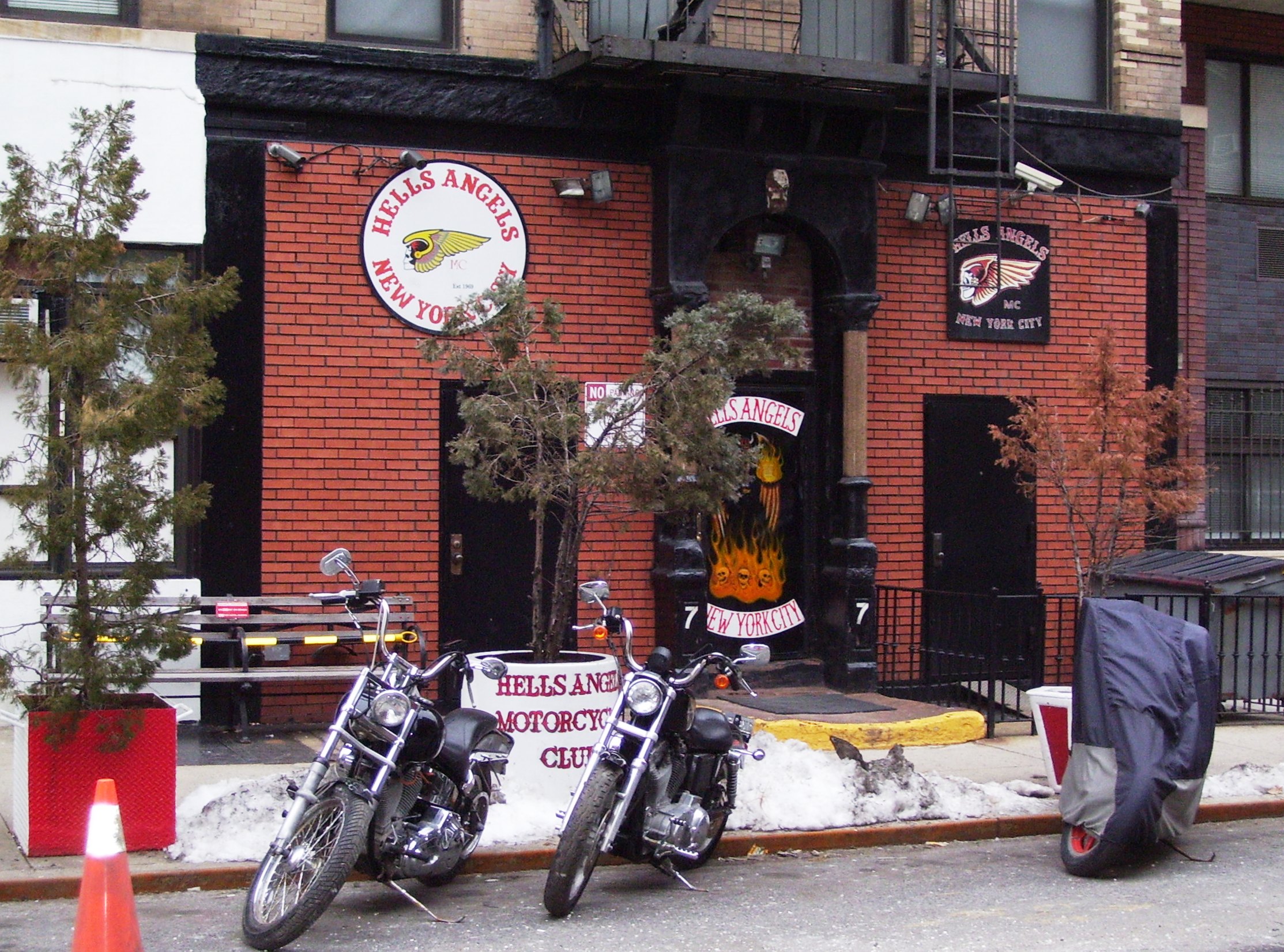
They arrived for what was supposed to be a club meeting. Five Hells Angels from Quebec’s North chapter were killed by fellow members on March 24, 1985—a betrayal that became infamous as the Lennoxville massacre.
On March 24, 1985, five members of the Hells Angels North chapter from Laval were summoned to a clubhouse in Lennoxville, in the Sherbrooke area of Quebec. They arrived expecting a club meeting. Instead, they were killed by members of the same organization.
The five men were Laurent “L’Anglais” Viau, president of the North chapter, Guy-Louis “Chop” Adam, Jean-Guy “Brutus” Geoffrion, Jean-Pierre “Matt le Crosseur” Mathieu and Michel “Willie” Mayrand. Their bodies were wrapped in sleeping bags, weighted with concrete and other heavy material, and dumped in the St. Lawrence River. In June, after one body surfaced, police recovered the others.
The episode became known as the Lennoxville massacre. The name is useful shorthand, but the event is more important than the label. It was an internal purge: a deliberate act of violence carried out inside the Hells Angels against one of the club’s own Quebec chapters.
That makes Lennoxville one of the essential starting points for understanding the later history of the Hells Angels in Quebec.
The North chapter
The victims belonged to the Hells Angels North chapter, based in Laval. Contemporary and retrospective accounts describe the chapter as increasingly isolated from other Quebec Hells Angels sections by 1985.
The complaints reported later included drug consumption, debt, attention from police, behavior considered damaging to the club’s reputation and failure to follow internal rules. Le Journal de Québec also reported that the Laval members were accused of owing a substantial debt to an associated criminal organization.
Those explanations should be handled carefully. Much of what is publicly known about the internal reasoning came through later testimony, informants and retrospective reconstruction. There is no neutral transcript of a leadership meeting explaining every motive.
What is not seriously in dispute is the result: the North chapter was selected for an internal purge.
March 24, 1985
Seven North chapter members had been called to the Sherbrooke-area clubhouse. Five appeared.
Those five were Viau, Adam, Geoffrion, Mathieu and Mayrand. Reporting on the case says that roughly forty Hells Angels members from Montreal, Sherbrooke and Halifax were present inside the clubhouse.
The five North members were shot at the clubhouse. The bodies were then concealed in sleeping bags, weighted and transported to the St. Lawrence River, where they were dumped near Saint-Ignace-de-Loyola.
The mechanics of the disposal are important because they show planning after the killings as well as violence during them. This was not a roadside confrontation or a spontaneous argument that escalated. The victims had been called to a controlled club environment, killed, packaged and removed.
The five victims
Laurent “L’Anglais” Viau was president of the North chapter and therefore the most obvious symbol of the chapter being eliminated.
Guy-Louis “Chop” Adam, Jean-Guy “Brutus” Geoffrion, Jean-Pierre “Matt le Crosseur” Mathieu and Michel “Willie” Mayrand were the other four members killed at the clubhouse.
Claude “Coco” Roy and the continuation of the purge
The purge did not end on March 24.
Two weeks later, Claude “Coco” Roy, a prospect associated with the North chapter, was also killed. Retrospective reporting dates his killing to April 7, 1985 and says his body was disposed of in the river in the same broader sequence.
Roy should therefore be kept separate from the five men killed inside the Lennoxville clubhouse while still being connected to the same purge. Combining all six deaths into a single event count blurs an important chronological distinction.
For this archive, Roy is treated as a separate person node linked to Lennoxville as part of the purge aftermath.
The men who escaped the meeting
Two North chapter figures who escaped the killings later became especially important to the investigation: Claude “Le Nez” Lachance and Yves “Apache” Trudeau.
Trudeau was in drug rehabilitation at the time of the massacre and did not attend the meeting. He later became one of the best-known cooperating witnesses in Canadian organized-crime history. Lachance also cooperated with police.
Their survival mattered because internal biker crimes were exceptionally difficult to reconstruct from the outside. An organization built around loyalty and secrecy creates obvious investigative problems when the principal witnesses are themselves members or associates of the organization.
Cooperating witnesses introduce another problem: incentives. They may receive protection, reduced exposure or other benefits. Their statements therefore have to be compared with physical evidence, other witnesses and court records rather than treated as automatically complete or neutral.
But in Lennoxville, insider cooperation became one of the mechanisms through which investigators were able to penetrate the secrecy surrounding the purge.
The bodies surface
On June 1, 1985, a body was seen floating in the St. Lawrence River. Police subsequently recovered the other bodies.
A contemporary federal Public Safety archive noted that five Hells Angels Laval chapter members had been recovered from the St. Lawrence that June. That contemporary record is valuable because it shows that the event was already being discussed by Canadian authorities in the broader context of outlaw motorcycle gang violence, rather than only being reconstructed decades later.
The recovery transformed a set of disappearances into a homicide investigation with physical evidence.
The method used to hide the bodies also became one of the most remembered elements of the case: sleeping bags, heavy weights and concrete were intended to keep the victims underwater. They did not.
The police reaction
The killings triggered a major police response.
Le Journal de Québec’s retrospective reports that more than 450 police officers took part in a series of actions that produced roughly fifty arrests and the seizure of almost 200 firearms and C$150,000. It further reports that 22 of the 35 Hells Angels members and prospects in Quebec were imprisoned in the aftermath.
The exact scope of each raid and charge belongs to the law-enforcement history surrounding Lennoxville, but the broader consequence is clear: an internal act intended to impose discipline also exposed the organization to intense outside pressure.
The purge solved one internal problem at enormous external cost.
The murder convictions
Retrospective reporting identifies five men as having received life sentences for the murders: Réjean “Zig Zag” Lessard, Jacques “La Pelle” Pelletier, Michel “Jinx” Genest, Luc “Sam” Michaud and Robert “Snake” Tremblay.
Other participants received lesser sentences in connection with the conspiracy and surrounding conduct.
At the same time, the article does not assume that every person present at the clubhouse committed the same act. Presence, participation, conspiracy liability and murder conviction are different legal and factual categories.
What Lennoxville revealed about the Hells Angels
The central significance of Lennoxville is internal governance through violence.
Popular descriptions of outlaw motorcycle clubs often emphasize rivalry between clubs: Hells Angels against Outlaws, Hells Angels against Rock Machine, one territory against another. Lennoxville demonstrates that the dividing line could also run inside the organization.
The North chapter was not an external enemy. Its members wore the same broader club identity.
Yet when other members concluded that the chapter had become a liability, the response was not merely political isolation or expulsion. Five members were killed in a controlled setting and another North prospect was killed shortly afterward.
That episode strengthened the perception that discipline inside the Quebec Hells Angels could be enforced with extreme violence.
Reputation as organizational power
Reputation matters in organized crime because violence does not have to be repeated every day to influence behavior every day.
A group that becomes known for punishing internal defiance creates an incentive structure for members, prospects and associates. The threat does not have to be stated at every meeting if earlier events have already demonstrated the possible consequences.
Canadian research on the Hells Angels has examined precisely this relationship between reputation, intimidation, resilience and organizational power. Lennoxville is one of the historical episodes that helps explain why the club’s reputation became an asset as well as a liability.
The same reputation could intimidate rivals and subordinate networks, but it could also intensify police attention, prosecution and public pressure.
Before the Quebec Biker War
Lennoxville happened almost a decade before the Quebec Biker War began in 1994.
It would be inaccurate to say the purge directly caused that later conflict. The biker war emerged from a different competitive environment, especially disputes over drug distribution, territorial influence and resistance to Hells Angels expansion.
But Lennoxville belongs in the war’s prehistory.
It demonstrated that Quebec’s Hells Angels were capable of coordinated violence, internal discipline and organizational restructuring. It also became part of the reputation that other bikers and criminal groups had to consider when deciding whether to cooperate, submit or resist.
By the 1990s, that question would become much larger than one chapter.
The Rock Machine and allied networks resisted Hells Angels expansion, while Maurice “Mom” Boucher and the later Nomads chapter became central to the Hells Angels side of the conflict. The violence that followed was larger, longer and more public than Lennoxville, but the earlier purge had already shown the severity of the organization’s internal logic.
From purge to war to police counterattack
Within the the Quebec Hells Angels story arc, Lennoxville is Chapter 1.
The sequence is now clearer:
1985 — Lennoxville: internal purge and consolidation.
1994–2002 — Quebec Biker War: sustained competition between the Hells Angels network and Rock Machine-aligned resistance.
2001 — Operation Springtime: a major police strike against the Nomads-centered drug network during the closing phase of the war.
2009 — Operation SHARQC: a province-wide attempt to dismantle the broader Quebec Hells Angels infrastructure through mass arrests and organized-crime prosecutions.
This structure is more useful than treating each event as an isolated crime story. Each stage changes the conditions for the next one.
Myth versus evidence
Lennoxville contains nearly every ingredient that encourages true-crime mythology: a secret meeting, betrayal inside a brotherhood, bodies weighted and dumped into a river, cooperating killers and an organization that became more famous after being exposed.
The documented facts are dramatic enough without embellishment.
Five North chapter members were killed at the clubhouse on March 24, 1985. Claude Roy was killed later in the purge sequence. Bodies were recovered from the St. Lawrence. Surviving North figures cooperated with authorities. Multiple Hells Angels members were convicted, including five men whom retrospective reporting identifies as receiving life sentences for the murders.
The exact private motives of every participant deserve more caution. Later recollections and informant accounts can illuminate events, but they should not be confused with contemporaneous recordings of internal decisions.
That distinction is central to this editorial approach: keep what is established separate from what is reconstructed.
Why Lennoxville still matters
Lennoxville was not the largest biker conflict in Canadian history. It was not the end of the Hells Angels in Quebec. In fact, the organization later expanded dramatically.
Its importance lies elsewhere.
The purge showed that the struggle for discipline and control could be as violent inside a criminal organization as outside it. It exposed the costs of internal consolidation, produced informants, triggered a sweeping police response and became a reference point for the reputation of the Quebec Hells Angels.
When the later Quebec Biker War, Operation Springtime and Operation SHARQC are viewed as one long arc, Lennoxville functions as the opening rupture.
The five men who entered the clubhouse on March 24, 1985 were members of the same club as the men waiting inside. That is precisely why the event remains one of the defining episodes in the history of the Hells Angels in Canada.
Inside the Story: The Evidence and Its Consequences
Five Hells Angels were summoned to a Quebec clubhouse. None of those five walked out alive. The deeper question is how an internal purge became a police investigation that shook the club across the province.
- DateMarch 24, 1985
- WhereLennoxville, Sherbrooke, Quebec
- Killed at meetingFive North chapter members
- Separate later killingClaude “Coco” Roy, April 7, 1985
Timeline: what happened, and when
- 1979: North chapter established in Laval; archival photographs later documented some of its founders.
- March 24, 1985: Five invited North chapter members are killed at the Lennoxville clubhouse.
- April 7, 1985: Claude “Coco” Roy is killed in a separate episode linked to the wider purge.
- June 1, 1985: A body surfaces in the St. Lawrence River; police recover others.
- 1985–1986: Insider cooperation, searches, arrests and ensuing court proceedings expose the purge.
- 2015: Thirty-year retrospectives identify the victims, five murder convicts and the police response.
- 2021: The old Sherbrooke clubhouse is demolished, removing a physical landmark of the massacre.
Why did five members enter a meeting they would never leave?
The North chapter was based in Laval, but the fatal meeting was at a clubhouse in the Lennoxville district of Sherbrooke. That distinction matters: the killings were not an attack on the North chapter in its own territory. The victims had been summoned to another chapter’s premises, where members from multiple Quebec and Atlantic-area chapters were reportedly present. A normal-looking club gathering gave the attackers control of the environment and access to their targets.
Investigative reporting decades later described grievances involving debt, cocaine use, publicity and disregard for internal rules. These are reported explanations drawn from criminal-justice reconstruction, not a verbatim record of every participant’s motives. What the killing itself establishes is narrower and starker: violence was used against members of the same broader club.
Five men at the clubhouse — and a sixth death later
Laurent “L’Anglais” Viau, Guy-Louis “Chop” Adam, Jean-Guy “Brutus” Geoffrion, Jean-Pierre “Matt le Crosseur” Mathieu and Michel “Willie” Mayrand were the five men killed on March 24. Viau is identified in the archive as a North chapter leader. Their individual histories are not interchangeable: the list records distinct victims of a single event, not a single collective biography.
Claude “Coco” Roy belongs in the same wider purge history but not in the count of five killed inside the clubhouse. Retrospective reporting dates Roy’s killing to April 7, about two weeks later. The difference between five deaths at the meeting and six in the broader sequence is a useful test of whether a retelling is preserving the actual chronology.
The St. Lawrence evidence that changed the investigation
The victims’ bodies were concealed in sleeping bags and weighted with concrete blocks or other heavy items before being dumped in the St. Lawrence River. On June 1 a body was discovered floating, followed by recovery of more remains. The physical evidence transformed a series of disappearances into a prosecutable homicide investigation. The method of concealment became one of the most vivid and frequently documented features of the case.
The river evidence does not by itself resolve every question of who planned the meeting, who fired each shot or which individuals knew what beforehand. That is why the court process, witness testimony and individual convictions remain separate parts of the story rather than one undifferentiated account of guilt.
Two men who did not attend became crucial to the aftermath
Yves “Apache” Trudeau and Claude “Le Nez” Lachance survived the North chapter purge and later cooperated with investigators. Accounts place Trudeau in drug rehabilitation when the deadly meeting took place. Their cooperation helped police look inside a closed social organization in which witnesses had powerful reasons to remain silent.
Inside witnesses are indispensable in many organized-crime cases, but they are not neutral narrators. They can have personal interests, criminal exposure or benefits from cooperation. A careful history identifies their role, then distinguishes documented corroboration from what witnesses alleged. The result is a stronger narrative than simply treating every quoted accusation as a finding of fact.
Why the police response was so sweeping
Le Journal de Québec’s 2015 retrospective describes more than 450 officers involved in a provincial response, approximately 50 arrests and major weapons and cash seizures. It also reports that 22 out of 35 Quebec Hells Angels members and prospects were jailed in the broader aftermath. Those figures belong to the reported enforcement response; they do not mean every person arrested was convicted of homicide.
The case illustrates a recurring paradox of violent internal discipline. A purge intended to settle an internal dispute generated physical evidence, informants, intense police scrutiny and public attention. In attempting to consolidate control, participants helped expose the organization to the state.
What the convictions actually establish
Retrospective coverage identifies Jacques “La Pelle” Pelletier, Réjean “Zig Zag” Lessard, Michel “Jinx” Genest, Luc “Sam” Michaud and Robert “Snake” Tremblay as five men given life sentences for the murders. Other participants received lesser punishments connected with the wider conspiracy. The legal distinction matters: participation in club life, attendance at a clubhouse, involvement in a conspiracy and conviction for murder are not the same thing.
Individual child profiles should eventually connect the five victims, the surviving witnesses and convicted participants to their roles in the case. Until a profile has sufficiently sourced independent material, however, its link can remain an internal graph relation rather than a thin public page.
The clubhouse outlived the killings
The Sherbrooke-area clubhouse continued to stand for decades and was demolished in 2021. Later reporting treated the building as a notorious landmark because the March 1985 killings had occurred there. Its demolition belongs to the afterlife of the crime scene, not to the 1985 investigative chronology.
For historical readers, this physical place explains why the word “Lennoxville” became shorthand for an event that involved members from the Laval North chapter. Geographic precision helps prevent confusion between the victims’ home chapter, the site of the murders and the river location where bodies were recovered.
From a purge to a war: what connects them — and what does not
The Quebec Biker War began years later, in 1994, as Hells Angels-linked and rival networks clashed over illicit-market power. Lennoxville was an internal purge in 1985; the later war involved rivalry outside the organization. They should not be collapsed into a single uninterrupted conflict or presented as if every later attack was ordered by the same people who took part in Lennoxville.
Their connection is historical and institutional. Both reveal how violence could be used to enforce power within overlapping criminal networks, while the later conflict generated a far broader public-security crisis. The sequence from Lennoxville to the Quebec war and then to Operation Springtime and SHARQC provides a defensible reading path without inventing direct causation for every incident.
Research sources
What the record establishes — and what it does not
Five North chapter members were killed at the Sherbrooke-area clubhouse; their weighted bodies were later recovered from the St. Lawrence River.
Public accounts differ on some internal motives and on the degree to which later explanations reflected testimony by cooperating witnesses.
People and groups in this story
Don’t stop here
References
- Violence, organized crime, and illicit drug markets: a Canadian case study · Champ pénal / Penal Field · View source ↗
- Couture c. R., 2007 QCCA 1609 · Court of Appeal of Quebec (UNODC case-law mirror) · View source ↗
- Expert Panel on Emerging Crimes — biker gangs in Quebec · Department of Justice Canada · View source ↗
- Organized Crime - Research Highlights 2015-H002 · Public Safety Canada · View source ↗
- Organized Crime and Smuggling in Canada: research discussing criminal networks and the Port of Montreal · Public Safety Canada · View source ↗
- Public Safety Canada study discussing Operation Springtime 2001 · Public Safety Canada · View source ↗
- 2009 Report on Organized Crime · Public Safety Canada / Government of Canada archive · View source ↗
- Liaison 12-2 (1986): outlaw motorcycle gang violence in Canada · Public Safety Canada archive · View source ↗
- Hells Angels vs. The Rock Machine: The War in Quebec · U.S. Department of Justice, Office of Justice Programs / NCJRS · View source ↗
- Lennoxville — Registre historique du milieu motard · Atlas Noir / archival newspaper index · View source ↗
- Hitman: The Untold Story of Canada’s Deadliest Assassin · HarperCollins · View source ↗
- Dans l’antichambre d’une guerre sans merci · Le Journal de Québec · View source ↗
- Il y a 30 ans, la tuerie de Lennoxville · Le Journal de Québec · View source ↗