Even the founding date is contested. Was it 1948 or 1950? To understand where Hells Angels came from, the evidence matters more than the version repeated most often.
The Hells Angels have one of the most famous names in motorcycle history and one of the least tidy founding stories.
A modern California peace-officer training manual states that the Hells Angels formed in 1948, that members came from the POBOBs, and that the club's mother chapter was in San Bernardino until the 1960s. Federal testimony given decades earlier placed the founding in 1950 at Fontana under Otto Friedli.
Both accounts come from government sources.
Why the date is uncertain
The postwar motorcycle-club scene was not built like a modern corporation.
Small riding groups formed around friends, veterans, mechanics and local social circles. Clubs merged, split, disappeared or adopted names and symbols from other groups. Records were informal.
The Hells Angels name itself existed in military and popular culture before the motorcycle club. That does not prove a single direct line of descent from any wartime unit to the club.
What matters historically is that a recognizable Hells Angels motorcycle-club identity emerged in Southern California around the end of the 1940s.
San Bernardino and Fontana
Government accounts repeatedly point to the Inland Empire.
The California POST material identifies San Bernardino as the early mother chapter. A 1984 federal hearing transcript describes a 1950 group in Fontana and says the mother chapter was eventually located in San Bernardino.
Those places are close enough geographically that the disagreement is about organizational history rather than two unrelated movements.
The safer conclusion is simple: the Hells Angels emerged in Southern California around 1948–1950, with San Bernardino becoming the most important early chapter.
From local club to transferable identity
The early Hells Angels did not yet resemble the worldwide organization that later law-enforcement reports would describe.
The crucial development was the creation of a chapter identity that could travel.
Colors, membership boundaries and local hierarchy transformed a riding group into something more durable. A chapter could have local leadership while belonging to a wider identity.
That structure is what made later expansion possible.
The mythology arrives later
Much of what people now associate with the Hells Angels was built after these first years.
Sonny Barger had not yet established the Oakland chapter. Hunter S. Thompson had not written his book. Altamont was two decades away.
The founding period matters precisely because it strips away the later legend.
Before the headlines, prosecutions, films and international chapters, there was a small California motorcycle world whose records were fragmentary enough that even government sources still disagree about the exact birthday.
That uncertainty is part of the history, not a problem to hide.
What existed before the famous name
The postwar motorcycle world that produced the Hells Angels was already crowded with clubs, informal riding groups and veterans who had returned to civilian life with mechanical skills, military experience and an appetite for speed. The popular image of a single founding meeting followed by a straight line of expansion is attractive because it is simple. The surviving record is not simple.
Government histories written later tried to impose order on that past. California training material points to 1948 and the POBOBs. Federal testimony has used 1950 and Fontana. Neither source was produced at the moment of founding, and both were written for law-enforcement purposes rather than as neutral club histories. They are valuable precisely because they disagree: they show that the earliest phase was not documented with the precision later mythology implies.
The safest historical approach is therefore to distinguish between the emergence of the name and the later consolidation of the organization. A Hells Angels identity was present in Southern California by the end of the 1940s. The structure that later made the name internationally recognizable came afterward.
The military-name myth
The words “Hell's Angels” had circulated long before the motorcycle club. They appeared in popular culture and in military aviation. That has encouraged repeated claims that the club descended directly from a particular wartime bomber or fighter unit.
The problem is evidence. Shared names are not the same thing as institutional continuity. Veterans were important to postwar motorcycle culture, but a direct organizational line from a named wartime unit to the California motorcycle club is not established by the government sources used here.
That distinction matters because the mythology is attractive enough to replace the record.
Why the Inland Empire mattered
San Bernardino and Fontana sat inside a rapidly changing Southern California landscape of highways, military installations, industrial work and expanding suburbs. Motorcycles offered mobility and identity in an environment where distances were large and automobile culture was becoming central to daily life.
The earliest Hells Angels story belongs to that geography. Before Oakland, before the Bay Area counterculture and before national news coverage, the organization was rooted in Southern California riding culture.
The chapter model would eventually make geography part of the club's identity. A member did not simply belong to “the Hells Angels”; he belonged through a local charter or chapter. That local structure gave the organization a way to expand without becoming a single centralized club in the ordinary corporate sense.
Colors, names and continuity
A durable organization needs more than a name. It needs recognizable symbols, rules about belonging and a way to distinguish insiders from outsiders.
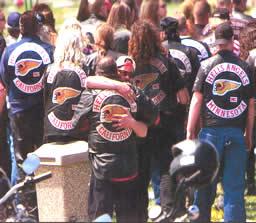
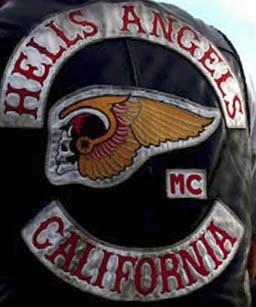
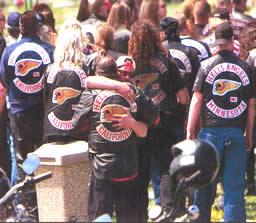
The Hells Angels' colors became crucial to that process. The winged death's-head emblem, chapter identifiers and California rockers created a visual identity that could be recognized instantly. Later federal photographs of club colors are much newer than the founding period, but they illustrate the system that allowed local groups to present themselves as parts of a larger whole.
That is one reason arguments over the exact first year do not change the larger historical picture. The important transformation was from an informal postwar riding scene into a repeatable chapter identity.
What we can say with confidence
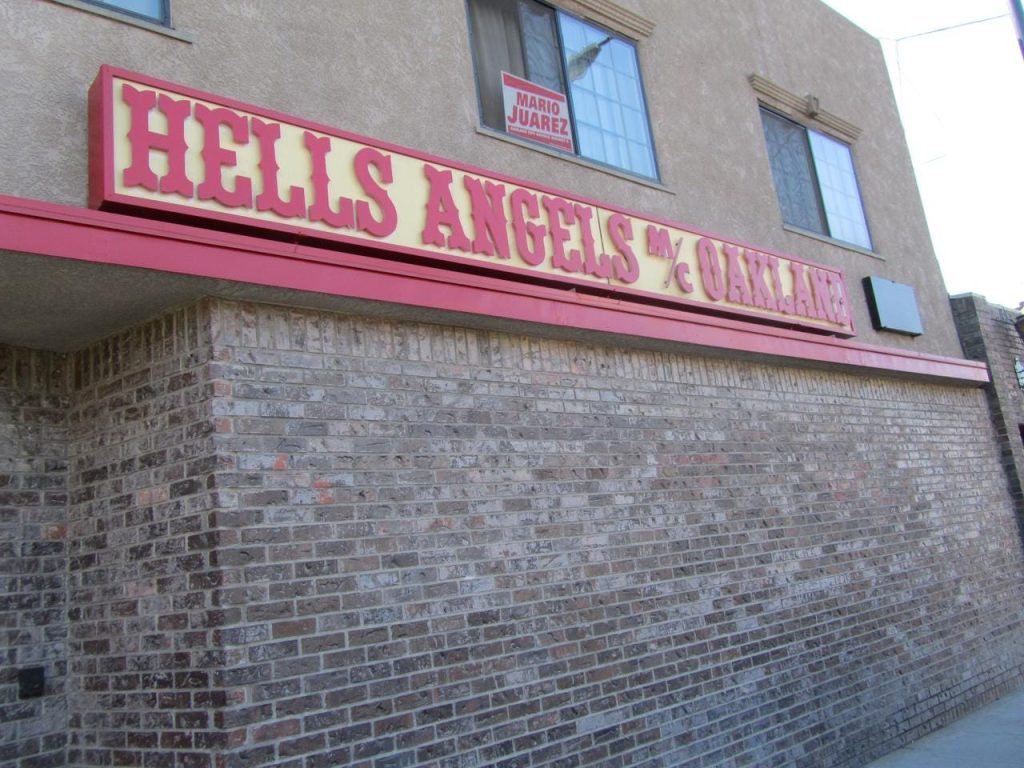
By the time Sonny Barger helped establish the Oakland chapter in 1957, the Hells Angels were not a newly invented organization. Southern California chapters and the name already existed. Oakland's significance was not that it created the club from nothing, but that it became a center of organization, visibility and later mythology.
The founding question therefore has two answers. If the question is “When did a Hells Angels motorcycle club first emerge in California?”, the surviving government record points to the late 1940s or around 1950. If the question is “When did the organization begin to look like the internationally recognizable Hells Angels of later decades?”, the answer lies in the following years, especially Oakland.
That is why this story ends without forcing a false precision. The uncertainty is not a weakness in the article. It is the most accurate description of the evidence.
What the record establishes — and what it does not
Government sources place the club's emergence in Southern California around 1948–1950 and identify San Bernardino as an early mother chapter.
The exact founding year and a single uncontested founding event are not established by the surviving sources.
People and groups in this story
Don’t stop here
References
- LD 38 – Chapter 3: Organized Crime Gangs · California Commission on Peace Officer Standards and Training · View source ↗
- LD 38 – Chapter 3: Organized Crime Gangs · California Commission on Peace Officer Standards and Training · View source ↗
- Organized Crime: Outlaw Motorcycle Gangs testimony · U.S. Senate / NCJRS archive · View source ↗