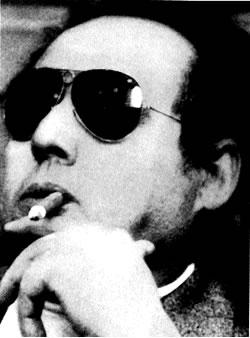
Luciano Leggio was the early architect of the Corleone faction that later produced Salvatore Riina and Bernardo Provenzano. Long before the Corleonesi became synonymous with the mass violence of the 1980s and early 1990s, Leggio helped transform a local Mafia group from the rural town of Corleone into a force capable of challenging Palermo’s established bosses.
Born in Corleone in 1925, he came from a poor rural background and entered criminal life young. Accounts of his early career place him in cattle theft, agricultural intimidation and the violent struggles surrounding land and labor in postwar Sicily. Investigations by Carabinieri officer Carlo Alberto Dalla Chiesa connected Leggio to the murder of trade unionist Placido Rizzotto, a killing that became emblematic of Mafia violence against peasant and labor organization in the Sicilian countryside.
The struggle for Corleone
The decisive local conflict centered on Michele Navarra, the older Mafia boss of Corleone. Leggio built his own faction with younger men including Salvatore Riina and Bernardo Provenzano. Navarra was murdered in 1958, and the struggle that followed helped establish Leggio’s group as the dominant Mafia force in the town.
That victory had consequences far beyond Corleone. The men around Leggio did not remain a provincial crew. They pushed into business, construction, extortion and the wider Palermo Mafia system. Over time the Corleonesi developed a reputation for secrecy, discipline and extreme violence, while cultivating alliances that allowed them to challenge better-established urban families.
Leggio’s role in this history is sometimes blurred because Riina later became far more notorious. The sequence matters: Leggio created the factional base and promoted the men who would carry it further. Riina and Provenzano were not outsiders who replaced him from nowhere; they emerged from the organization he had built.
Entry into wider Cosa Nostra power
By the late 1960s Leggio had become a significant figure in the wider Sicilian Mafia. Historical accounts place him among the leaders involved in rebuilding coordinating structures after the turmoil of the First Mafia War. He was associated with the Corleonesi role in the violent reordering of Cosa Nostra that followed.
The December 1969 Viale Lazio massacre in Palermo became one of the events signaling that older balances were breaking down. In the years that followed, the Corleonesi strengthened their position while rival leaders underestimated how aggressively the faction was accumulating power.
The organization that eventually emerged under Riina was even more violent and centralized than the system Leggio had helped build. That later transformation should not be projected backward onto every stage of Leggio’s career, but his rise is essential to understanding how it became possible.
Fugitive years and arrest
Leggio spent years evading capture, despite repeated investigations and trials. His fugitive status added to the legend surrounding him and exposed weaknesses in the state’s ability to penetrate Mafia support networks. He was finally arrested in Milan in 1974.
His imprisonment did not end Corleonesi power. Instead, Riina and Provenzano increasingly took operational control. From that point the faction continued its expansion without needing Leggio to remain physically free. The Second Mafia War of the early 1980s destroyed many rival networks and left the Corleonesi dominant inside Cosa Nostra.
Leggio continued to appear in major Mafia proceedings, including the Maxi Trial era. By then, however, the center of operational power had clearly shifted to Riina and Provenzano. Distinguishing those phases prevents later crimes from being mechanically attributed to Leggio simply because he had been the faction’s earlier leader.
Death in prison
Leggio remained imprisoned for the rest of his life. On November 15, 1993, he collapsed in custody in Sardinia and died in a hospital in Nuoro, reportedly after a heart attack. He was 68.
His death came after Riina had already been arrested and after the 1992–1993 Mafia bombing campaign had changed Italy’s confrontation with Cosa Nostra. The organization Leggio helped create had outgrown him and had become identified with a national crisis of Mafia violence.
Luciano Leggio’s historical importance lies in that transition. He was the bridge between the local postwar Mafia of Corleone and the Corleonesi faction that would dominate Sicilian organized crime. Riina became the more infamous boss, but the path to Riina’s power began with Leggio’s takeover of Corleone decades earlier.
Documented network
Cosa Nostra (organization): Documented historical association with Cosa Nostra.
Salvatore Riina (person): Riina emerged from the Corleone faction led by Leggio.
Bernardo Provenzano (person): Provenzano emerged from the same Corleone faction.
Timeline and case connections
Structured events are kept separate from general biography so later audits can update dates, convictions, killings, organizational changes or court outcomes without rewriting unrelated material.
Documented event. This is retained as a structured timeline connection.
Documented event. This is retained as a structured timeline connection.
Documented event. This is retained as a structured timeline connection.
1993-11-15 — Death of Luciano Leggio. Leggio collapsed in high-security custody in Sardinia and died in a Nuoro hospital on November 15, 1993.
Status and record
The structured birth record lists 1925-01-06 in Corleone, Sicily, Italy. The death record lists 1993-11-15 in Nuoro, Sardinia, Italy. Cause: Reported heart attack. Leggio collapsed in high-security custody in Sardinia and died in a Nuoro hospital on November 15, 1993.
Books and screen
Source record
The Master package currently attaches these sources to the profile: – Parliamentary Anti-Mafia Commission historical report on Cosa Nostra — Camera dei Deputati / Senato della Repubblica, Tier 1. – Nello Stato di Cosa Nostra: termini in codice, modi di dire e nomenclature — Treccani, Tier 2. – Falcone e il pool antimafia — Treccani, Tier 2. – Provenzano, Bernardo — Treccani, Tier 2. – Riina, Salvatore (Totò) — Treccani, Tier 2. – Maxi Trial judgments and historical materials — Tribunale di Palermo, Tier 1. – Luciano Liggio obituary — The Independent, Tier 2.
Claim-level source references remain in the structured data so later audits can trace evidence rather than relying on a generic bibliography.
Evidence and editorial boundaries
For living subjects especially, legal status and allegations require dated evidence. Future expansion should come from stronger records, court material, archives or newly processed canonical entities rather than generalized crime lore.
Key events
Born
Birth of Luciano Leggio.
Death
Death of Luciano Leggio.
People, groups and places
Portrayed on Screen
The Traitor
Portrayed by Vincenzo Pirrotta.
References
-
[1]Parliamentary Anti-Mafia Commission historical report on Cosa NostraTier 1MentionsSupportsView source ↗
-
[2]Maxi Trial judgments and historical materialsTier 1MentionsView source ↗
-
[3]Luciano Liggio obituaryTier 2MentionsSupportsView source ↗
-
[4]Falcone e il pool antimafiaTier 2MentionsSupportsView source ↗
-
[5]Nello Stato di Cosa Nostra: termini in codice, modi di dire e nomenclatureTier 2MentionsSupportsView source ↗
-
[6]Provenzano, BernardoTier 2SupportsMentionsView source ↗
-
[7]Riina, Salvatore (Totò)Tier 2MentionsSupportsView source ↗