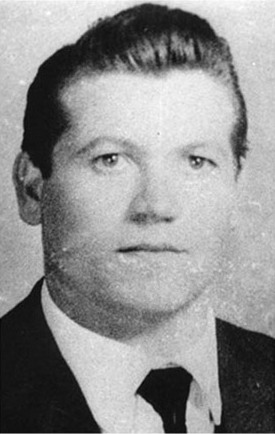
Bernardo Provenzano was one of the central figures of the Corleonesi faction that reshaped Sicilian Cosa Nostra through the violent decades of the late twentieth century. A close ally of Luciano Leggio and Salvatore Riina, he spent more than four decades as a fugitive, accumulated multiple life sentences and emerged after Riina’s 1993 arrest as the figure most closely associated with Cosa Nostra’s leadership and its shift toward lower-visibility control. He was finally arrested near Corleone on 11 April 2006 and remained imprisoned until his death in 2016.
Treccani records Provenzano as born in Corleone in 1933 and describes his early criminal path through theft, illegal slaughter and the Corleonesi clan. By the late 1960s and 1970s, he was no longer a peripheral rural criminal. He was part of the faction that would defeat rival Palermo groups and dominate Cosa Nostra.
The Corleonesi rise
The Corleonesi took their name from Corleone but eventually exercised power far beyond the town. Luciano Leggio was an early leader of the faction. Salvatore Riina and Provenzano became key figures in the group that followed him.
Provenzano’s reputation was built first in the violent phase of that rise. Treccani places him among the group responsible for the 1969 Viale Lazio massacre and later at the top of the Corleonesi leadership. During the Second Mafia War, the Corleonesi destroyed or displaced major rival factions and imposed a new balance of power inside Cosa Nostra.
The historical record links Provenzano to the same strategic bloc as Riina, but the two men became associated with different styles. Riina came to symbolize spectacular violence against rivals and the Italian state. Provenzano, especially after 1993, became associated with concealment, mediation and a quieter form of control.
Riina, the massacres and life sentences
The early 1990s brought Cosa Nostra into direct confrontation with the state. Judges Giovanni Falcone and Paolo Borsellino were killed in the Capaci and Via D’Amelio bombings in 1992. Italian judicial and parliamentary records place Provenzano within the leadership targeted in proceedings arising from that period, and Treccani records life sentences imposed in absentia for the massacres.
It is important not to rewrite organizational responsibility as a claim about who physically carried out each attack. Provenzano’s profile distinguishes leadership, convictions and judicial findings from unsupported claims about direct hands-on participation in every crime committed by Cosa Nostra.
When Riina was arrested in January 1993, Provenzano remained at large. He became the dominant figure most commonly associated with the organization’s next phase.
The strategy of “inabissamento”
Provenzano’s later leadership is often described through the idea of inabissamento—submergence. Instead of constant spectacular attacks, Cosa Nostra sought to reduce the public visibility of its violence while preserving influence through extortion, public contracts, business relationships, money laundering and territorial control.
That did not make the organization benign. It was a strategic change designed to reduce pressure while maintaining criminal power. Treccani describes Provenzano as managing a complex system involving contracts, extortion, laundering and drug trafficking after Riina’s arrest.
This shift is one reason Provenzano matters historically. He represents the transition from the openly confrontational Cosa Nostra of the massacre years to a model that tried to survive by becoming less visible.
Forty-three years as a fugitive
Provenzano’s fugitive period became legendary because of its duration: roughly forty-three years. He did not escape to a distant continent and disappear from Sicilian organized crime. Investigators concluded that he remained connected to the organization while living in and around the territory where he had grown up.
That paradox—extreme proximity combined with extreme secrecy—made his case a symbol of both mafia protection networks and the difficulty of penetrating them.
Provenzano avoided ordinary electronic communication. His handwritten messages, known as pizzini, became one of the defining details of his leadership. The notes carried instructions and responses between the fugitive boss and associates. After his arrest, they became valuable evidence for understanding how a hidden leader could continue to communicate while reducing the risk created by telephones and electronic surveillance.
Arrest near Corleone
On 11 April 2006, police arrested Provenzano at a rural hideout near Corleone. The arrest ended one of the longest and most politically significant fugitive periods in modern Italian criminal history.
The arrest is significant because it connects Provenzano, Cosa Nostra, the Corleonesi era and the investigative methods used to penetrate the support system around him.
The arrest also had symbolic force. Riina had been captured thirteen years earlier; Provenzano’s detention removed the figure most strongly associated with the post-Riina leadership model.
Prison and 41-bis
After his arrest, Provenzano was held under Italy’s high-security anti-mafia regime. Treccani records that he was detained at Novara until his death. The Casa Circondariale di Novara is therefore part of his canonical custody history and is linked as a separate prison entity.
The prison itself continues to contain a 41-bis department, according to the Italian Ministry of Justice. That regime is designed to severely restrict contacts between imprisoned organized-crime leaders and outside criminal networks.
This matters because imprisonment is not just a final line in a biography. Prison locations connect people, legal regimes, transfers and deaths in custody, showing what happened after the arrest rather than ending the story at the courthouse door.
Death
Bernardo Provenzano died in Milan on 13 July 2016 while still in state custody. He was eighty-three years old. The exact medical detail is less important to the criminal-history page than the custody status: he died as a convicted Cosa Nostra leader after ten years of imprisonment following decades as a fugitive.
His public death record therefore belongs alongside the arrest and prison history rather than being treated as an unrelated biographical footnote.
Why Provenzano matters
Provenzano’s significance comes from the span of his career. He connects the Corleonesi rise, the Mafia wars, the 1992 massacre era, Riina’s downfall, the quieter post-1993 strategy, the pizzini communication system and the long investigation that finally ended in his arrest.
He is also a useful corrective to the idea that organized-crime leadership always looks the same. Riina and Provenzano operated within the same power bloc but became symbols of different strategic phases. One is associated above all with direct confrontation and spectacular violence; the other with concealment and organizational survival after that violence provoked overwhelming state pressure.
The historical record therefore treats Provenzano not as a generic “boss of bosses” character but as a documented leader embedded in a network of people and events: Luciano Leggio, Salvatore Riina, Cosa Nostra, the Second Mafia War, Capaci, Via D’Amelio, his 2006 arrest and the Novara prison where his fugitive story finally became a custody story.
Documented network
Cosa Nostra (organization): Documented historical association with Cosa Nostra.
Salvatore Riina (person): Longtime Corleonesi allies who rose together in Cosa Nostra.
Luciano Leggio (person): Provenzano emerged from the same Corleone faction.
Casa Circondariale di Novara (prison): Treccani records Provenzano as detained in Novara until his death.
Cosa Nostra (organization) is recorded in the canonical graph as boss, documented status, 90% confidence. This label is preserved without inferring a broader association.
Corleonesi (organization) is recorded in the canonical graph as senior leader, documented status, 90% confidence. This label is preserved without inferring a broader association.
Arrest of Bernardo Provenzano (event): captured after 43 years on the run
Corleone (location) is recorded in the canonical graph as origin hideout area, documented status, 90% confidence. This label is preserved without inferring a broader association.
Salvatore Riina (person) is recorded in the canonical graph as long time ally and predecessor, documented status, 90% confidence. This label is preserved without inferring a broader association.
Matteo Messina Denaro (person) is recorded in the canonical graph as later senior cosa nostra leader, documented status, 90% confidence. This label is preserved without inferring a broader association.
Salvatore Lo Piccolo (person): senior Palermo boss / succession contender
Timeline and case connections
Structured events are kept separate from general biography so later audits can update dates, convictions, killings, organizational changes or court outcomes without rewriting unrelated material.
Documented event. This is retained as a structured timeline connection.
Documented event. This is retained as a structured timeline connection.
Documented event. This is retained as a structured timeline connection.
Documented event. This is retained as a structured timeline connection.
Documented event. This is retained as a structured timeline connection.
Documented event. This is retained as a structured timeline connection.
Documented event. This is retained as a structured timeline connection.
Documented event. This is retained as a structured timeline connection.
Date not specified in current profile sources — Arrest of Bernardo Provenzano. captured after 43 years on the run
13 July 2016 — Death of Bernardo Provenzano. cancer / long illness
Status and record
The structured birth record lists 1933 in Corleone, Sicily, Italy. The death record lists 13 July 2016 in Milan, Italy. Cause: cancer / long illness.
Source record
The Master package currently attaches these sources to the profile: – Provenzano, Bernardo — Treccani, Tier 2. – Maxi Trial judgments and historical materials — Tribunale di Palermo, Tier 1. – Parliamentary report on the 1992–1993 Cosa Nostra bombing campaign — Camera dei Deputati / Senato della Repubblica, Tier 1. – Parliamentary Anti-Mafia Commission historical report on Cosa Nostra — Camera dei Deputati / Senato della Repubblica, Tier 1. – Falcone e il pool antimafia — Treccani, Tier 2. – DIA historical panel on investigations following the 1990s massacres and Giuseppe Di Matteo case — Direzione Investigativa Antimafia, Tier 1. – Casa circondariale di Novara — institutional profile — Ministero della Giustizia, Tier 1. – Bernardo Provenzano obituary — The Guardian, Tier 2. – Top mafia boss arrested — The Guardian, Tier 2.
Claim-level source references remain in the structured data so later audits can trace evidence rather than relying on a generic bibliography.
Evidence and editorial boundaries
For living subjects especially, legal status and allegations require dated evidence. Future expansion should come from stronger records, court material, archives or newly processed canonical entities rather than generalized crime lore.
Key events
Arrest of Bernardo Provenzano
Capture of Bernardo Provenzano near Corleone after 43 years as a fugitive.
Where this person was held
People, groups and places
References
-
[1]Parliamentary Anti-Mafia Commission historical report on Cosa NostraTier 1MentionsView source ↗
-
[2]Parliamentary report on the 1992–1993 Cosa Nostra bombing campaignTier 1MentionsSupportsView source ↗
-
[3]DIA historical panel on investigations following the 1990s massacres and Giuseppe Di Matteo caseTier 1MentionsView source ↗
-
[4]Casa circondariale di Novara — institutional profileTier 1MentionsSupportsView source ↗
-
[5]Maxi Trial judgments and historical materialsTier 1SupportsMentionsView source ↗
-
[6]Bernardo Provenzano obituaryTier 2MentionsView source ↗
-
[7]Top mafia boss arrestedTier 2MentionsView source ↗
-
[8]Falcone e il pool antimafiaTier 2MentionsView source ↗
-
[9]Provenzano, BernardoTier 2MentionsSupportsView source ↗