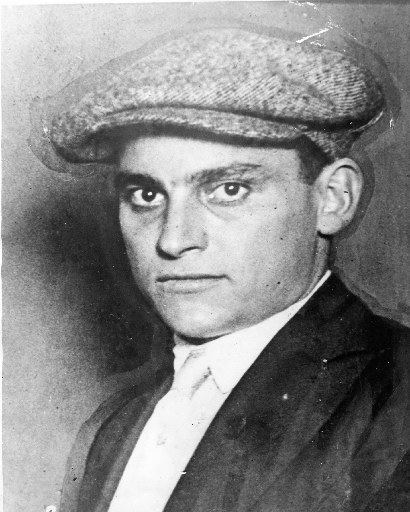
The Genna brothers were a major force in Chicago’s Prohibition underworld during the first half of the 1920s. Their organization was based in Little Italy and became important not only because of its own bootlegging business but because its expansion helped destabilize the uneasy arrangements among Chicago’s larger criminal groups.
The family business
The Gennas were a Sicilian immigrant family whose brothers became deeply involved in the illegal alcohol economy created by national Prohibition. Historical accounts describe a system in which small household stills produced alcohol for the organization. The Mob Museum notes that the brothers supplied residents with small copper stills, creating a distributed production network rather than relying only on large breweries.
That model could produce enormous volumes when multiplied across many homes. It also pushed the Gennas into competition over sugar, alcohol, distribution and territory.
Allies and rivals
The Genna organization operated in the same criminal marketplace as Johnny Torrio and Al Capone. At various points the Gennas were allied with the South Side organization. Their position also connected them to the Unione Siciliana, an influential Sicilian mutual-aid society that became entangled with underworld politics.
The gang’s expansion aggravated Dean O’Banion’s North Side organization. One dispute involved gambling debts; another involved competition over bootlegging territory.
O’Banion and escalation
Dean O’Banion was murdered in November 1924 at his flower shop. Historical accounts commonly identify Frankie Yale together with John Scalise and Albert Anselmi, gunmen associated with the Genna side, as the attackers.
The murder did not settle the conflict. It accelerated it.
North Side retaliation targeted Torrio and others. At the same time, violence increasingly struck the Genna family itself. During 1925, several brothers and close associates were killed in rapid succession.
Collapse of leadership
Angelo Genna was shot in May 1925 after a car chase and died soon afterward. Other brothers were killed or fled Chicago as the organization’s position deteriorated. What had looked like a powerful family network only a few years earlier became fragmented under sustained violence.
This is one reason the Gennas deserve their own organization page rather than appearing merely as secondary names in Capone biographies. They controlled real production and territory, and their decline reshaped the city’s criminal balance.
Absorption and legacy
As the Genna organization weakened, the larger South Side organization associated with Capone became increasingly dominant. Prohibition-era Chicago was not a neat two-gang contest from the beginning. It was a shifting system of families, neighborhood organizations, temporary alliances and violent breakups.
The Gennas are crucial to understanding that system.
Their story also demonstrates the limits of criminal “success.” An organization could build a profitable production network very quickly, yet leadership concentrated inside one family created obvious vulnerabilities when rivals began killing key members.
Why the Genna family matters
Adding the family as a canonical organization turns those connections into a navigable historical network instead of leaving the Gennas as names buried inside other people’s stories.
People who shaped this story
Rivals, allies and counterpart organizations
References
-
[1]The FBI and the American Gangster, 1924-1938Tier 1SupportsMentionsView source ↗
-
[2]Bootleggers and Bathtub GinTier 2MentionsSupportsView source ↗
-
[3]Dean O’BanionTier 2SupportsView source ↗
-
[4]The St. Valentine’s Day Massacre: What Happened BeforeTier 2MentionsSupportsView source ↗
-
[5]Angelo Genna in the 1920sTier 2MentionsView source ↗
-
[6]Genna crime familyTier 3MentionsView source ↗