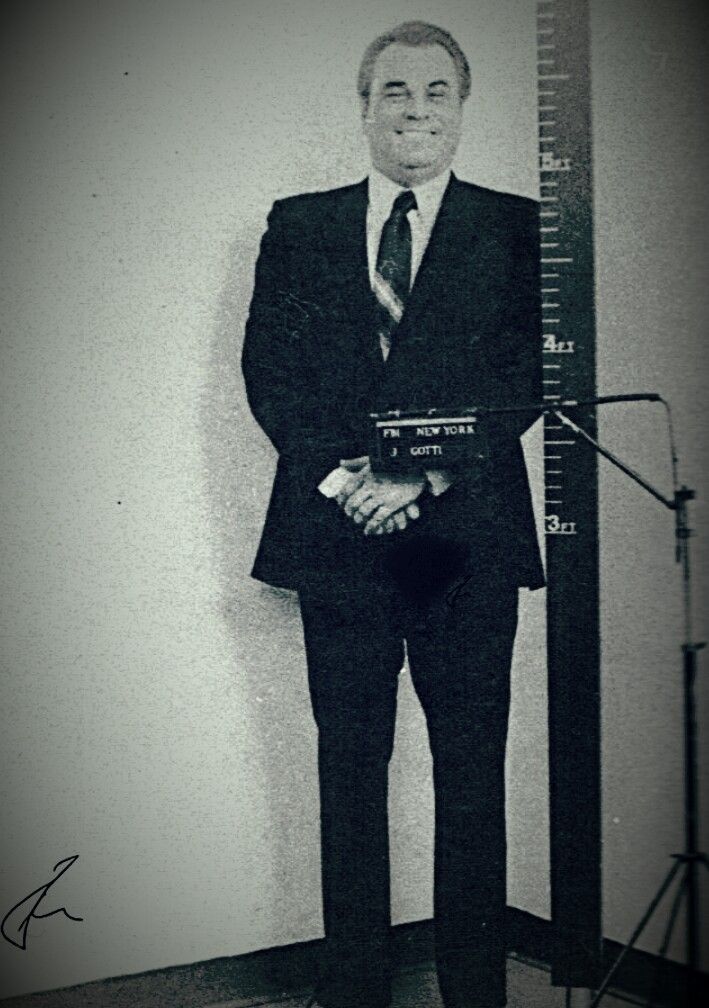
John Gotti became the most famous American Mafia boss of the late twentieth century, not because he was the most secretive or the longest-serving, but because his rise to leadership of the Gambino crime family unfolded in public. The 1985 murder of Paul Castellano, Gotti’s expensive suits, repeated courthouse appearances and a string of acquittals turned him into a tabloid figure before an FBI and NYPD investigation finally produced a racketeering and murder conviction in 1992.
His story is also a study in the limits of Mafia celebrity. Public visibility helped build the “Dapper Don” legend, but surveillance and the testimony of his own underboss, Salvatore “Sammy the Bull” Gravano, ultimately helped destroy his freedom.
Early criminal career
Gotti grew up in New York and became involved in organized crime at a young age. By the 1960s he was associated with the Gambino family’s Bergin Hunt and Fish Club crew in Queens.
The FBI arrested him in 1968 for his role in a cargo-theft conspiracy. He served prison time and was released in 1972. Within a few years he was again in serious legal trouble, this time over a murder case.
After another prison term, Gotti returned to a Gambino organization led by Paul Castellano and underboss Aniello Dellacroce.
Dellacroce and the street faction
Dellacroce was a major influence on Gotti. He represented a powerful street-oriented wing of the family and commanded loyalty among crews that did not always identify with Castellano’s leadership style.
Gotti’s crew was involved in gambling, loansharking and other rackets. Federal investigators also developed cases involving narcotics trafficking by people around his faction, creating tension because Castellano had publicly opposed drug dealing by family members.
Dellacroce’s death in December 1985 removed an important internal balance.
The Sparks Steak House murders
On December 16, 1985, Paul Castellano and underboss Thomas Bilotti were shot to death outside Sparks Steak House in Manhattan.
The FBI’s historical account states that Gotti watched the operation from a nearby car and later had his driver pass the scene to confirm that the killings had been carried out.
The murders were a direct challenge to the existing Gambino leadership. Gotti soon became boss of the family.
The event remains central to modern Mafia history because it connects Gotti, Castellano, Bilotti, Gravano, Gambino succession politics and the later federal murder case.
The Dapper Don
Gotti cultivated a highly visible public image. He wore expensive tailored clothing, appeared regularly outside the Ravenite Social Club and showed little interest in the low-profile style associated with Carlo Gambino.
Newspapers called him the “Dapper Don.” After several prominent acquittals, another nickname appeared: the “Teflon Don,” suggesting that criminal charges did not stick.
The image was misleading. Federal and local investigators were steadily building a more sophisticated case.
Surveillance and the Ravenite
By the 1980s, the FBI had extensive experience investigating La Cosa Nostra as an organized enterprise. Court-authorized electronic surveillance allowed investigators to collect conversations that exposed hierarchy, disputes and criminal conduct.
Gotti’s meetings created opportunities for surveillance. Investigators recorded discussions in locations he believed were safe from law enforcement.
Those recordings helped prosecutors move beyond the testimony of outside witnesses and show how the Gambino leadership itself discussed family business.
Sammy Gravano turns government witness
The decisive break came when Salvatore Gravano, Gotti’s underboss, agreed to cooperate with the government.
Gravano’s testimony gave prosecutors an insider account of murders and the operation of the Gambino family. It also shattered one of the central assumptions on which Mafia secrecy depended: that senior members would not testify against one another.
The cooperation transformed the case from one built heavily on surveillance into one supported by a high-ranking participant who could explain the meaning of recorded conversations and internal decisions.
The 1992 conviction
Gotti was arrested in December 1990 and charged with racketeering, murder, jury tampering and other offenses.
The trial used anonymous jurors, a measure intended to protect the process from interference. On April 2, 1992, the jury convicted Gotti on all counts submitted to it, including responsibility for the murders of Castellano and Bilotti.
He received a life sentence without the possibility of parole under the sentence imposed at the time.
The conviction ended the public phase of Gotti’s Mafia career and became one of the FBI’s best-known organized-crime victories.
Prison and death
Gotti spent the rest of his life in federal custody. His health later deteriorated because of cancer.
He was transferred to the Federal Medical Center in Springfield, Missouri, where he died on June 10, 2002 while still serving his life sentence.
His death also closes the prison chapter of his biography: the Gambino boss who had once dominated New York tabloids died in a federal medical prison facility far from the Ravenite Social Club.
Gotti and the Gambino family after 1992
Gotti’s imprisonment did not dissolve the Gambino crime family. Leadership arrangements changed, prosecutions continued and the organization survived beyond the celebrity boss who had become its public symbol.
That survival is another reminder that a Mafia family is larger than one boss. Crews, associates, rackets and relationships can persist after a leader is removed.
Historical significance
John Gotti’s significance comes from the convergence of several themes: violent succession, Mafia celebrity, electronic surveillance, witness cooperation and the effectiveness of racketeering prosecutions.
His profile connects directly to Paul Castellano, Thomas Bilotti, Sammy Gravano, the Gambino crime family, Sparks Steak House, the Ravenite Social Club, federal RICO investigations and FMC Springfield.
The mythology is memorable, but the documentary record is more important: Gotti rose through organized crime, seized power after a double murder, and was ultimately convicted because investigators and a senior insider were able to reconstruct how that power worked.
Castellano, Dellacroce and the succession crisis
The conflict that produced Gotti’s rise was not simply a personal feud. Castellano represented the official boss and had significant support among senior family figures, while Dellacroce commanded loyalty among street crews. After Dellacroce died, Gotti and allies no longer had the same internal buffer against Castellano.
The Sparks murders therefore represented both a homicide conspiracy and a succession coup. That context explains why the killings changed the entire family rather than merely eliminating two individuals.
Why the earlier cases failed to end his career
Gotti’s “Teflon” reputation was built from acquittals and failed prosecutions, but the later federal case showed how different investigative tools could change the outcome. Electronic surveillance captured conversations that ordinary eyewitness cases could not, while Gravano’s cooperation gave prosecutors an insider capable of interpreting those recordings.
The 1992 prosecution was stronger because it assembled a pattern of racketeering and murder rather than depending on a single disputed incident.
Public image versus organizational reality
Gotti’s celebrity made him appear larger than the organization around him. In reality, he remained dependent on captains, crews, an underboss and a network of associates. The family survived his life sentence because those relationships did not vanish with one conviction.
That contrast is central to his historical importance: the most visible Mafia boss of his era also demonstrated why organized crime cannot be reduced to the biography of a single boss.
Documented network
Gambino Crime Family (organization): John Gotti is documented as a boss in the Gambino family’s history.
Federal Medical Center, Springfield (prison): Transferred for medical treatment while serving a life sentence and died there in federal custody.
Paul Castellano (person): FBI historical account states Gotti ordered and monitored the 1985 murder of Castellano.
Thomas Bilotti (person): Bilotti was killed with Castellano in the 1985 succession attack attributed by the FBI to Gotti.
Salvatore “Sammy the Bull” Gravano (person): Gravano served as Gotti’s underboss and later cooperated with federal prosecutors.
Timeline and case connections
Structured events are kept separate from general biography so later audits can update dates, convictions, killings, organizational changes or court outcomes without rewriting unrelated material.
June 10, 2002 — Death of John Gotti. Gotti died while serving a life sentence in federal custody.
Status and record
The death record lists June 10, 2002 in Federal Medical Center, Springfield, Missouri, United States. Cause: Cancer. Gotti died while serving a life sentence in federal custody.
Books and screen
Source record
The Master package currently attaches these sources to the profile: – John Gotti — Federal Bureau of Investigation, Tier 1.
Claim-level source references remain in the structured data so later audits can trace evidence rather than relying on a generic bibliography.
Evidence and editorial boundaries
For living subjects especially, legal status and allegations require dated evidence. Future expansion should come from stronger records, court material, archives or newly processed canonical entities rather than generalized crime lore.
Key events
Death
Death of John Gotti.
Where this person was held
People, groups and places
Books connected to John Gotti
As an Amazon Associate, RoguesBook earns from qualifying purchases through the edition links below.

Boss of Bosses: The Fall of the Godfather: The FBI and Paul Castellano

Mob Star: The Story of John Gotti
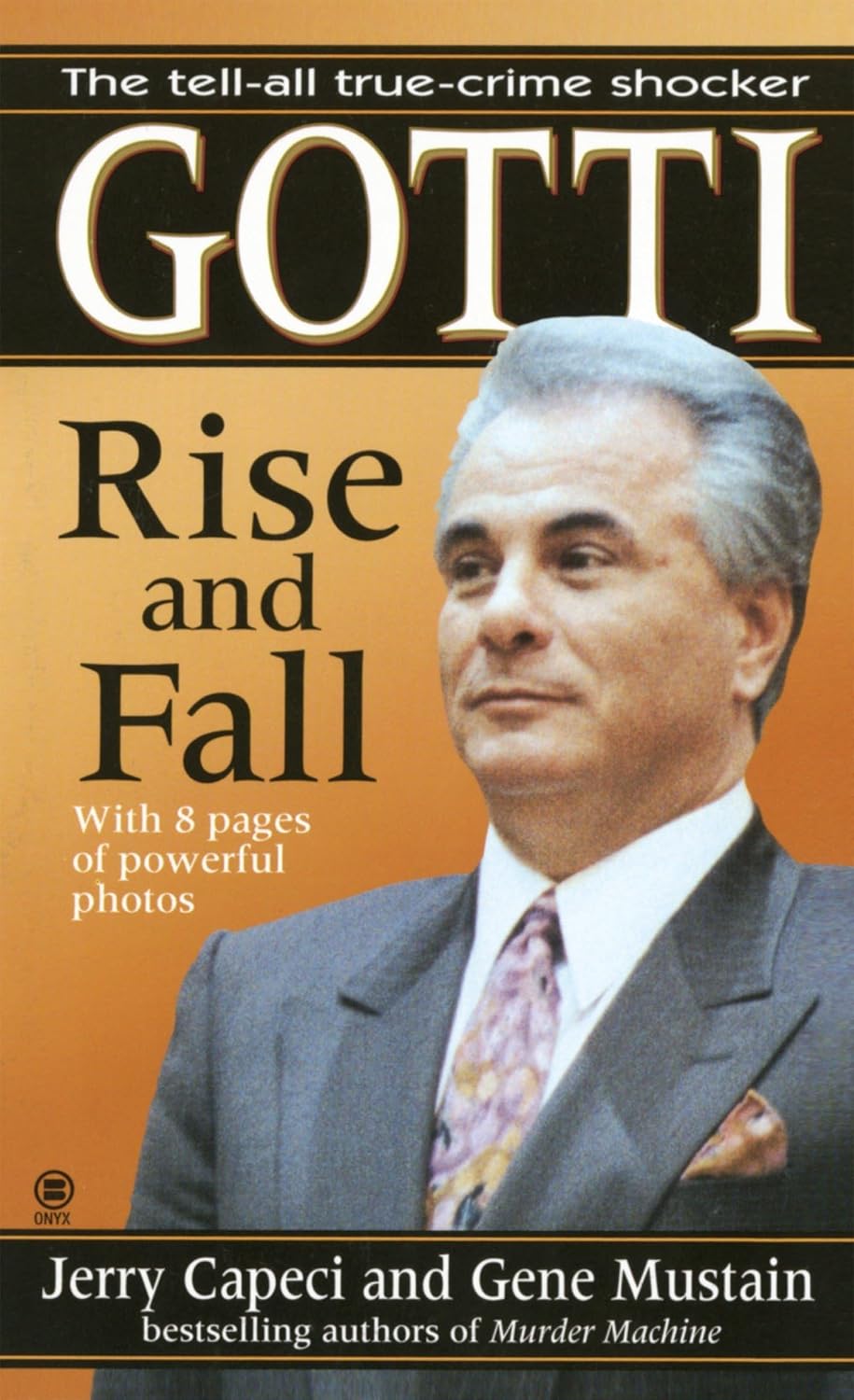
Gotti: Rise and Fall
References
-
[1]Carlo Gambino FBI Vault filesTier 1SupportsView source ↗
-
[2]John GottiTier 1SupportsMentionsView source ↗
-
[3]United States sentencing position discussing Salvatore Gravano cooperationTier 1SupportsView source ↗