
Vito Rizzuto became the most recognizable figure in Montreal organized crime during the late twentieth and early twenty-first centuries. His importance came not only from his position inside a Sicilian family network, but from his ability to connect criminal groups that did not belong to one formal hierarchy.
His career linked Montreal to New York Mafia politics, international drug trafficking and a wider Quebec underworld that included Italian organized-crime factions, independent traffickers, the West End Gang and outlaw motorcycle clubs.
From Sicily to Montreal
Vito Rizzuto was born in Cattolica Eraclea, Sicily, on February 21, 1946.
His family immigrated to Canada while he was young and settled in the Montreal area. His father, Nicolo Rizzuto Sr., became a major figure in the city’s Sicilian organized-crime milieu.
Montreal already had an entrenched Italian criminal structure associated with the Cotroni and Violi families. The rise of the Rizzutos therefore occurred inside an existing underworld rather than on empty ground.
Over time, the Sicilian network around the Rizzutos gained influence as older rivals declined through killings, prosecutions and shifting alliances.
The Bonanno connection
The most important judicially established episode in Vito Rizzuto’s U.S. history concerns the 1981 killings of three Bonanno crime family captains in Brooklyn.
The murders occurred during a violent internal struggle inside the Bonanno family after the removal of boss Philip Rastelli’s rival Carmine Galante and amid conflict over control of the family.
Three captains—Alphonse Indelicato, Philip Giaccone and Dominick Trinchera—were lured to a meeting and killed on May 5, 1981.
Years later, U.S. prosecutors accused Rizzuto of participating in the conspiracy. The case became a major bridge between Montreal Mafia history and the internal politics of New York’s Bonanno family.
Arrest, extradition and guilty plea
Rizzuto was arrested in Montreal in January 2004 on a U.S. extradition request.
After legal proceedings in Canada, he was extradited to the United States in 2006.
On May 4, 2007, he pleaded guilty in federal court to racketeering conspiracy connected with the 1981 triple murder. He admitted being present at the scene as part of the conspiracy while disputing accounts that described him as one of the shooters.
He received a ten-year prison sentence and a substantial fine.
The guilty plea is crucial because it separates one major part of the Rizzuto story from rumor. Whatever later arguments existed about his exact physical role, his participation in the conspiracy was established by his own plea in federal court.
A network rather than a simple hierarchy
Rizzuto was often described in the press as the “boss” or “godfather” of Montreal.
Those labels capture his influence but can oversimplify the structure he operated in.
Montreal organized crime involved family relationships, business partnerships, ethnic networks and transactional alliances. Rizzuto’s power appears to have depended heavily on mediation: resolving disputes, maintaining contacts and connecting groups that could profit from cooperation.
That model helps explain why his absence had such a large effect. A broker can be difficult to replace even when the individual organizations around him remain intact.
Project Colisée and the network at home
While Vito Rizzuto faced U.S. proceedings, Canadian authorities were conducting Project Colisée.
The RCMP-led operation culminated in November 2006 with raids, arrests and hundreds of officers deployed across the Montreal area.
Authorities identified senior figures including Vito’s father Nicolo Rizzuto Sr., Paolo Renda, Rocco Sollecito, Francesco Arcadi, Francesco Del Balso and Lorenzo Giordano.
The investigation alleged criminal activity involving drug importation, trafficking, bookmaking, extortion and proceeds of crime.
Project Colisée is useful because it shows the network around Rizzuto as a collection of named people and specific criminal markets rather than as a vague “Mafia” label.
The family losses during imprisonment
Rizzuto’s years in U.S. custody coincided with devastating losses inside his family.
On December 28, 2009, his son Nicolo Rizzuto Jr. was shot and killed in Montreal.
On May 20, 2010, his brother-in-law Paolo Renda disappeared after leaving his home area. He has never been found.
On November 10, 2010, Vito’s father, Nicolo Rizzuto Sr., was shot and killed at his home in Montreal.
These events became part of a wider cycle of killings and disappearances affecting people associated with the old network.
It is tempting to force every incident into a single revenge narrative. The public evidence does not support treating every death as part of one proven chain of command.
Release and return to Canada
Rizzuto was released from U.S. federal prison on October 5, 2012.
He returned to the Montreal area at a time when the criminal landscape had changed dramatically.
Many of his closest relatives and associates were dead or missing. Rival networks had gained space. Journalists and law-enforcement sources quickly began reporting that his return was altering the balance again.
A new sequence of killings followed, and contemporary coverage often described the period as a restoration or revenge campaign.
Those descriptions remain partly interpretive. A careful historical account therefore distinguishes between documented deaths, criminal charges and broader theories about who ordered what.
Death in 2013
Vito Rizzuto died on December 23, 2013, at Sacré-Cœur Hospital in Montreal. He was sixty-seven.
Hospital reporting at the time attributed his death to natural causes following serious health problems.
His funeral took place in Montreal’s Little Italy and drew extensive media attention.
His death belongs under Natural Causes, not murder or prison death.
That ending is historically important because it closed a period in which one individual had become the central public symbol of Montreal’s Mafia structure.
What happened to the organization after him
Rizzuto’s death did not end organized crime in Montreal.
Instead, the city entered a more fragmented period in which established Italian organized-crime figures, outlaw motorcycle gangs, street gangs and independent trafficking networks competed and cooperated in changing combinations.
The Rizzuto name remained relevant. In June 2025, Vito’s son Leonardo Rizzuto was arrested in a large Quebec police operation and charged with first-degree murder in connection with a 2011 killing. The charge is an allegation and should not be treated as a conviction.
That later development illustrates the persistence of the family name without proving continuity of exactly the same structure Vito Rizzuto once coordinated.
Reputation and mythology
Vito Rizzuto is sometimes portrayed as a uniquely peaceful Mafia diplomat who kept Montreal stable through personal authority.
There is some historical basis for viewing him as a mediator, but the romantic version can hide the environment in which that mediation occurred.
The network was tied to narcotics trafficking, extortion, illegal gambling and violent disputes. Stability in organized crime does not mean an absence of coercion; it can mean that conflict is being managed before it becomes visible.
The more useful historical question is therefore not whether Rizzuto was a “good” or “bad” boss. It is how his relationships reduced friction among groups whose interests often overlapped.
Historical significance
Vito Rizzuto matters because his biography connects several major organized-crime histories.
He links the Rizzuto crime family to the Bonanno crime family and the 1981 three-captains murder. He links Montreal to Project Colisée and the RCMP’s largest investigations into traditional Italian organized crime. His imprisonment connects directly to the killings of his son and father and to the disappearance of Paolo Renda.
His return in 2012 opens another rabbit hole into the violent reordering of Montreal’s underworld, while his death in 2013 marks the end of the network’s most identifiable leadership era.
The strongest way to understand Rizzuto is therefore as a criminal broker: a man whose influence came from the number and importance of the relationships running through him. When he was removed from Montreal, those relationships became harder to manage. That disruption may be his clearest historical legacy.
Documented network
Nicolo Rizzuto Sr. (person): Vito Rizzuto is connected to Nicolo Rizzuto Sr. in the sourced historical record.
Nicolo Rizzuto Jr. (person): Vito Rizzuto is connected to Nicolo Rizzuto Jr. in the sourced historical record.
Rizzuto crime family (organization): Vito Rizzuto is connected to Rizzuto crime family in the sourced historical record.
Bonanno Crime Family (organization): Rizzuto pleaded guilty in the United States to racketeering conspiracy connected with the 1981 killings of three Bonanno captains.
Project Colisée: The 2006 Montreal Mafia Takedown (event): Project Colisée targeted senior figures in the Montreal network surrounding Rizzuto while he faced U.S. proceedings.
Timeline and case connections
Structured events are separated from general biography so a later audit can change a date, conviction, killing, organizational split or court outcome without rewriting unrelated portions of the page.
Date not specified in current profile sources — Project Colisée: The 2006 Montreal Mafia Takedown. Project Colisée targeted senior figures in the Montreal network surrounding Rizzuto while he faced U.S. proceedings.
December 23, 2013 — Death of Vito Rizzuto. Rizzuto died at Sacré-Cœur Hospital in Montreal on December 23, 2013.
Status and record
The structured birth record lists February 21, 1946 in Cattolica Eraclea, Sicily, Italy. The death record lists December 23, 2013 in Montreal, Quebec, Canada. Cause: Natural causes following serious illness. Rizzuto died at Sacré-Cœur Hospital in Montreal on December 23, 2013.
Books and screen
Source record
The Master package currently attaches these sources to the profile: – PROJECT COLISÉE – A Major Police Operation Targeting Traditional Italian Organized Crime — Royal Canadian Mounted Police / Government of Canada, Tier 1. – Timeline: Life of reputed Mafia boss Vito Rizzuto — Global News / Montreal Gazette, Tier 2. – Rizzuto crime family — Wikipedia, Tier 3. – Vito Rizzuto, Montreal’s Mafia boss with a global reach, dead at 67 — The Canadian Press / CityNews, Tier 2.
The presence of a source does not mean it supports every sentence. Claim-level references remain in structured data for later audits.
Evidence and editorial boundaries
For living subjects in particular, legal status and allegations require dated evidence. Future expansion should come from stronger records, court material, archives or newly processed canonical entities rather than generalized crime lore.
Key events
Born
Birth of Vito Rizzuto.
Project Colisée: The 2006 Montreal Mafia Takedown
Project Colisée was a major multi-agency investigation that produced mass arrests, searches and charges against a Montreal Italian organized-crime network in November 2006.
Death
Death of Vito Rizzuto.
Montreal, Quebec, CanadaPeople, groups and places
Books connected to Vito Rizzuto
As an Amazon Associate, RoguesBook earns from qualifying purchases through the edition links below.
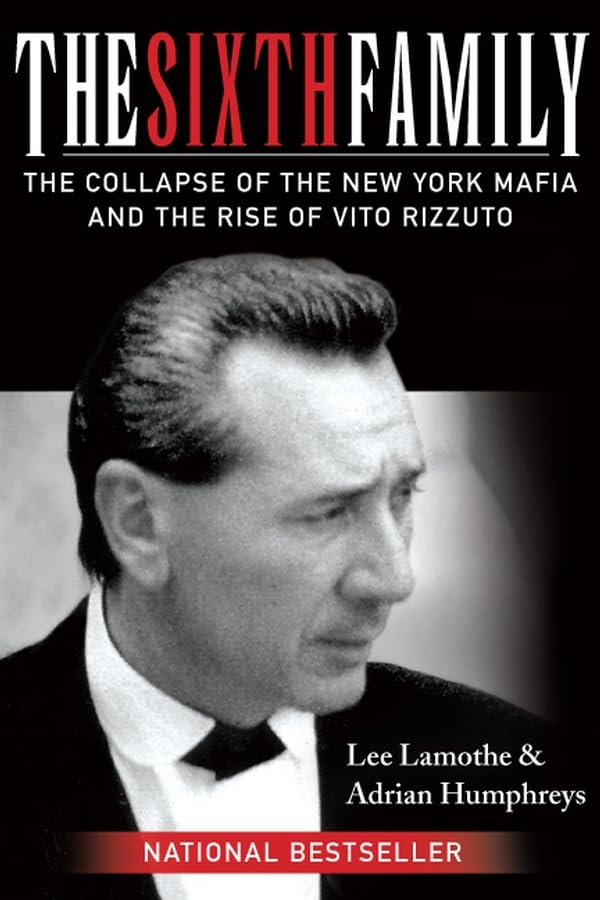
The Sixth Family: The Collapse of the New York Mafia and the Rise of Vito Rizzuto

Business or Blood: Mafia Boss Vito Rizzuto’s Last War
References
-
[1]CFSEU Officers Tackle Traditional Organized Crime on Several FrontsTier 1SupportsView source ↗
-
[2]Police Dismantle Traditional Italian-based Organized Crime in MontréalTier 1SupportsView source ↗
-
[3]PROJECT COLISÉE - A Major Police Operation Targeting Traditional Italian Organized CrimeTier 1SupportsMentionsView source ↗
-
[4]Nick Rizzuto gunned down in Montreal: sourceTier 2SupportsView source ↗
-
[5]Timeline: Life of reputed Mafia boss Vito RizzutoTier 2MentionsSupportsView source ↗
-
[6]Vito Rizzuto, Montreal’s Mafia boss with a global reach, dead at 67Tier 2MentionsSupportsView source ↗
-
[7]Rizzuto crime familyTier 3SupportsMentionsView source ↗