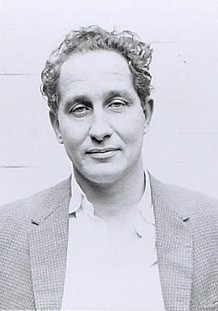
Ronnie Biggs became the most famous face of the Great Train Robbery even though he was not the mastermind of the 1963 crime. His notoriety came from what happened afterward: a thirty-year prison sentence, a spectacular escape from Wandsworth Prison, decades as a fugitive abroad, and an extraordinary public life in Brazil before he voluntarily returned to Britain in 2001.
The contrast between fame and operational importance is central to understanding Biggs. British Transport Police identifies Bruce Reynolds as the principal organizer of the Great Train Robbery. Biggs was part of the gang and helped bring in a replacement train driver, but his later celebrity far exceeded his role in planning the robbery itself.
The Great Train Robbery
On August 8, 1963, a gang stopped the Glasgow-to-London Royal Mail train at Bridego Bridge in Buckinghamshire after tampering with railway signals. The robbers overpowered staff and removed 120 sacks of cash, taking roughly £2.6 million — an enormous sum at the time.
Biggs took part in the operation. The replacement driver recruited for the robbery proved unable to operate the locomotive as planned, forcing the regular driver to move the train. After the gang fled, investigators traced them to Letherslade Farm, where fingerprints and abandoned materials provided critical evidence.
Biggs was arrested, convicted and sentenced to thirty years in prison. The sentence placed him among the defendants receiving extremely heavy punishment for what became one of Britain’s most famous postwar crimes.
Escape from Wandsworth
Biggs served only about fifteen months before escaping from Wandsworth Prison on July 8, 1965. The escape transformed him from one participant in a famous robbery into an international fugitive. He left Britain, underwent plastic surgery intended to alter his appearance and eventually lived in Australia under an assumed identity.
When he feared discovery there, he moved again and ultimately settled in Brazil. His ability to remain outside British custody for decades turned him into a recurring tabloid figure. Police efforts to return him became part of the mythology surrounding the robbery.
In 1974 former Scotland Yard detective Jack Slipper tracked Biggs to Rio de Janeiro. British authorities were unable to secure his return from Brazil, and Biggs remained free. His legal position, family circumstances and the absence at that time of an effective extradition route allowed him to continue living there.
Fugitive celebrity
Biggs’s years in Brazil gave him a level of fame unusual for a convicted robber. He gave interviews, posed for photographs and became connected to books, recordings and popular culture built around the Great Train Robbery. That publicity helped turn him into the symbolic face of the crime.
The image could obscure the costs of the life he had chosen. He was separated from family, lived with the possibility of arrest, and remained legally unable to return home without facing imprisonment. In later interviews he acknowledged those losses even while continuing to cultivate the “rogue” persona that newspapers associated with him.
His celebrity also distorted public memory of the robbery. The operation involved a larger gang, with Bruce Reynolds playing the central planning role and other participants carrying out critical tasks. Biggs became the name many people remembered because the escape and fugitive years provided a continuing story long after the robbery itself.
Return, final years and death
In May 2001, after more than three decades abroad, Biggs voluntarily returned to Britain. He was arrested on arrival and sent back to prison to continue serving his sentence. By then his health was deteriorating and he later suffered a series of strokes.
He was released on compassionate grounds in 2009 because of his medical condition. Biggs spent his final years in Britain and died in London on December 18, 2013, aged 84.
Why the legend became bigger than the role
Ronnie Biggs remains useful as a case study in how criminal celebrity is created. His actual role in the Great Train Robbery was important enough to produce a thirty-year sentence, but the escape, Brazil years and repeated media appearances made him far more famous than many participants who had greater responsibility for organizing the heist.
That distinction matters to the historical record of the case. Biggs was a participant in the Great Train Robbery and a successful prison escapee who remained at large for decades. He was not the architect of the robbery. His lasting fame came from the story that followed the crime, not from command of the gang that carried it out.
Documented network
Great Train Robbery gang (organization): Ronnie Biggs is documented in sources as associated with Great Train Robbery gang.
Great Train Robbery (1963) (event): Linked to the related canonical historical event.
Ronnie Biggs escape from Wandsworth Prison (event): Linked to the related canonical historical event.
Wandsworth Prison (prison): Served part of his Great Train Robbery sentence at Wandsworth before escaping in July 1965.
Great Train Robbery (event) is recorded in the canonical graph as participant convicted, documented status, 90% confidence. This label is preserved without inferring a broader association.
Wandsworth Prison (prison) is recorded in the canonical graph as escaped in 1965, documented status, 90% confidence. This label is preserved without inferring a broader association.
Leatherslade Farm (location) is recorded in the canonical graph as gang hideout, documented status, 90% confidence. This label is preserved without inferring a broader association.
Bruce Reynolds (person): robbery mastermind / prior criminal contact
Buster Edwards (person) is recorded in the canonical graph as fellow great train robbery participant, documented status, 90% confidence. This label is preserved without inferring a broader association.
Timeline and case connections
Structured events are kept separate from general biography so later audits can update dates, convictions, killings, organizational changes or court outcomes without rewriting unrelated material.
Date not specified in current profile sources — Great Train Robbery (1963). Linked to the related canonical historical event.
Date not specified in current profile sources — Ronnie Biggs escape from Wandsworth Prison. Linked to the related canonical historical event.
Date not specified in current profile sources — Great Train Robbery. participant; convicted
18 December 2013 — Death of Ronnie Biggs. Biggs died in London in 2013 after years of serious ill health and multiple strokes.
Status and record
The structured birth record lists 1929. The death record lists 18 December 2013 in London, England. Cause: died after years of serious ill health and multiple strokes. Biggs died in London in 2013 after years of serious ill health and multiple strokes.
Books and screen
Source record
The Master package currently attaches these sources to the profile: – The Great Train Robbery — British Transport Police, Tier 1. – Policing and prosecution: Great Train Robbery records — The National Archives (UK), Tier 1. – Ronnie Biggs obituary — The Guardian, Tier 2. – Ronnie Biggs, Great Train Robber, dies aged 84 — The Guardian, Tier 2. – Ronnie Biggs obituary — The Independent, Tier 2.
Claim-level source references remain in the structured data so later audits can trace evidence rather than relying on a generic bibliography.
Evidence and editorial boundaries
For living subjects especially, legal status and allegations require dated evidence. Future expansion should come from stronger records, court material, archives or newly processed canonical entities rather than generalized crime lore.
Key events
Great Train Robbery (1963)
A gang stopped and robbed a Glasgow-to-London Royal Mail train in the early hours of 8 August 1963, stealing a cash consignment reported at…
Ronnie Biggs escape from Wandsworth Prison
Ronnie Biggs escaped from Wandsworth Prison in July 1965 after serving about fifteen months of his thirty-year Great Train Robbery sentence.
Death
Death of Ronnie Biggs.
Where this person was held
People, groups and places
References
-
[1]The Great Train RobberyTier 1SupportsMentionsView source ↗
-
[2]Policing and prosecution: Great Train Robbery recordsTier 1SupportsMentionsView source ↗
-
[3]Ronnie Biggs obituaryTier 2SupportsMentionsView source ↗
-
[4]Ronnie Biggs, Great Train Robber, dies aged 84Tier 2MentionsView source ↗
-
[5]Ronnie Biggs obituaryTier 2MentionsView source ↗