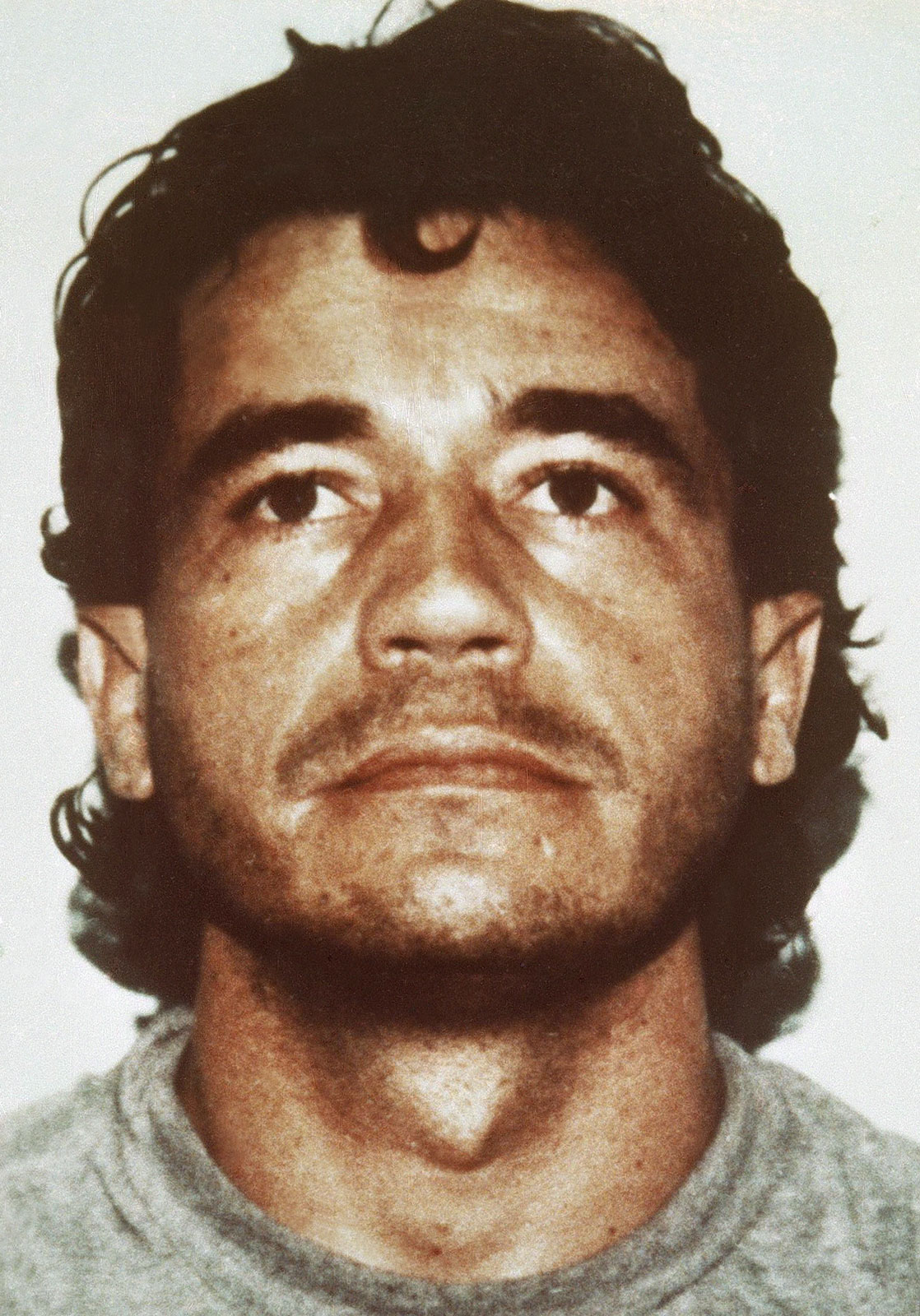
Carlos Enrique Lehder Rivas was one of the early Medellín Cartel figures who helped turn cocaine trafficking into an industrial-scale air-transport business between Colombia, the Caribbean and the United States. His importance was not simply that he sold cocaine. Lehder became associated with a logistics model built around aircraft, refueling points and transshipment territory, most famously Norman’s Cay in the Bahamas, at a moment when Colombian traffickers were rapidly expanding access to the U.S. market.
An air-smuggling entrepreneur
DEA historical accounts place Lehder among the traffickers who developed large cocaine routes during the late 1970s and early 1980s. Aircraft were central to that system. Small planes could move loads from Colombia through Caribbean staging points and then toward the United States, reducing dependence on older smuggling methods and allowing larger, more frequent shipments.
Norman’s Cay became the symbol of Lehder’s approach. The island’s location in the Bahamas made it useful as a transshipment and refueling point between South America and Florida. The popular image of Lehder often reduces the story to an exotic private island, but the more important point is logistical: control of an intermediate base could make an air bridge more reliable, scalable and difficult to disrupt.
Medellín Cartel connections
Lehder operated in the same expanding cocaine economy as Pablo Escobar and other figures later grouped under the Medellín Cartel label. The cartel was never a conventional corporation with a single neat chain of command. It was a coalition of traffickers, financiers, transport specialists and armed networks whose interests overlapped.
Lehder’s value inside that environment was transportation. The Medellín organization needed cocaine production, laboratories, money laundering, political protection and violence, but it also needed a dependable way to move product north. Lehder’s aviation network helped solve that problem at a critical stage in the cartel’s growth.
Politics and the extradition issue
Lehder also became one of the most public anti-extradition voices among Colombian traffickers. Extradition to the United States threatened cartel leaders with a legal system they could not influence as easily as institutions inside Colombia. That made the issue existential for senior traffickers.
He created a political movement and used anti-extradition rhetoric publicly. His name later became connected to Los Extraditables, the coalition of traffickers who opposed transfer to U.S. courts. The broader Extradition War became one of the defining conflicts of Colombia’s cocaine era, combining political pressure, terrorism, assassinations and attempts to intimidate the state into abandoning extradition.
Capture and extradition
Lehder’s removal was a major early victory against the Medellín network. Colombian authorities captured him in 1987 and extradited him to the United States in February of that year. The transfer was strategically important because it demonstrated that a senior cartel figure could be placed beyond the immediate reach of the organization’s Colombian protection networks.
He was prosecuted in federal court on drug-trafficking charges and received a very long prison sentence. His case became one of the clearest examples of why Medellín leaders feared extradition: once a defendant was in U.S. custody, the political and coercive tools that had worked in Colombia were dramatically less useful.
What Lehder changed
Lehder’s historical significance comes from the intersection of logistics, politics and scale. His air-smuggling network showed how cocaine trafficking could be organized as a repeatable transport system rather than as isolated shipments. At the same time, his political activity demonstrated how deeply trafficking organizations were willing to enter public life when their legal survival was threatened.
That combination made him different from a simple lieutenant. He was a specialist whose operational model influenced the growth of a larger criminal economy, while his anti-extradition activism placed him inside the political conflict that would dominate the Medellín era.
The Norman’s Cay mythology
Norman’s Cay has become one of the most repeated images in cartel history because it fits a cinematic narrative: aircraft, Caribbean water, money and a remote base controlled by traffickers. The reality matters more than the legend. The island worked because geography and aviation technology allowed traffickers to break a long route into manageable stages.
Norman’s Cay is therefore not just a colorful anecdote. It explains the infrastructure behind the Medellín Cartel’s early growth and helps connect Lehder to the larger story of how cocaine supply chains were built before later cartels adopted more diversified maritime, land and container routes.
Removal before Escobar’s final collapse
Lehder was taken out of the Medellín leadership picture years before Pablo Escobar’s death in 1993. That timing is important. The cartel did not collapse when Lehder was captured, just as it did not disappear after the loss of any one figure. Other transport routes, traffickers and armed networks continued operating.
His extradition instead represented cumulative pressure. Over time, arrests, deaths, defections, asset seizures and attacks on infrastructure weakened the network. Lehder’s removal was one of the first major blows against a generation of traffickers who had appeared almost untouchable.
Why Carlos Lehder remains a high-value profile
Carlos Lehder connects several major chapters of Colombia’s cocaine era: the Medellín Cartel, Pablo Escobar, Los Extraditables, Norman’s Cay and Colombia’s Extradition War. His career is also a reminder that criminal empires depend on logistics as much as violence.
The enduring interest in Lehder comes from that mixture. He was a trafficker, aviation organizer, political provocateur and symbol of the period when cocaine routes between Colombia and the United States expanded at extraordinary speed. Understanding his role makes the Medellín story less about a single famous kingpin and more about the system that made the cartel possible.
Prison, cooperation and the long legal aftermath
Lehder’s U.S. case continued long after his 1987 extradition. The original punishment reflected the scale of the charges and the political importance attached to his prosecution. His later legal history included cooperation with U.S. authorities and sentence changes, making his incarceration story much longer and more complicated than the simple line “extradited and jailed.”
That long aftermath matters because it illustrates the leverage created by extradition. Once in federal custody, a former cartel figure can become a source of information, a cooperating witness, a defendant seeking reductions or all three at different points. The criminal network may have moved on, but the legal consequences can continue for decades.
A logistics profile, not an Escobar footnote
Lehder is sometimes introduced mainly through Pablo Escobar, which understates his historical importance. A trafficking organization can replace a gunman more easily than it can replace a system that reliably moves multi-kilogram loads across borders. Lehder’s place in the Medellín story comes from solving that logistical problem at an early stage.
That makes his profile valuable even for readers who already know the Escobar story. Following Lehder leads away from biography and toward infrastructure: aircraft, Caribbean staging points, extradition politics and the network of traffickers whose combined skills made the Medellín Cartel possible.
Documented network
Medellín Cartel (organization): DEA history identifies Lehder as a major trafficker whose cooperation with Colombia-based traffickers helped shape the Medellín Cartel.
Los Extraditables (organization): Lehder was an outspoken opponent of extradition associated with the Medellín anti-extradition campaign.
Colombia’s Extradition War, 1984–1991 (story arc): Lehder’s anti-extradition politics and 1987 extradition are major elements of the arc.
Status and record
The structured life-status field is living. This administrative value should change only when a reliable current source supports an update. The current-status field is released.
Books and screen
Source record
The Master package currently attaches these sources to the profile: – DEA History 1975–1980 — Drug Enforcement Administration, Tier 1. – DEA History 1985–1990 — Drug Enforcement Administration, Tier 1.
The presence of a source does not mean it supports every sentence. Claim-level references remain in structured data for later audits.
Evidence and editorial boundaries
For living subjects in particular, legal status and allegations require dated evidence. Future expansion should come from stronger records, court material, archives or newly processed canonical entities rather than generalized crime lore.
People, groups and places
Portrayed on Screen
American Made
American Made gives RoguesBook a clean bridge from one pilot’s biography into the Medellín Cartel network.
References
-
[1]Pablo Escobar Life MaskTier 1SupportsView source ↗
-
[2]DEA History 1975–1980Tier 1SupportsMentionsView source ↗
-
[3]The Drug Enforcement Administration, 1985–1990Tier 1SupportsMentionsView source ↗
-
[4]The Drug Enforcement Administration, 1990–1994Tier 1SupportsView source ↗
-
[5]Sentencia de Justicia y Paz — antecedentes de Bloque de Búsqueda y Los PepesTier 1SupportsView source ↗