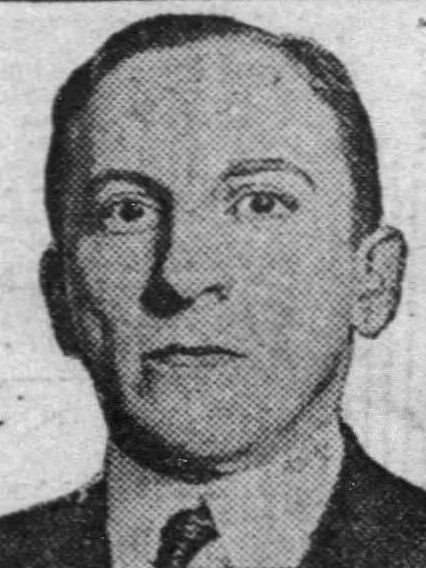
Arnold Rothstein was one of the most important financiers in the New York underworld before and during Prohibition. He was a gambler, bookmaker and investor whose money helped younger criminal operators move from neighborhood rackets into larger, better financed enterprises.
His reputation later grew into that of an all-powerful criminal mastermind, especially because of the 1919 Black Sox scandal. The historical record is more complicated. Rothstein was repeatedly linked to corruption and illegal gambling, and his financing role in Prohibition networks is well documented, but some of the most famous claims about him were never proved in court.
A professional gambler in New York
Rothstein was born in New York City in 1882. He entered gambling while young and built a reputation around betting, card games, bookmaking and the ability to raise or deploy large sums of cash.
That financial capacity distinguished him from many street criminals of the era. Rothstein could fund a venture, absorb risk, connect people with capital and take a share of the return.
His underworld importance therefore came less from commanding a conventional gang than from acting as a broker. He occupied the space between gamblers, bootleggers, politicians, businessmen and violent operators who needed financing.
That model would become increasingly important during Prohibition.
Financing bootlegging
The National Archives gives unusually concrete evidence for Rothstein’s role in the illegal liquor economy.
Its history of Prohibition-era smuggling describes him financing the purchase of liquor abroad, ships to transport it and corruption needed to land the cargo around New York. The same account identifies him as an early financial backer of criminal entrepreneurs including Waxey Gordon and other large liquor syndicates.
Rothstein later helped finance the younger network around Charles “Lucky” Luciano, Joe Adonis, Frank Costello, Meyer Lansky and Benjamin “Bugsy” Siegel.
The significance was structural. Prohibition bootlegging was not simply a matter of gangsters stealing trucks. Large operations required working capital, import arrangements, vessels, warehouses, bribery, distribution and protection.
Rothstein could help provide the money that made that scale possible.
Luciano, Lansky and the next generation
Rothstein is often described as a mentor to the men who later built the modern American Mafia and national crime syndicate.
“Mentor” can be useful if it is not taken too literally. There was no formal underworld school in which Rothstein trained a class of future bosses. What the evidence does show is financing, association and business influence.
The National Archives states that the Luciano-Adonis-Costello-Lansky-Siegel network received early financial backing from Rothstein. It also describes him advising the group to sell expensive imported liquor to wealthy customers rather than dilute product for the mass market.
That is a revealing example of his influence. It reflects market strategy rather than street warfare: identify the customer, control quality, use capital efficiently and protect the supply chain.
Younger gangsters did not need Rothstein to teach them violence. His distinctive value was showing how illegal markets could be treated as organized business.
The Black Sox scandal
No part of Rothstein’s biography requires more caution than the 1919 World Series.
Eight Chicago White Sox players were accused of participating in a scheme to deliberately lose games against the Cincinnati Reds in exchange for gambling money. Rothstein’s name became permanently tied to the scandal.
Contemporary accusations and later histories identified people connected to him, including former boxer Abe Attell, as participants in the gambling operation. Rothstein himself denied arranging the fix.
The surviving record does not justify a simple sentence that he “fixed the World Series” as proven fact.
The Mob Museum notes that Rothstein was suspected by many of engineering the scandal, while also emphasizing that the case against him never produced a conviction establishing that claim. Other historical accounts describe witnesses and gamblers giving conflicting versions of whether he had approved, rejected or later profited from the scheme.
The scandal mattered enormously to his public image even without a conviction. It turned a wealthy New York gambler into a national symbol of corruption in sport.
Gambling, information and influence
Rothstein’s career was built around information.
Bookmaking and high-stakes betting rewarded anyone who could obtain news quickly, understand odds and move money before competitors. Horse racing, cards and sports betting all created opportunities for both legitimate handicapping and corruption.
His reputation for betting only when he held an advantage contributed to the image of “The Brain,” a man who supposedly never left anything to chance.
That legend should also be treated carefully. Rothstein did lose, and one major gambling dispute appears to have been directly connected to his death.
Final years and death: the final poker debt
In 1928 Rothstein became involved in a high-stakes poker game and a dispute over a very large debt.
On November 4, he was shot at Manhattan’s Park Central Hotel. He survived long enough to be questioned but did not identify his attacker. He died on November 6.
Accounts differ on the precise mechanics of the dispute and who was ultimately responsible. What is clear is that the shooting was connected in contemporary reporting to gambling debts and that no murder conviction conclusively resolved the killing.
His death at forty-six removed a financier at the moment New York organized crime was becoming larger and more centralized.
What happened after Rothstein
The National Archives describes Rothstein’s murder as creating a power and money vacuum in the underworld.
The younger network he had helped finance no longer needed a single outside bankroll in the same way. Luciano, Lansky, Costello, Adonis and Siegel were becoming powerful operators in their own right.
Within a few years, New York organized crime would be reshaped by the Castellammarese War and the reorganization of Mafia leadership in 1931.
Rothstein did not create that entire system. He died before it fully developed. But his career demonstrated a model that fit the new environment: capital, partnerships across groups, commercial planning and investment in illegal markets.
Myth and evidence
Rothstein’s legend tends to make him responsible for everything.
He has been portrayed as the secret architect behind sports fixing, bootlegging, narcotics, gambling and the careers of nearly every major New York gangster of the 1920s.
A better historical approach is narrower.
His financing of bootlegging networks is documented. His associations with major younger criminals are documented. His importance in illegal gambling is beyond dispute. His connection to the Black Sox scandal is historically significant, but the strongest version of the accusation was never established by a conviction.
That distinction does not minimize his role. It makes it more credible.
Historical significance
Rothstein represents a transition in organized crime.
The older underworld depended heavily on local gangs, vice districts and political protection. Prohibition created markets that demanded larger amounts of capital and more sophisticated logistics.
Rothstein was well positioned for that transition because his central skill was money.
He could finance liquor, back bookmakers, connect operators and spread risk across different ventures. The men around him learned that criminal enterprises could be managed with many of the same tools used in legitimate commerce.
His strongest historical connections run toward Luciano, Lansky, Siegel, Waxey Gordon, Legs Diamond, Prohibition smuggling and the unresolved 1928 shooting.
His legacy is not that he single-handedly invented modern organized crime. It is that he helped supply the capital and business logic that allowed a new generation of criminals to expand.
Documented network
Charles “Lucky” Luciano (person): National Archives history identifies Rothstein as an early financial backer of the Luciano-Adonis-Costello-Lansky-Siegel bootlegging network.
Meyer Lansky (person): Lansky was part of the younger syndicate network whose early liquor operations received Rothstein financing.
Benjamin “Bugsy” Siegel (person): Siegel was part of the Lansky-connected Prohibition network that National Archives history describes as receiving Rothstein backing.
Jack “Legs” Diamond (person): Diamond was closely associated with Rothstein’s underworld circle during Prohibition.
Waxey Gordon (person): National Archives history identifies Rothstein as an early financier of Gordon’s liquor-smuggling operation.
Timeline and case connections
Structured events are separated from general biography so a later audit can change a date, conviction, killing, organizational split or court outcome without rewriting unrelated portions of the page.
1928-11-06 — Death of Arnold Rothstein. Rothstein was shot at Manhattan’s Park Central Hotel on November 4, 1928 and died two days later without identifying his attacker.
Status and record
The structured birth record lists 1882-01-17 in New York City, United States. The death record lists 1928-11-06 in New York City, United States. Cause: Gunshot wounds. Rothstein was shot at Manhattan’s Park Central Hotel on November 4, 1928 and died two days later without identifying his attacker.
Books and screen
Source record
The Master package currently attaches these sources to the profile: – Smugglers, Bootleggers, Scofflaws — U.S. National Archives and Records Administration, Tier 1. – Mafia Monograph — Federal Bureau of Investigation, Tier 1. – Arnold Rothstein — Wikipedia, Tier 4. – Arnold Rothstein – Death, Boardwalk Empire & Crimes — Biography.com, Tier 3. – Arnold Rothstein — The Mob Museum, Tier 2. – One of New York’s most notorious gamblers is shot to death — HISTORY, Tier 3.
The presence of a source does not mean it supports every sentence. Claim-level references remain in structured data for later audits.
Evidence and editorial boundaries
For living subjects in particular, legal status and allegations require dated evidence. Future expansion should come from stronger records, court material, archives or newly processed canonical entities rather than generalized crime lore.
Key events
Born
Birth of Arnold Rothstein.
New York City, United StatesDeath
Death of Arnold Rothstein.
New York City, United StatesPeople, groups and places
References
-
[1]La Cosa NostraTier 1SupportsView source ↗
-
[2]Mafia MonographTier 1MentionsView source ↗
-
[3]Smugglers, Bootleggers, ScofflawsTier 1MentionsSupportsView source ↗
-
[4]Arnold RothsteinTier 2MentionsSupportsView source ↗
-
[5]Arnold Rothstein - Death, Boardwalk Empire & CrimesTier 3MentionsView source ↗
-
[6]One of New York’s most notorious gamblers is shot to deathTier 3MentionsSupportsView source ↗
-
[7]Arnold RothsteinTier 3MentionsView source ↗
-
[8]Legs DiamondTier 3SupportsView source ↗
-
[9]Lucky LucianoTier 3SupportsView source ↗
-
[10]Waxey GordonTier 3SupportsView source ↗