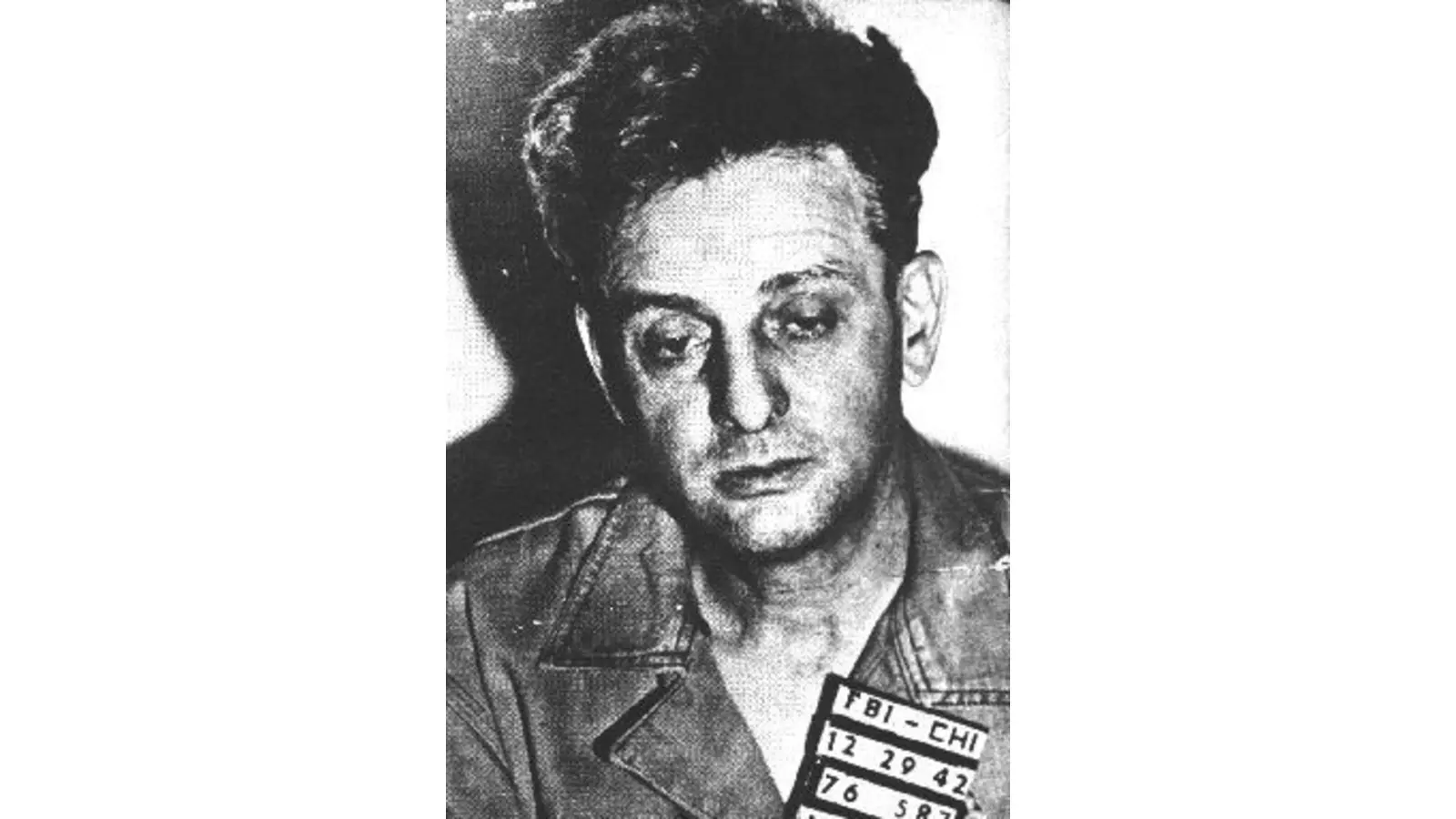
The Touhy Gang was a Chicago-area criminal organization associated with Roger Touhy and a circle of gunmen, robbers and bootleggers active during the violent transition from Prohibition into the Depression-era public-enemy period. Its history overlapped with Chicago's larger organized-crime conflicts, interstate robbery cases and, later, one of the most publicized prison escapes of the Second World War.
Roger Touhy and the northwest Chicago underworld
Roger Touhy came from a large Chicago family and became associated with bootlegging and other illegal enterprises in the northwest suburbs. Federal histories later described parts of northwest Cook County as “Touhy Territory.” The gang operated in an environment where alcohol distribution, labor rackets, gambling and protection systems were contested by rival groups.
Touhy's organization is often discussed in relation to the Capone interests. The two should not be collapsed into one network. The Touhy group had its own members and territory, and the rivalry became part of the wider struggle over Chicago's illegal markets. Basil “The Owl” Banghart emerged as one of the most important figures around Touhy, combining a long criminal record with experience in armed robbery, vehicle theft and repeated escapes from custody.
The Factor kidnapping case
The event that defined Touhy's legal history was the 1933 kidnapping of John “Jake the Barber” Factor. Touhy and several associates were prosecuted in Illinois state court. In February 1934 Touhy and two other defendants were convicted and received 99-year sentences.
The FBI had investigated the Factor kidnapping but turned its evidence over to state authorities because the victim had not been transported across state lines, limiting federal jurisdiction under the law then in force.
The Factor conviction remained controversial for decades. Later court rulings and litigation challenged aspects of the case.
A gang broken apart
According to FBI historical accounts, the Touhy organization was largely broken by 1934. Some members were dead; others were serving long prison sentences. Banghart also received a lengthy sentence for the Factor kidnapping and a federal sentence in a separate mail-robbery case.
For several years Touhy was therefore more significant as an imprisoned gang leader than as the head of an active street organization. That changed in October 1942.
The Joliet prison escape
Touhy, Banghart and other prisoners escaped from the Illinois state penitentiary at Joliet on October 9, 1942. Because they were state prisoners, the escape itself did not automatically give the FBI a federal case. The legal opening came after the fugitives failed to comply with Selective Service registration requirements during wartime, allowing federal warrants to be obtained.
The escapees relied on stolen identities, changing apartments and outside contacts. FBI histories describe the group as highly disciplined for a time. Members avoided unnecessary exposure, used aliases and tried to obtain vehicles and money that would reduce the risk of being identified through stolen property.
The group also began to fracture. Two fugitives were beaten after violating internal rules, and several men separated from the core group. Investigators used contacts, hotel records, stolen identification and surveillance to narrow the search.
The December 1942 capture
By December agents had located several fugitives and were using surveillance to work toward Touhy, Banghart and Edward Darlak. In the early hours of December 29, 1942, federal agents surrounded an apartment building in Chicago. Searchlights were directed at the building, nearby residents were moved away and the men were ordered to surrender.
Touhy, Banghart and Darlak were captured and returned to custody. The operation became another high-profile FBI success and revived national attention around a gang that many people had assumed belonged to an earlier criminal era.
Release, controversy and Touhy's death
Touhy and Banghart eventually obtained release after later legal proceedings challenged the legitimacy of the Factor case and related convictions. Touhy left prison in 1959. Only weeks later, on December 16, he was shot outside the home of his sister in Chicago and died shortly afterward.
Touhy's death generated theories about revenge, organized crime and old enemies. Those theories should remain theories unless a source supports a specific attribution. The killing is a strong candidate for its own Story because the unresolved questions belong at event level rather than inside a simplified organization biography.
Historical classification of the Touhy Gang
The gang's value as a research node comes from its connections: Chicago Prohibition conflicts, the Factor kidnapping prosecution, mail robbery, prison escapes, federal jurisdiction and the 1942 manhunt. A substantial organization page gives those connections context without pretending that every person linked to Touhy belonged to the same crew at the same time.
People who shaped this story
References
-
[1]A Byte Out of History: The Hunt for Roger “The Terrible” Touhy and His GangTier 1MentionsSupportsView source ↗
-
[2]Roger “The Terrible” TouhyTier 1MentionsSupportsView source ↗
-
[3]The FBI and the American Gangster, 1924-1938Tier 1MentionsSupportsView source ↗
-
[4]The FBI and the American Gangster, 1924–1938Tier 1Supports
-
[5]Roger Touhy mugshot and case materialsTier 1MentionsView source ↗