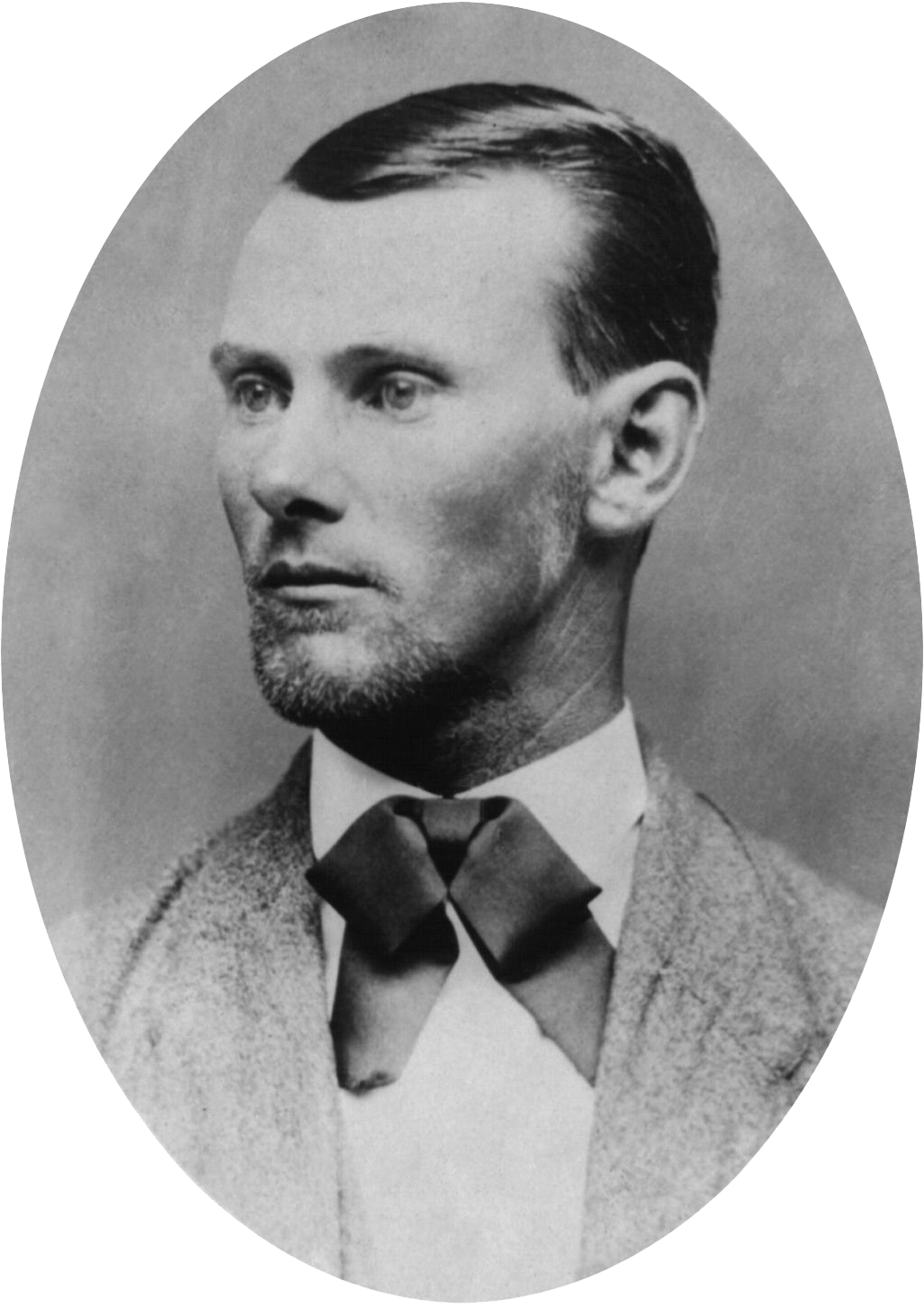
Jesse James became an American legend almost as quickly as he became an outlaw. A former Confederate guerrilla, he participated in a long post-Civil War career of armed robbery and then was transformed by newspapers, dime novels, songs and films into a political rebel and folk hero.
The legend is part of his history, but it should not replace the criminal record. James and his associates robbed banks, trains and other targets, and their violence affected employees, passengers, townspeople and law-enforcement officers. The popular claim that he routinely robbed the rich to give money to the poor is not supported by solid evidence.
Civil War Missouri
Jesse Woodson James was born in Missouri in 1847 and grew up in a border state torn apart by the Civil War.
Missouri’s conflict was especially brutal because conventional armies overlapped with guerrilla warfare, raids, reprisals and violence against civilians.
As a teenager, James joined pro-Confederate guerrillas associated with men such as William “Bloody Bill” Anderson. His older brother Frank also fought in the guerrilla conflict.
This experience mattered after the war. It gave the brothers weapons experience, networks of former fighters and a political identity rooted in Confederate resistance.
It also supplied later defenders with a ready-made explanation for their crimes: the James brothers could be presented not as ordinary robbers but as men continuing a political struggle against Reconstruction.
From guerrilla war to robbery
After the Civil War, Jesse and Frank James became associated with armed robberies across Missouri and neighboring states.
The brothers eventually operated with members of the Younger family and other former guerrillas in what became known as the James-Younger Gang.
Historical attribution of every robbery is difficult. Newspapers and detectives sometimes blamed famous outlaws for crimes because their names sold papers and provided convenient suspects.
The larger pattern, however, is clear. The gang carried out a sustained series of bank, stagecoach and train robberies.
In 1873 the group began robbing trains, an innovation that expanded both the geographic reach and the publicity of the outlaw career.
Building a political image
Jesse James did not passively receive his legend. He helped create it.
The State Historical Society of Missouri notes that he wrote letters to the press and benefited from editors sympathetic to former Confederates.
John Newman Edwards, a newspaper editor and political ally of ex-Confederate interests, portrayed James as a symbol of resistance to Republican Reconstruction government.
That publicity was powerful because it converted criminal acts into political theater.
The result was an early version of reputation management. James could deny particular robberies, attack his pursuers and present himself as a victim of political persecution while continuing to benefit from outlaw fame.
The Robin Hood image grew from this environment, not from documented evidence of a systematic program of redistributing stolen money to the poor.
Pinkerton pursuit and escalation
The Pinkerton National Detective Agency pursued the James brothers beginning in the early 1870s.
The conflict produced one of the most controversial episodes in the story.
In 1875 Pinkerton operatives attacked the James family home. An explosive device killed Jesse’s young half-brother Archie and badly injured his mother, Zerelda Samuel, whose arm was later amputated.
The raid strengthened sympathy for the James brothers among supporters who already viewed them as victims of Northern power.
It also demonstrates how the pursuit of famous outlaws could intensify cycles of violence rather than simply end them.
The Northfield disaster
The turning point for the original James-Younger Gang came at Northfield, Minnesota, on September 7, 1876.
The gang attempted to rob the First National Bank.
The raid failed when bank employees resisted and local residents armed themselves. Gunfire killed members of the outlaw party and triggered a large pursuit.
The Younger brothers were eventually captured. Jesse and Frank escaped.
Northfield shattered the original gang and demonstrated the risks of operating far from the supportive networks and familiar terrain that had helped the outlaws survive in Missouri and nearby areas.
It also became one of the best-documented events in the James story because the attack unfolded in a town full of witnesses.
A smaller and less stable gang
After Northfield, Jesse and Frank spent time under assumed names.
Jesse later organized another group of criminals and returned to robbery, but the new organization lacked the bonds created by Civil War service and family relationships in the original gang.
The State Historical Society of Missouri describes Jesse becoming increasingly suspicious of the newer men around him.
That deterioration is important. The outlaw career did not end because one giant posse finally cornered James. It ended from inside his own shrinking circle.
Governor Crittenden and the Ford brothers
By the early 1880s, Missouri governor Thomas T. Crittenden was determined to end the James problem.
A reward was offered for the arrest of Jesse and Frank.
Robert Ford and his brother Charley entered Jesse’s orbit while secretly discussing the reward.
Jesse was living in St. Joseph under the name Thomas Howard with his wife and children. He believed the Ford brothers were helping prepare future robberies.
Robert Ford had another plan.
The killing of Jesse James
On April 3, 1882, Robert Ford shot Jesse James inside James’s St. Joseph home.
James was thirty-four years old.
Ford and his brother surrendered, were convicted of murder and then quickly pardoned by Governor Crittenden. The unusual sequence immediately generated controversy.
Instead of ending James’s legend, the killing expanded it.
Ford became a symbol of betrayal, while James was increasingly portrayed as a doomed hero shot in the back by a man seeking reward money.
That interpretation often overshadowed the years of armed robbery that preceded the shooting.
Myth after death
Jesse James proved ideal for popular culture.
His story had nearly every element needed for a durable American myth: Civil War division, brothers in arms, horses, banks, trains, detectives, betrayal and a violent death at home.
Dime novels and later films simplified the politics and crime into an outlaw adventure.
The Robin Hood claim became especially persistent. Yet the historical record does not establish that James operated a program of taking wealth from powerful institutions in order to distribute it among poor farmers.
He had local sympathizers and sometimes benefited from Confederate political loyalty. That is different from documented charitable redistribution.
Historical significance
Jesse James matters because his career connects the Civil War to the mythology of the Old West.
He shows how guerrilla violence could continue into postwar criminal networks, how newspapers could transform an outlaw into a political symbol, and how public sympathy could coexist with serious armed crime.
The strongest connected topics are Frank James, Cole Younger, the James-Younger Gang, the Northfield bank raid, the Pinkerton pursuit, Robert Ford and the 1882 killing in St. Joseph.
The central editorial rule is simple: preserve the legend because it shaped American culture, but do not let the legend erase the victims or turn robbery into folk charity without evidence.
Documented network
James Younger Gang (organization): Jesse and Frank James operated with members of the Younger family and other associates in the James-Younger Gang.
Frank James (person): Frank and Jesse James fought in Confederate guerrilla networks and later participated together in the postwar outlaw career.
Cole Younger (person): Cole Younger and his brothers were major associates of the James brothers in the James-Younger Gang.
Robert Ford (person): Robert Ford entered James’s circle while discussing reward arrangements and shot James on April 3, 1882.
Northfield Bank Raid (event): Jesse and Frank James escaped after the failed 1876 Northfield raid destroyed the original James-Younger Gang.
Killing of Jesse James (event): James was killed in his St. Joseph home by Robert Ford on April 3, 1882.
Timeline and case connections
Structured events are kept separate from general biography so later audits can update dates, convictions, killings, organizational changes or court outcomes without rewriting unrelated material.
Date not specified in current profile sources — Northfield Bank Raid. Jesse and Frank James escaped after the failed 1876 Northfield raid destroyed the original James-Younger Gang.
Date not specified in current profile sources — Killing of Jesse James. James was killed in his St. Joseph home by Robert Ford on April 3, 1882.
1882-04-03 — Death of Jesse James. Robert Ford shot James inside James’s St. Joseph, Missouri, home on April 3, 1882.
Status and record
The structured birth record lists 1847-09-05 in Clay County, Missouri, United States. The death record lists 1882-04-03 in St. Joseph, Missouri, United States. Cause: Gunshot wound. Robert Ford shot James inside James’s St. Joseph, Missouri, home on April 3, 1882.
Books and screen
Source record
The Master package currently attaches these sources to the profile: – Jesse James — Encyclopaedia Britannica, Tier 2. – Jesse James FBI Vault index — Federal Bureau of Investigation, Tier 1. – Jesse James — State Historical Society of Missouri — Historic Missourians, Tier 1. – James-Younger Gang Bank Raid, Northfield, 1876 — MNopedia / Minnesota Historical Society, Tier 1. – Wikimedia Commons file pages and licensing metadata — Tier 3. – Robert Ford — State Historical Society of Missouri — Historic Missourians, Tier 1.
Claim-level source references remain in the structured data so later audits can trace evidence rather than relying on a generic bibliography.
Evidence and editorial boundaries
For living subjects especially, legal status and allegations require dated evidence. Future expansion should come from stronger records, court material, archives or newly processed canonical entities rather than generalized crime lore.
Key events
Born
Birth of Jesse James.
Northfield Bank Raid
The James-Younger Gang attempted to rob the First National Bank of Northfield.
Killing of Jesse James
Robert Ford shot Jesse James inside James’s St.
People, groups and places
Portrayed on Screen
The Great Northfield Minnesota Raid
Portrayed by Robert Duvall.
References
-
[1]Jesse James FBI Vault indexTier 1MentionsView source ↗
-
[2]The Prison Mirror and the Younger BrothersTier 1SupportsView source ↗
-
[3]The Story of Cole YoungerTier 1SupportsView source ↗
-
[4]James-Younger Gang Bank Raid, Northfield, 1876Tier 1SupportsMentionsView source ↗
-
[5]Frank JamesTier 1SupportsView source ↗
-
[6]Jesse JamesTier 1SupportsMentionsView source ↗
-
[7]Robert FordTier 1SupportsMentionsView source ↗
-
[8]Butch CassidyTier 2SupportsView source ↗
-
[9]Jesse JamesTier 2MentionsSupportsView source ↗
-
[10]Wikimedia Commons file pages and licensing metadataTier 3MentionsView source ↗