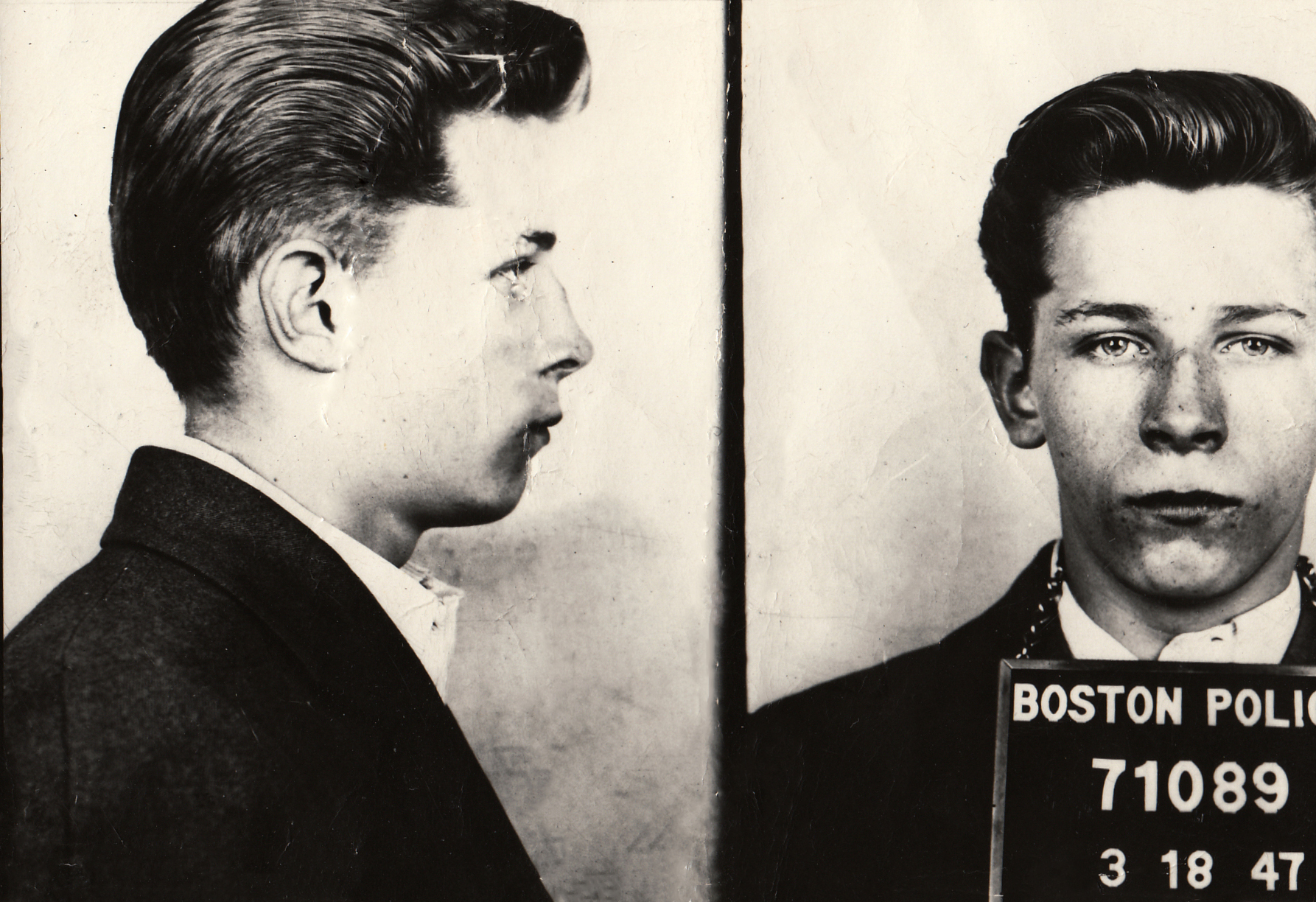
The Winter Hill Gang was one of the most important organized-crime groups in modern Boston.
Its history stretches across multiple leaders and factions, but the name is most closely associated today with James “Whitey” Bulger.
That association is accurate but incomplete.
The organization existed before Bulger’s dominance and operated within a wider Boston underworld that included bookmakers, hijackers, extortionists and competing ethnic crime groups.
Somerville roots
The group took its name from the Winter Hill neighborhood of Somerville, Massachusetts.
Early figures included Buddy McLean and Howie Winter.
The gang became involved in gambling, loansharking, hijacking and other rackets.
Boston’s organized-crime landscape was divided among several groups, including Irish-American gangs and the New England branch of La Cosa Nostra.
Competition between those worlds could be violent.
The Boston gang war
During the 1960s, the Winter Hill organization became involved in a brutal conflict with the McLaughlin gang.
The dispute produced a series of murders and retaliatory killings.
The war eventually strengthened Winter Hill’s position.
This period is important because it predates Whitey Bulger’s later celebrity.
The organization’s reputation for violence did not begin with him.
Howie Winter
Howie Winter emerged as a major leader after Buddy McLean’s death.
Under Winter, the gang remained deeply involved in illegal gambling and related rackets.
Federal prosecution eventually damaged his leadership.
Winter was convicted in a major horse-race-fixing case and went to prison.
That transition created space for Bulger and Stephen Flemmi to become more powerful.
Whitey Bulger
Bulger became the gang’s best-known figure.
The FBI later described him as the leader of the violent Winter Hill Gang and pursued him for years as one of its Ten Most Wanted fugitives.
Federal charges tied Bulger to racketeering, extortion, narcotics distribution and murders.
In 2013, after his capture, a federal jury convicted him on numerous charges, including racketeering and involvement in multiple killings.
The conviction transformed long-standing allegations into adjudicated facts for specific counts.
The informant scandal
The Winter Hill story is inseparable from one of the most damaging scandals in FBI history.
Bulger and Flemmi served as informants for the Bureau.
The relationship was supposed to help federal investigators attack the New England Mafia.
Instead, corrupt FBI handling allowed Bulger to receive sensitive information and avoid pressure.
The Boston office’s historical account now discusses this relationship as part of its own institutional history.
That matters because the history is not only a criminal biography; it is also a story of institutional failure and compromised law enforcement.
It is also a story about law-enforcement failure.
Fugitive years
Bulger disappeared in 1995 after receiving advance warning that charges were coming.
He remained a fugitive for sixteen years.
The FBI captured him in Santa Monica, California, in 2011 after a renewed publicity campaign focused partly on his companion Catherine Greig.
His long disappearance became one of the most famous fugitive cases in modern FBI history.
Organization versus personality
Bulger’s fame can make the Winter Hill Gang look like a one-man organization.
It was not.
The gang had earlier leaders, bookmakers, enforcers and partners, and it existed inside a broader Boston criminal ecosystem.
That is why the organization deserves its own canonical page rather than being treated as a footnote inside Bulger’s biography.
Why Winter Hill matters
Winter Hill connects Irish-American organized crime, Boston gang warfare, gambling, federal informants, corruption and the FBI fugitive program.
Portrayed on Screen
The Departed
The most important RoguesBook fact about The Departed is also the easiest to get wrong: Jack Nicholson is not literally playing Whitey Bulger.
People who shaped this story
References
-
[1]FBI Boston HistoryTier 1MentionsSupportsView source ↗
-
[2]Top Ten Fugitive James ‘Whitey’ Bulger ArrestedTier 1MentionsSupportsView source ↗