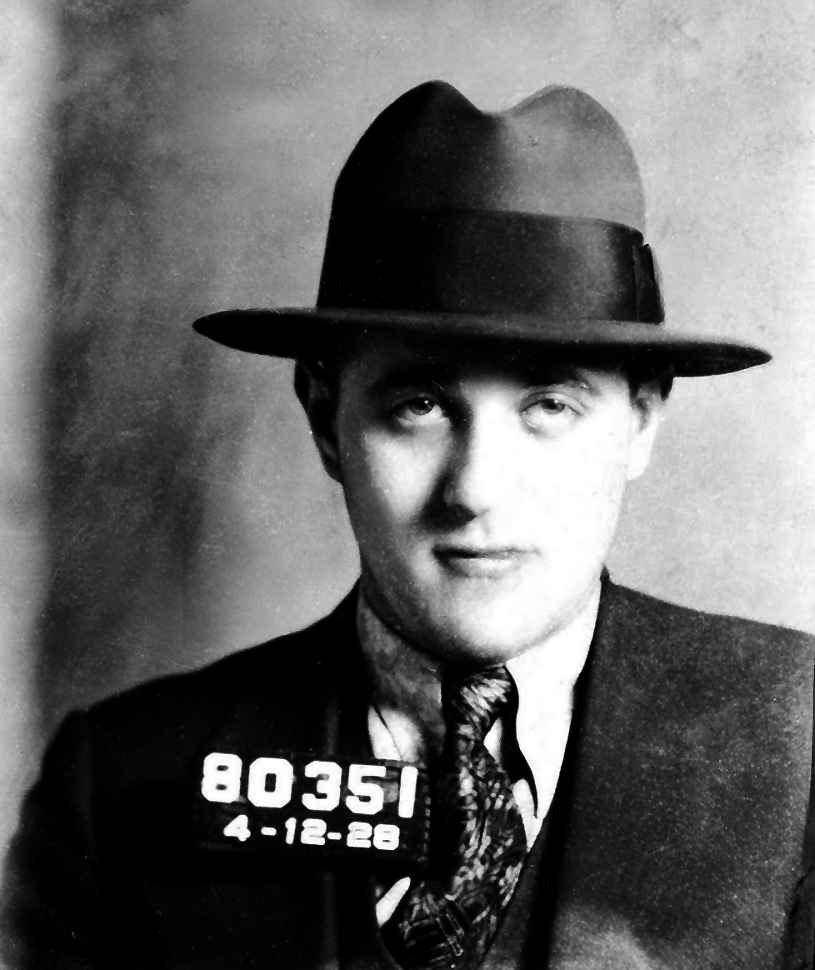
The Bugs and Meyer Mob was an early New York criminal partnership associated with Benjamin “Bugsy” Siegel and Meyer Lansky.
It operated before the modern Five Families system had fully stabilized and helped connect street-gang culture, Prohibition bootlegging and the broader national syndicate networks that emerged during the 1930s.
The organization’s name comes from the nicknames of its two best-known leaders.
Siegel and Lansky
Benjamin Siegel and Meyer Lansky met as young men in New York.
Their personalities were often described as opposites.
Siegel developed a reputation for volatility and physical violence.
Lansky became known for calculation, gambling and financial organization.
That contrast made the partnership historically memorable.
The FBI’s Siegel files describe the two men forming what agents called the “Bugs and Meyer” gang during the Prohibition era.
Bootlegging
Illegal liquor created the group’s central opportunity.
The FBI’s historical records describe Siegel and Lansky escorting liquor between New York and Chicago and developing bootlegging interests of their own.
Protection was a major part of that business.
Trucks carrying illegal alcohol were valuable targets.
An organization able to guarantee delivery, intimidate hijackers and retaliate against rivals could charge for security as well as participate directly in the trade.
Territory and the Waxey Gordon network
Federal records also describe the partnership expanding into territory connected to Waxey Gordon.
Violence played a role in those shifts.
As rivals were weakened or removed, Siegel and Lansky absorbed contacts, personnel and business opportunities.
The pattern is important because it anticipates later organized crime.
The goal was not simply to rob a competitor once.
It was to take over the competitor’s revenue stream.
Connections to the wider syndicate
Siegel and Lansky developed relationships with figures including Lucky Luciano, Frank Costello, Louis Buchalter and others.
Those connections placed the Bugs and Meyer Mob inside a broader network that eventually became associated with the National Crime Syndicate and the Commission system.
The organization therefore acts as a bridge between neighborhood gangs and national organized crime.
Siegel moves west
Siegel later moved much of his activity toward California and Nevada.
He became associated with gambling ventures and the development of the Flamingo in Las Vegas.
The FBI continued to track his relationship with Lansky.
Their partnership did not remain a simple New York street gang.
It evolved into business and criminal relationships spread across several states.
Lansky’s later career
Lansky became one of the most enduring organized-crime figures in American history.
FBI files describe his involvement in gambling operations and his connections with major underworld figures over decades.
That long career can obscure the significance of his early partnership with Siegel.
The Bugs and Meyer period shows the operational foundation: bootlegging, protection and gang alliances before national gambling interests became dominant.
Myth and terminology
“Bugs and Meyer Mob” is a useful historical label, but it should not be treated as if the group maintained a formal corporate identity for decades.
Membership shifted.
The leaders moved into larger networks.
The organization belongs to a transitional period.
Why it matters
The Bugs and Meyer Mob connects Five Points-era street crime, Prohibition, Lucky Luciano, Murder, Inc., Las Vegas and the National Crime Syndicate.
It is one of the clearest bridge organizations on the site.
Without it, Siegel and Lansky appear as isolated biographies.
With it, readers can see the network that carried them from New York street crime into national organized crime.
People who shaped this story
References
-
[1]Bugsy Siegel Part 31 of 32Tier 1MentionsSupportsView source ↗
-
[2]Meyer Lansky FBI Vault collectionTier 1MentionsSupportsView source ↗
-
[3]Benjamin Siegel (1906-1947)Tier 2SupportsView source ↗
-
[4]Benjamin "Bugsy" SiegelTier 2SupportsView source ↗