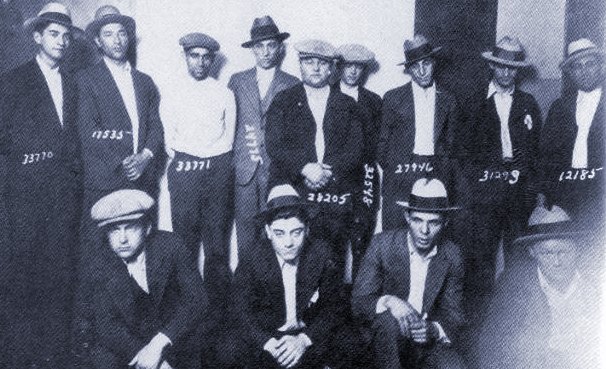
Detroit’s Purple Gang grew from a neighborhood street group into one of the most feared criminal organizations of the Prohibition era. Its rise was powered by geography: Detroit sat directly across the river from Canada, turning the region into one of the most important corridors for smuggling liquor into the United States.
From neighborhood gang to bootlegging power
The group emerged from Detroit’s lower east side, an immigrant neighborhood sometimes called Little Jerusalem. The Detroit Historical Society identifies the Burnstein brothers — Raymond, Joseph, Isadore and Abraham — as central figures in the organization.
The gang first became known through local delinquency and protection activity. Prohibition dramatically expanded the available profits. Liquor could cross the Detroit River from Canada and be moved into a national distribution system. The Purple Gang hijacked shipments, protected its own traffic and built relationships with other criminal organizations.
The FBI’s history of its Detroit field office specifically notes that the Purple Gang controlled much of the city’s illicit liquor activity during the 1920s.
Violence as enforcement
The gang developed a reputation for violence not as spectacle but as a business method. Threats, bombings and assaults could be used to force cooperation, discourage witnesses and regulate industries that had become vulnerable to racketeering.
One of the clearest examples was the Cleaners and Dyers War. The Detroit Historical Society describes a gang-controlled system in which cleaners who resisted an association faced intimidation, property damage and violence. Thirteen gang members were tried for extortion in 1928 and acquitted.
The episode shows why organized crime during Prohibition cannot be reduced to smuggling alcohol. The profits and enforcement networks created around liquor could be redirected into labor racketeering, gambling, extortion and other markets.
Links beyond Detroit
Historical accounts connect the Purple Gang with Chicago’s underworld. The Detroit Historical Society notes that Al Capone chose to purchase whiskey from the group rather than fight it for Detroit territory. Claims that Purple Gang members were directly involved as spotters in the St. Valentine’s Day Massacre have circulated for decades, but such claims were never proved in court and should remain clearly qualified.
The Collingwood Manor Massacre
The gang’s decline accelerated in 1931. Three men associated with a breakaway faction — Herman “Hymie” Paul, Isadore Sutker and Joe Lebowitz — were invited to what was presented as a peace meeting at the Collingwood Manor apartment building.
They were shot to death. Sol Levine, who had driven them there, later testified. Convictions arising from the killings sent key Purple Gang members to prison.
The significance of the Collingwood Manor Massacre is structural. A group whose power depended on fear and internal discipline was damaged by internal conflict, testimony and the removal of important members.
Decline
By the middle of the 1930s, the Purple Gang no longer dominated Detroit’s underworld. Members had been killed, imprisoned or absorbed into other criminal networks.
Why it matters
It connects Detroit, the Canadian border, bootlegging, labor racketeering and the national movement of illicit alcohol. That makes it a natural bridge between local gang history and the larger criminal economy created by Prohibition.
People who shaped this story
References
-
[1]Collingwood Manor MassacreTier 1MentionsSupportsView source ↗
-
[2]Purple GangTier 1MentionsSupportsView source ↗
-
[3]FBI Detroit HistoryTier 1MentionsSupportsView source ↗
-
[4]Purple Gang group photographTier 2MentionsView source ↗