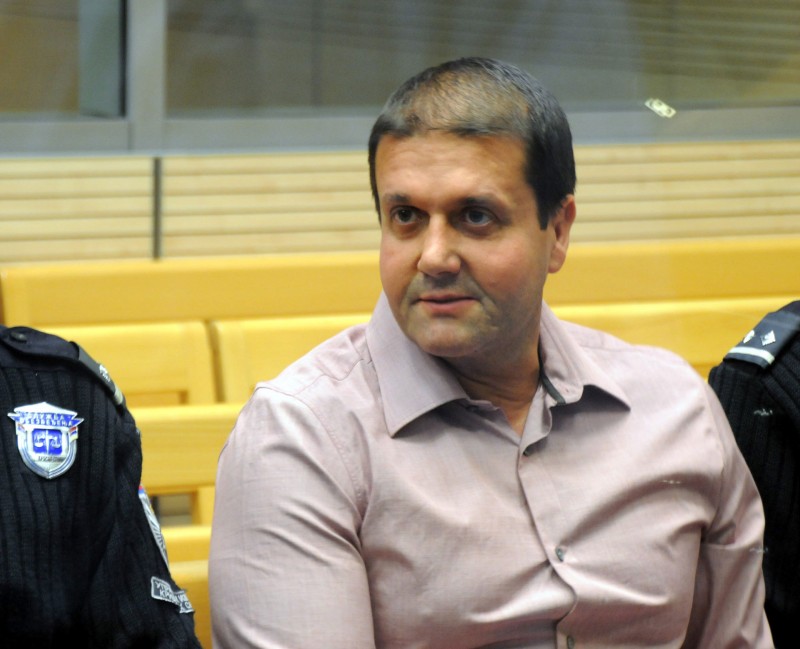
Darko Šarić is one of the most important Balkan organized-crime figures of the twenty-first century. Serbian courts convicted him of organizing an international cocaine-smuggling operation that moved multi-ton quantities from South America toward Western Europe. His cases marked a shift from the street-gang and assassination culture associated with the Zemun era toward a more transnational model built around maritime logistics, offshore finance, legitimate businesses and large-scale narcotics trafficking.
From the Balkans to the cocaine trade
Šarić was born in Montenegro and developed business and criminal connections across Serbia and the wider region. By the late 2000s, investigators in Serbia and partner countries were focusing on a network accused of arranging shipments of cocaine from South America to Europe.
The scale of the case was exceptional by Serbian standards. Prosecutors described operations involving several tons of cocaine and a network of companies and associates used to move money and conceal ownership.
The 5.7-ton cocaine case
The central Serbian prosecution concerned approximately 5.7 tons of cocaine. The case moved through repeated trials, appeals and procedural disputes. Earlier judgments were overturned or reconsidered, which means older articles can give an incomplete picture if they freeze the case at one procedural stage.
The key current legal anchor is the 2022 appellate judgment that sentenced Šarić to fourteen years in prison for organizing the international cocaine-smuggling operation. Serbian institutional reporting in 2025 continued to identify that fourteen-year sentence as the one he was serving.
Surrender in 2014
Šarić spent years outside Serbia while the case developed. In March 2014 he surrendered to Serbian authorities. His return triggered intense public interest because he had become a symbol of the region’s new generation of transnational crime bosses.
The proceedings that followed lasted for years. The case was legally complex, partly because of the number of defendants and partly because appellate courts repeatedly reviewed procedural issues.
Money laundering proceedings
The drug-trafficking case was accompanied by money-laundering prosecutions. Prosecutors alleged that illicit proceeds were invested through companies, property and financial structures in Serbia and elsewhere.
These cases are particularly important for understanding how modern organized crime differs from the older Belgrade underworld. Reputation and violence still matter, but the real power of large narcotics networks comes from logistics, finance, shell companies and the ability to integrate illegal money into the legal economy.
The 2025 first-instance case
In April 2025, a Serbian special court issued a first-instance judgment in a separate case, sentencing Šarić to six years for organizing a criminal group whose members were convicted of several offenses connected to efforts against cooperating witness Nebojša Joksović and other conduct. The court acquitted the defendants of the allegation that they had planned Joksović’s murder.
Because that judgment was first-instance, it should not be presented as a final conviction until appellate proceedings are complete.
Status in 2026
As of September 2026, Šarić remained in prison serving the fourteen-year cocaine-trafficking sentence. A Belgrade court rejected his request for conditional release after he had served the statutory portion required to apply. Other proceedings involving him were still active.
That current status is important because Šarić’s legal history is unusually fluid. A good profile must date its statements and distinguish final judgments from pending or first-instance cases.
Why Šarić is a major the archive hub
Šarić opens an entirely different rabbit hole from the Arkan and Zemun clusters. His story connects the Balkans to South America, Western Europe, international cocaine routes, money laundering, offshore business structures and later Balkan criminal organizations.
He should therefore function as a bridge from the Serbian organized-crime archive into the broader South America–Western Balkans Cocaine Pipeline story arc and, eventually, into Montenegrin clan conflicts and European port logistics.
Documented network
South America–Western Balkans Cocaine Pipeline (story arc): The court record describes operations spanning South America and Western Europe.
Status and record
The structured life-status field is living. This administrative value should change only when a reliable current source supports an update. The current-status field is serving time.
Source record
The Master package currently attaches these sources to the profile: – Kzz OK 2/2023 — Supreme Court of Serbia, Tier 1. – Kzz OK 6/2021 — Supreme Court of Serbia, Tier 1. – The Long Trial of the Balkan Cocaine King — OCCRP / KRIK, Tier 2. – Darko Šarić osuđen na kaznu zatvora od šest godina — RTS, Tier 2. – Darko Šarić ostaje u zatvoru – odbijen zahtev za uslovno puštanje na slobodu — KRIK, Tier 2.
Claim-level source references remain in the structured data so later audits can trace evidence rather than relying on a generic bibliography.
Evidence and editorial boundaries
For living subjects especially, legal status and allegations require dated evidence. Future expansion should come from stronger records, court material, archives or newly processed canonical entities rather than generalized crime lore.
How this profile fits the archive
The source package currently includes Kzz OK 2/2023; Kzz OK 6/2021; The Long Trial of the Balkan Cocaine King; Darko Šarić osuđen na kaznu zatvora od šest godina; Darko Šarić ostaje u zatvoru – odbijen zahtev za uslovno puštanje na slobodu. Those records define the safe editorial boundary for this version of the page. Unknown dates and unresolved associations remain explicit because a missing fact is a research task, not permission to speculate.
Key events
Operation Balkan Warrior
A multinational investigation launched in 2009 against a cocaine-trafficking network associated with Darko Šarić and shipments moving from South America toward Europe.
People, groups and places
References
-
[1]Kzz OK 2/2023Tier 1SupportsMentionsView source ↗
-
[2]Kzz OK 6/2021Tier 1MentionsSupportsView source ↗
-
[3]Darko Šarić ostaje u zatvoru – odbijen zahtev za uslovno puštanje na sloboduTier 2MentionsView source ↗
-
[4]The Long Trial of the Balkan Cocaine KingTier 2SupportsMentionsView source ↗
-
[5]Darko Šarić osuđen na kaznu zatvora od šest godinaTier 2MentionsView source ↗