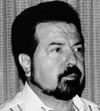
Gilberto Rodríguez Orejuela was one of the principal leaders of the Cali Cartel, the Colombian trafficking organization that became the dominant rival to the Medellín Cartel and later one of the largest suppliers of cocaine to the United States. Along with his brother Miguel Rodríguez Orejuela, Gilberto helped lead an organization whose power rested on international trafficking, money laundering, corruption, business fronts and a deliberately less theatrical public image than the one associated with Pablo Escobar.
The Cali Cartel’s leadership model
The Cali Cartel was not simply “the cartel that came after Medellín.” The two organizations overlapped in time and used different combinations of violence, corruption and commercial infrastructure.
U.S. Justice Department records identify Gilberto and Miguel Rodríguez Orejuela as central leaders. Hélmer “Pacho” Herrera and José Santacruz Londoño were also named among the cartel’s four principal leaders. Together, those networks handled cocaine production, transport, wholesale distribution and the laundering of enormous revenues.
Gilberto became known as “El Ajedrecista,” or “the Chess Player,” a nickname that fit the image of a leader associated with planning and organizational discipline. The nickname should not be allowed to romanticize the operation. U.S. authorities described the cartel as a criminal enterprise that used corruption and violence while moving cocaine on a massive scale.
Expansion as Medellín weakened
As pressure destroyed the Medellín Cartel’s senior leadership, Cali’s relative position strengthened. The death of Pablo Escobar in 1993 did not end Colombia’s cocaine trade. It changed who controlled a larger share of it.
Cali’s structure was suited to that transition. The organization relied heavily on compartmentalized networks, communications, front businesses and financial systems. That made the cartel harder to reduce to one visible kingpin.
U.S. investigators later described Operation Cornerstone as a long-running effort that documented extraordinary cocaine volumes connected to the organization. In announcing the Rodríguez Orejuela brothers’ 2006 guilty pleas, the Justice Department said the cartel had been responsible for sending more than 200 tons of cocaine to the United States over many years.
Arrest in Cali
Colombian National Police arrested Gilberto Rodríguez Orejuela in Cali on June 9, 1995. His arrest was one of the key blows in the campaign against the cartel’s senior command.
The capture came during a concentrated effort by Colombian authorities to dismantle the organization. Other top leaders were arrested or killed in the period that followed, reducing the cartel’s ability to function as the dominant national network it had become.
Extradition to the United States
Gilberto was extradited from Colombia to the United States in December 2004. The transfer was significant because Colombia had earlier prohibited extradition of its nationals for a period, and the legal landscape had changed by the time U.S. prosecutors brought later conduct into the federal case.
His brother Miguel followed in March 2005. The two men were then prosecuted in U.S. federal court on cocaine-importation and money-laundering charges.
The 2006 guilty plea
On September 26, 2006, Gilberto and Miguel pleaded guilty in Miami to conspiracy to import cocaine into the United States. They also agreed to plead guilty to a money-laundering conspiracy.
Each received a 30-year federal prison sentence for qualifying conduct. The plea agreements also included a $2.1 billion forfeiture judgment against narcotics-related assets and businesses.
The Justice Department described the financial case as a major part of the cartel’s destruction. Prosecutors said drug proceeds had been moved through a business empire that included pharmaceutical companies and hundreds of retail drug stores in Colombia.
Family assets and financial networks
The 2006 agreements extended beyond the two brothers. Twenty-eight family members entered a separate agreement involving business entities and other assets. That illustrates why the Cali story cannot be understood only through arrests.
A trafficking organization that generates billions of dollars needs mechanisms to hold and disguise wealth. Front companies, relatives, trusted managers and reorganized businesses can outlive an individual prosecution. Asset forfeiture therefore became a parallel campaign against the cartel’s ability to preserve criminal proceeds.
Death in federal custody
Federal Bureau of Prisons records list Gilberto Rodríguez Orejuela as dying on May 31, 2022, while in federal custody. Cancer was recorded as the cause of death.
His death closed the personal story of one of the cartel’s best-known leaders, but the historical significance of the Cali organization remains larger than any one defendant.
Why Gilberto Rodríguez Orejuela matters
Gilberto’s profile is a central bridge between Medellín-era violence and the more corporate-looking trafficking system associated with Cali. The contrast is often overstated—Cali also used violence—but the organization demonstrated how corruption, intelligence gathering, legitimate businesses and financial concealment could become as strategically important as gunmen.
His story connects directly to Miguel Rodríguez Orejuela, the Cali Cartel, Hélmer Herrera, José Santacruz Londoño, the cartel’s 1995 dismantling campaign and the 2006 U.S. prosecution. Together they show how a multinational cocaine enterprise actually functioned.
Gilberto and Miguel were not interchangeable
Because the brothers were prosecuted together and led the same cartel, summaries often collapse them into a single unit. They should not be merged. Each had a separate arrest date, extradition history, custody record and personal biography, even though their leadership histories overlap.
That separation becomes particularly important after 2022, when Gilberto died in federal custody while Miguel’s legal and prison timeline continued. A user moving between the brothers should see both the overlap and the divergence.
Cali as an intelligence problem
The Cali Cartel also forced investigators to think beyond visible street violence. An organization using legitimate companies, sophisticated communications and corruption can be harder to map than one that announces its power through spectacular attacks. The long Operation Cornerstone investigation and later financial cases reflected that challenge.
This is why the Rodríguez Orejuela story has durable search value. It explains a different model of cartel power—one based on business systems, information and concealment as well as coercion—and provides a natural comparison with the more openly violent Medellín era.
Why the Cali model outlived its founders
The Cali Cartel’s collapse did not erase the trafficking knowledge, commercial contacts or money-laundering techniques developed during its rise. Smaller organizations and successor networks could reuse pieces of that infrastructure without reproducing the same leadership structure. Gilberto’s career therefore matters beyond the biography of one trafficker: it helps explain a transition from a highly visible cartel leadership to more fragmented networks that were harder to describe through a single boss. The arrests, extraditions and forfeitures dismantled a particular command structure, but they did not end the economic incentives or transport corridors that had made Colombia central to the cocaine trade.
Documented network
Cali Cartel (organization): Sources place Gilberto Rodríguez Orejuela in the historical network described as Cali Cartel.
Miguel Rodríguez Orejuela (person): The Justice Department described the brothers as joint Cali Cartel leaders.
Timeline and case connections
Structured events are separated from general biography so a later audit can change a date, conviction, killing, organizational split or court outcome without rewriting unrelated portions of the page.
May 31, 2022 — Death of Gilberto Rodríguez Orejuela. Federal Bureau of Prisons records list Rodríguez Orejuela as dying in federal custody on May 31, 2022, with cancer recorded as the cause.
Status and record
The death record lists May 31, 2022 in United States federal custody. Cause: Cancer. Federal Bureau of Prisons records list Rodríguez Orejuela as dying in federal custody on May 31, 2022, with cancer recorded as the cause.
Source record
The Master package currently attaches these sources to the profile: – DEA History 1990–1994 — Drug Enforcement Administration, Tier 1. – DEA History 1994–1998 — Drug Enforcement Administration, Tier 1. – DEA History 2003–2008 — Drug Enforcement Administration, Tier 1. – Cali Cartel Leaders Plead Guilty to Drug and Money Laundering Conspiracy Charges — U.S. Department of Justice, Tier 1. – Federal inmate deaths, 2019–2022 — Federal Bureau of Prisons, Tier 1. – Department of Justice Annual Report 1995 — Cali Cartel dismantling — U.S. Department of Justice, Tier 1.
The presence of a source does not mean it supports every sentence. Claim-level references remain in structured data for later audits.
Evidence and editorial boundaries
For living subjects in particular, legal status and allegations require dated evidence. Future expansion should come from stronger records, court material, archives or newly processed canonical entities rather than generalized crime lore.
Key events
Cali Cartel Leadership Arrests of 1995
In 1995 Colombian authorities arrested Gilberto Rodríguez Orejuela, Miguel Rodríguez Orejuela and José Santacruz Londoño in a sequence the U.S.
Extraditions of Gilberto and Miguel Rodríguez Orejuela
Gilberto Rodríguez Orejuela was extradited from Colombia to the United States in December 2004 and Miguel Rodríguez Orejuela followed in March 2005.
Death
Death of Gilberto Rodríguez Orejuela.
People, groups and places
References
-
[1]DEA History 1994–1998Tier 1MentionsSupportsView source ↗
-
[2]DEA History 2003–2008Tier 1MentionsSupportsView source ↗
-
[3]The Drug Enforcement Administration, 1990–1994Tier 1MentionsSupportsView source ↗
-
[4]Federal inmate deaths, 2019–2022Tier 1MentionsSupportsView source ↗
-
[5]Cali Cartel Leaders Plead Guilty to Drug and Money Laundering Conspiracy ChargesTier 1SupportsMentionsView source ↗
-
[6]Department of Justice annual report: Avianca Flight 203 prosecutionTier 1SupportsMentionsView source ↗