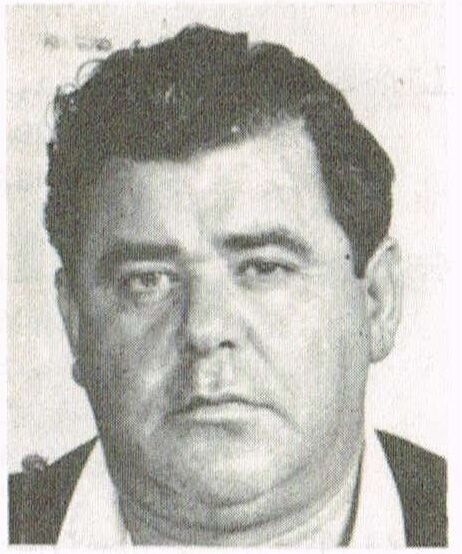
Carmine “Mr. Gribbs” Tramunti was the senior Lucchese crime family figure who occupied the organization’s top position during the transition between Tommy Lucchese and Anthony Corallo. His time as boss was shorter and less celebrated than either man’s, but it sat at an important moment when federal investigators were concentrating increasingly on narcotics, interstate gambling and the structure of La Cosa Nostra.
Tramunti was born in New York in 1910 and grew up in East Harlem. He developed a criminal record early and became associated with the network that evolved into the Lucchese family. By the 1950s and 1960s he was a senior figure with influence in gambling and other rackets.
Federal records from the period identified Tramunti as a leader in the Thomas Lucchese family. A 1965 FBI memorandum, for example, discussed him in connection with a large interstate gambling operation and described him as a leader in the Lucchese organization. Such records are useful because they document how law enforcement viewed his status before he became the family’s best-known interim boss.
After Tommy Lucchese
Tommy Lucchese died in 1967 after decades as one of New York’s most respected Mafia leaders. His death created a succession problem. Anthony Corallo was a natural long-term candidate but was facing legal constraints, and Tramunti emerged as the principal leader during the transition.
Histories differ over whether Tramunti should be described as full boss, acting boss or a caretaker acceptable to other senior figures. What is clear is that he functioned as the public-facing top figure of the family during this period and was treated by federal authorities as a major Lucchese leader.
The distinction matters because Mafia leadership was not always a simple corporate title. A man could hold formal rank while power was shared with imprisoned or temporarily unavailable leaders. Tramunti’s tenure is a good example of why organized-crime succession has to be described with more nuance than a simple list of bosses.
Gambling and narcotics prosecutions
Tramunti’s criminal cases also show the changing priorities of federal law enforcement. Earlier investigations focused heavily on gambling and interstate racketeering. By the early 1970s, narcotics prosecutions had become increasingly important.
Tramunti was convicted in a major federal narcotics case associated with the aftermath of the so-called French Connection era. Prosecutors argued that he participated in a heroin conspiracy involving established traffickers and organized-crime figures. The case became controversial in later Mafia histories because the evidence used to connect senior leaders to narcotics networks was often indirect and depended on surveillance, meetings and cooperating witnesses rather than a boss personally handling drugs.
That does not make the conviction disappear: Tramunti was convicted and received a lengthy federal sentence. But it is useful to separate the legal result from later storytelling that sometimes turns every meeting or handshake into proof of a specific transaction.
Corallo takes over
By the time Tramunti was sent to prison, Anthony Corallo was positioned to assume undisputed control of the Lucchese family. Corallo’s administration would last into the 1980s and become one of the principal targets of the Mafia Commission prosecution.
Tramunti therefore occupies a transitional place in the family’s history. He was not the architect of the organization in the way Tommy Lucchese had been, and he did not preside over the major RICO battles that defined Corallo’s final years. Instead, he kept the leadership structure functioning during the years between them.
Tramunti died on October 15, 1978, while serving his federal sentence. He was sixty-eight years old.
His career is valuable precisely because it is less mythologized. Through Tramunti, the Lucchese story moves from the postwar Mafia into the era of interstate gambling investigations, narcotics conspiracies and increasingly sophisticated federal surveillance. He is the hinge between two more famous bosses and an example of how continuity inside a crime family could depend on temporary leadership arrangements rather than a dramatic power struggle.
Death
Carmine Tramunti died on October 15, 1978. The documented cause of death was Natural causes.
Documented network
Lucchese Crime Family (organization): Tramunti was the family’s senior leader after Tommy Lucchese’s death and before Anthony Corallo’s long-term rule.
Anthony Corallo (person): Corallo succeeded Tramunti as the family’s dominant boss.
Timeline and case connections
Structured events are kept separate from general biography so later audits can update dates, convictions, killings, organizational changes or court outcomes without rewriting unrelated material.
October 15, 1978 — Death of Carmine Tramunti. Tramunti died while serving a federal prison sentence.
Status and record
The structured birth record lists October 1, 1910 in New York City, United States. The death record lists October 15, 1978. Cause: Natural causes. Tramunti died while serving a federal prison sentence.
Source record
The Master package currently attaches these sources to the profile: – Carmine Tramunti interstate gambling memorandum — Federal Bureau of Investigation, Tier 1. – Five Families: The Rise, Decline, and Resurgence of America’s Most Powerful Mafia Empires — Thomas Dunne Books, Tier 1. – Bureau of Narcotics profile of Carmine Tramunit (cropped).jpg — Wikimedia Commons / Federal Bureau of Narcotics, Tier 2.
Claim-level source references remain in the structured data so later audits can trace evidence rather than relying on a generic bibliography.
Evidence and editorial boundaries
For living subjects especially, legal status and allegations require dated evidence. Future expansion should come from stronger records, court material, archives or newly processed canonical entities rather than generalized crime lore.
Key events
Born
Birth of Carmine Tramunti.
New York City, United StatesDeath
Death of Carmine Tramunti.
People, groups and places
References
-
[1]Carmine Tramunti interstate gambling memorandumTier 1MentionsSupportsView source ↗
-
[2]Five Families: The Rise, Decline, and Resurgence of America’s Most Powerful Mafia EmpiresTier 1SupportsMentions
-
[3]United States v. Carmine Tramunti — federal case referenceTier 1SupportsView source ↗
-
[4]Bureau of Narcotics profile of Carmine Tramunit (cropped).jpgTier 2MentionsView source ↗